





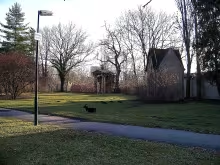
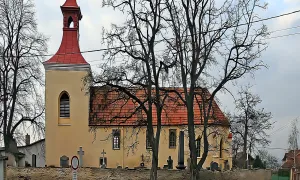
Svatojiřský Park in Nymburk occupies the site of a former municipal cemetery. Situated on the south-western edge of the historic town center, it is named after the Renaissance church of St. George, built on foundations from an earlier 14th-century chapel. The park holds historical significance as it transformed from a medieval burial ground into a cultural landmark, preserving monuments that reflect Nymburk’s rich heritage.
The origins of Svatojiřský Park date back to the 14th century when the first cemetery was established around an original chapel. In 1569, a larger Renaissance building replaced the chapel, marking significant architectural development. The cemetery expanded in 1787 due to population growth and remained the primary burial ground until its closure in the early 1960s. During this period, it also served as a chapel, with Gustav Červinka’s secessionist tombstone being one of the preserved monuments.
Architecturally, Svatojiřský Park showcases elements from various periods, reflecting changes in style and purpose. The Renaissance church of St. George is a key structure built on medieval foundations. In 1787, the site expanded to accommodate more burials and served dual purposes as both cemetery and chapel. Notable features include two large 19th-century chapel tombs belonging to the Tozarowy and Krouských families, and a neoclassical tombstone designed by Josef Václav Myslbek for Dr. Mikuláš Miksche.
Throughout its history, Svatojiřský Park has been associated with notable figures such as engineer Gustav Červinka and poet Otakar Theer. These individuals contributed to Nymburk’s cultural and intellectual fabric, leaving legacies now commemorated within the park's preserved monuments.
The cemetery closed in the early 1960s, marking a significant transition for Svatojiřský Park. Between 1967 and 1969, an asanace process removed remains and gravestones, relocating historically valuable objects to depots. Despite this transformation, some structures were preserved, including Červinka’s tombstone and two large chapel tombs from the 19th century.
Today, Svatojiřský Park stands as a testament to Nymburk's historical evolution. It offers visitors a glimpse into its past through well-preserved monuments. The park is accessible, providing locals and tourists an opportunity to explore a site rich in history and cultural significance. Its preserved structures serve as reminders of the town’s heritage and attractions that invite reflection on time's passage and the stories embedded within this urban landscape. Visitors are encouraged to explore Svatojiřský Park, where history is etched into every corner, offering a unique journey through Nymburk's storied past.
Historical milestones
- 14. století
- Založení původní kaple a hřbitova.
- 1569
- Výstavba renesančního kostela svatého Jiří.
- 1787
- Rozšíření hřbitova kvůli růstu populace.
- kolem 1960
- Zavření hřbitova a přeměna na park.
- 1967-1969
- Proces asanace, odstranění ostatků a pohřebních kamenů.
Architectural development
Svatojiřský Park evolved from a medieval cemetery to a Renaissance church and later became a city park. The original chapel was replaced by a larger Renaissance structure in 1569, which also served as a burial chapel. Significant expansion occurred in 1787, accommodating the growing town's needs.
Historical events
In 1569, a larger Renaissance building was constructed on the site of an earlier chapel.
The cemetery expanded significantly in 1787 and served as the main municipal burial ground until the early 1960s.
Points of interest
- The Renaissance church of St. George, a central feature of Svatojiřský Park, was built on the foundations of an earlier 14th-century chapel, illustrating how historical layers are physically intertwined within the park.
- During its transformation in the early 1960s, the asanace process involved relocating remains and gravestones to depots, a practice that preserved these artifacts for future generations while allowing the space to be repurposed.
Guide
Show guide text
Welcome to Svatojiřský Park in Nymburk, a place where history and nature intertwine beautifully. As you stand here, take a moment to absorb the serene atmosphere of this city park that once served as a municipal cemetery. The lush greenery around you masks its rich past, inviting you on a journey through time.
The origins of Svatojiřský Park trace back to the 14th century with the establishment of an original chapel and burial ground. This site evolved significantly over the centuries, reflecting the town's growth and changing needs. In 1569, the Renaissance church of St. George was constructed on these ancient foundations, marking a pivotal moment in the park’s history. Its architectural elegance stands as a testament to the era’s craftsmanship.
As you wander through the park, take a closer look at the Renaissance church of St. George. Notice its robust structure and consider how it seamlessly incorporates elements from earlier periods. This church is not just an architectural marvel but also a symbol of continuity, bridging centuries of history beneath your feet.
Several notable figures are connected to this place, adding depth to its story. Gustav Červinka, a respected educator and railway engineer, once walked these grounds. Otakar Theer, whose literary works continue to resonate, was also linked here. Jan Nepomuk Červinka, a citizen of Nymburk, Tomáš Černý, who served as Prague’s mayor, and MUDr. Mikuláš Miksche, a dedicated physician and patriot from Prague, all have ties to this site.
An intriguing aspect of the park's transformation occurred in the early 1960s when it closed as a cemetery. The process known as "asanace" involved removing remains and gravestones, transforming the space into the peaceful park you see today. This transition reflects broader societal changes and the evolving relationship between urban spaces and their historical layers.
As we conclude this brief exploration, I invite you to continue discovering more about Svatojiřský Park. Each path and corner holds stories waiting to be uncovered. Thank you for joining me on this journey through time, and may your visit inspire a deeper appreciation of the history that surrounds us.
Tips for visitors
The best time to visit Svatojiřský Park is during the spring or early autumn when the weather is mild, making it ideal for walking through its lush greenery and enjoying outdoor activities. These seasons also offer beautiful natural lighting that enhances the park's beauty, especially around dawn and dusk. Summer can be pleasant but might be crowded due to local events, while winter offers a quieter experience with snow-covered landscapes.
Parking is available near Svatojiřský Park, and it’s accessible by public transportation as well. For those driving, check for nearby parking options in advance. Public transport users should verify current routes and schedules using a transit app or website to plan their journey efficiently. The park's central location makes it easily reachable from various parts of Nymburk.
When visiting the park, consider bringing comfortable walking shoes as there are several paths to explore. A picnic blanket can be useful if you wish to enjoy a meal amidst nature. Don’t forget sunscreen and a hat for sun protection during sunny days, or a light jacket in case it gets chilly. For those interested in bird watching, binoculars might enhance the experience.
For photography enthusiasts, the best spots include areas around the Renaissance church of St. George, where you can capture its architectural details against the park's natural backdrop. Early morning or late afternoon provides soft lighting that highlights textures and colors beautifully. The park’s varied landscapes offer numerous opportunities for creative shots, from wide-angle views to close-ups of flora.
Nearby attractions within a 30-minute drive include the Nymburk Castle, which offers insights into regional history with its well-preserved architecture and exhibits. For families, the nearby Adventure Park provides fun activities in a natural setting. These spots are great for extending your visit and exploring more of the region's cultural and recreational offerings.
Businesses nearby
Do you run a restaurant, accommodation, shop, museum, rental, wellness or other visitor service near this monument? Show yourself directly to the people heading to it — this is how they will see you in the app and on the web:
Accommodation nearby
Themed route
Thematic Walking Tour: Svatojiřský Park and Surroundings
1. Svatojiřský Park (Park) Begin your journey at the heart of Nymburk, where the serene beauty of Svatojiřský Park awaits. This park is a perfect starting point for exploring local history and nature. Stroll through its lush greenery and enjoy the peaceful atmosphere that makes it ideal for relaxation and reflection.
2. Church of Saint George (Church) A short walk from the park, you'll find the historic Church of Saint George. This architectural gem is renowned for its stunning Gothic design and rich history dating back to the 14th century. It's a must-visit for anyone interested in religious architecture or local heritage.
3. Nymburk Castle (Castle) Continue your exploration by heading towards the iconic Nymburk Castle. Located just outside the park, this castle is a significant cultural landmark with roots stretching back to the 13th century. Its impressive structure and historical significance make it an essential stop for history enthusiasts.
4. Old Town Square (Town Square) Return to the town center and visit the charming Old Town Square. This area offers a glimpse into Nymburk's vibrant past with its quaint buildings and cobblestone streets. It's perfect for soaking in local culture, enjoying a coffee at one of the nearby cafes, or simply people-watching.
5. Nymburk Museum (Museum) Conclude your tour at the Nymburk Museum, located near the Old Town Square. This museum provides insights into the region's history and cultural evolution through its diverse exhibits. It's an excellent place to deepen your understanding of Nymburk's past and present.
This thematic walking tour offers a comprehensive experience of Nymburk’s historical and cultural highlights, all within easy reach from Svatojiřský Park.
Seasonal recommendations
Spring: The arrival of spring at Svatojiřský Park marks a time of renewal and vibrant colors as the park awakens from winter's slumber. This season is characterized by blooming flowers, including tulips and daffodils, which create a picturesque landscape perfect for leisurely walks or picnics under the blossoming trees. The gentle warmth of spring encourages an influx of both locals and tourists eager to experience nature's revival. Visitors are advised to dress in layers as temperatures can fluctuate between mild days and cooler evenings. Early morning visits are recommended to enjoy the park with fewer crowds, allowing for a more intimate experience amidst the awakening flora.
Summer: Summer at Svatojiřský Park is a time of full bloom and lush greenery, offering an idyllic setting for outdoor activities. The long daylight hours provide ample opportunity to explore the park's extensive gardens and enjoy its serene atmosphere. This season attracts large numbers of visitors seeking respite from the city heat, making it one of the busiest times at the park. To avoid crowds, consider visiting early in the morning or later in the afternoon. Comfortable walking shoes and light clothing are recommended due to the warm weather, along with sun protection such as hats and sunscreen.
Autumn: Autumn transforms Svatojiřský Park into a tapestry of fiery hues, with leaves turning shades of red, orange, and gold. This season is perfect for photography enthusiasts eager to capture the stunning fall foliage. The cooler temperatures make it an ideal time for extended walks or cycling through the park's scenic paths. While visitor numbers are moderate compared to summer, weekends can still see a fair amount of activity. Layered clothing is advisable as mornings can be brisk while afternoons remain mild. Carrying a light jacket or sweater ensures comfort during your visit.
Winter: Winter at Svatojiřský Park offers a quiet and contemplative atmosphere under a blanket of snow, turning the landscape into a serene winter wonderland. The park's features take on a different charm as they are adorned with frosty decorations, making it an enchanting place for a peaceful stroll or a reflective moment. Winter is one of the least crowded seasons, providing a more intimate experience with nature. Visitors should dress warmly in layers and wear waterproof boots to navigate potentially icy paths comfortably. The park's opening hours may be shorter during this season, so checking ahead before planning your visit is advisable.
Visualizations and artistic views

Vizualizace jsou generovány umělou inteligencí a slouží jako inspirace.


Tips from visitors
No tips yet. Be the first!
Log in and add your tip.
Reviews and comments