





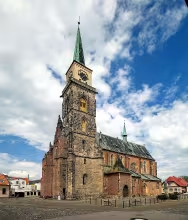
The Church of Saint Giles in Nymburk is a notable example of Gothic brick architecture in the Central Bohemian Region of the Czech Republic. Situated centrally on Kostelní Square, it stands out for its historical significance and architectural beauty. The church features a three-aisled basilica with an extended choir and a towering front structure that reaches 66 meters, creating a distinctive silhouette against Nymburk's medieval fortifications. Originally dedicated to Saint Nicholas, the church was rededicated to Saint Giles during the Thirty Years' War and is now protected as a cultural monument.
The origins of the Church of Saint Giles are linked with the foundation of Nymburk in the 13th century under Přemysl Otakar II and his son Wenceslaus II. This era saw significant urban development in Bohemia. The church's architecture reflects its phased construction, resulting in a blend of styles. Its oldest part is an early Gothic presbytery from the mid-13th century, characterized by a pentagonal apse with a highly profiled Gothic pointed arch portal. After a devastating fire in 1343, the church was rebuilt and expanded to include basilical naves and additional towers.
The architectural evolution of the Church of Saint Giles continued through various historical events. During the Thirty Years' War, Saxon forces massacred over 200 people inside the church on August 16, 1634. This tragic event led to the permanent closure of the northern entrance, now marked by a memorial plaque. Post-war modifications included Baroque adaptations and later restorations aimed at returning the structure to its original Gothic form.
Throughout its history, the church has undergone numerous renovations and reconstructions. In the late 19th century, architect Bernard Grueber initiated partial regotisation, further developed by Matěj Červený and Josef Mocker. The early 20th century saw significant restoration efforts led by Kamil Hilbert, who removed neo-Gothic modifications and restored original Gothic elements. More recent restorations in the late 20th century focused on preserving the church's structural integrity and aesthetic appeal.
Today, the Church of Saint Giles remains a vital cultural and historical site in Nymburk. Its rich history and architectural significance make it a compelling destination for visitors interested in exploring the legacy of Gothic architecture and Bohemian heritage. The church continues to serve as a testament to the resilience and artistic achievements of its builders and restorers, inviting all who visit to appreciate its enduring beauty and historical importance.
Historical milestones
- 1300
- The church was likely founded in conjunction with the establishment of Nymburk.
- 1343
- The church burned down and was rebuilt with a basilica added.
- 1634
- Saxon forces massacred over 200 people inside the church during the Thirty Years' War.
Architectural development
The Church of Saint Giles was constructed in stages, resulting in stylistically diverse sections. The earliest part is a late Gothic presbytery from the mid-13th century. A basilica with three aisles was added after the fire in 1343. Notable additions include the northern and southern towers, built around 1500, and baroque modifications to the presbytery by stonemason D. Augustin post-Thirty Years' War.
Historical events
The church burned down in 1343 and was subsequently rebuilt with a basilica added.
In 1634, during the Thirty Years' War, Saxon forces massacred over 200 people inside the church.
Points of interest
- The Church of Saint Giles was originally dedicated to Saint Nicholas before being rededicated to Saint Giles during the Thirty Years' War, reflecting a shift in religious or political influence at that time.
- A tragic event occurred on August 16, 1634, when Saxon forces massacred over 200 people inside the church during the Thirty Years' War, leading to the permanent closure of its northern entrance, now marked by a memorial plaque.
Guide
Show guide text
Welcome to the historic heart of Nymburk, where you now stand before the majestic Church of Saint Giles, a testament to Gothic architectural brilliance and centuries of history. As you gaze upon its striking façade on Kostelní Square, take in the harmonious blend of brickwork with sparing touches of stone—a signature style that speaks volumes about the era it hails from.
The origins of this church trace back to around 1300, likely founded alongside the establishment of Nymburk itself. This period marked a time when the city began to flourish under the reigns of prominent figures like Přemysl Otakar II and Václav II. However, adversity struck in 1343 when fire ravaged the original structure, leading to its reconstruction with an added basilica—a testament to resilience and renewal.
As you stand here today, take a moment to appreciate the church's three-aisled basilica design, crowned by a towering presence that stretches 66 meters into the sky. This tower not only dominates the skyline but also forms a distinctive silhouette against Nymburk’s historic fortifications—a sight both awe-inspiring and humbling.
The Church of Saint Giles holds stories woven with threads of triumph and tragedy. One such tale dates back to August 16, 1634, during the tumultuous Thirty Years' War when Saxon forces committed a massacre inside these walls, claiming over 200 lives. This dark chapter in history is intertwined with the church's identity, marking its rededication from Saint Nicholas to Saint Giles—a shift reflecting changing religious and political influences of the time.
Among the historical figures linked to this site is Jan Očko z Vlašimi, a notable personality whose legacy adds depth to the church’s storied past. His influence during his lifetime contributed significantly to both ecclesiastical and civic life in Nymburk.
As you continue your exploration, consider the layers of history that have shaped this sacred space. The Church of Saint Giles is not just an architectural marvel but a living chronicle of resilience, faith, and transformation. We invite you to delve deeper into its stories, uncovering the narratives etched within its walls.
Thank you for joining us on this journey through time. May your visit inspire reflection and curiosity as you continue to explore Nymburk’s rich heritage. Safe travels, and may each step reveal new wonders!
Businesses nearby
Do you run a restaurant, accommodation, shop, museum, rental, wellness or other visitor service near this monument? Show yourself directly to the people heading to it — this is how they will see you in the app and on the web:
Nearby
Nymburk is surrounded by historic fortifications and features other notable monuments, including a statue of Saint John of Nepomuk. The area offers picturesque landscapes typical of Central Bohemia.
Accommodation nearby
Themed route
Thematic Walking Tour: Nymburk's Historical and Cultural Gems
1. Kostel svatého Jiljí (Church of St. Giles) - *Type:* Church - *Why Visit:* This stunning Baroque church, located in the heart of Nymburk, is renowned for its intricate architecture and historical significance. As a centerpiece of the town's spiritual life since the 14th century, it offers visitors a glimpse into the rich religious heritage of Central Bohemia.
2. Statue of Saint John of Nepomuk - *Type:* Monument - *Why Visit:* Just a short walk from the Church of St. Giles, this statue commemorates Saint John of Nepomuk, a revered figure in Czech history known for his martyrdom and association with the city's legends. The monument is an excellent example of local craftsmanship and provides insight into the cultural narratives that shape Nymburk.
3. Nymburk's Historic Fortifications - *Type:* Historical Site - *Why Visit:* Surrounding the town, these fortifications are a testament to Nymburk’s strategic importance throughout history. A walk along these ancient walls offers breathtaking views of the surrounding landscapes and an opportunity to reflect on the town’s role in regional defense over centuries.
This thematic tour encapsulates the historical and cultural essence of Nymburk, focusing on its religious landmarks and historic fortifications that tell the story of this charming Central Bohemian town.
Seasonal recommendations
Spring: Visiting the Church of St Giles in Nymburk during spring offers a refreshing experience as nature awakens around this historical landmark. The blooming flowers and lush greenery create a picturesque setting, enhancing the church's architectural beauty with vibrant colors. As daylight extends, the natural light beautifully illuminates the interior, casting intricate shadows through stained glass windows. Springtime is generally less crowded than summer, making it an ideal time for those who prefer a quieter visit. Visitors should dress in layers to accommodate fluctuating temperatures and consider bringing comfortable walking shoes if exploring nearby gardens or parks.
Summer: The church shines under the bright sunlight of summer, with its architecture standing out against the clear blue skies. This season is perfect for enjoying the lush surroundings as local flora reaches full bloom, creating a lively atmosphere around Nymburk's historic site. Summer attracts more visitors due to school holidays and warmer weather, so it’s advisable to arrive early in the day to avoid larger crowds. Light clothing is recommended to stay comfortable during your visit, and carrying water or a hat can be beneficial for those exploring outdoor areas.
Autumn: Autumn in Nymburk offers a stunning display of colors as leaves turn vibrant shades of red, orange, and yellow around the Church of St Giles. The changing foliage provides a dramatic backdrop that enhances the church's historical charm. This season is ideal for photography enthusiasts who wish to capture the picturesque scenery. While the weather can be unpredictable, with potential rain showers, visitors should dress in layers and carry an umbrella or raincoat. Autumn tends to have fewer tourists compared to summer, offering a more serene experience.
Winter: The Church of St Giles takes on a magical quality during winter, especially when snow blankets the surrounding area, creating a tranquil and enchanting atmosphere. The soft light filtering through frosted windows adds a cozy ambiance inside the church. Winter months see reduced visitor numbers, making it an excellent time for those seeking a peaceful experience. It is crucial to dress warmly in layers and wear sturdy footwear suitable for potentially icy paths. Additionally, be aware that opening hours may be shorter during this season, so checking ahead is advisable.
Visualizations and artistic views

Vizualizace jsou generovány umělou inteligencí a slouží jako inspirace.


Tips from visitors
No tips yet. Be the first!
Log in and add your tip.





Reviews and comments