




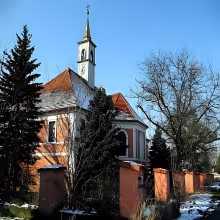
Zámek Dobřejovice stands as a testament to the architectural evolution from medieval fortifications to baroque elegance in Dobřejovice, within the Středočeský kraj region. This single-story baroque structure is surrounded by a park and has been recognized as a cultural monument since 1958. Its historical significance lies not only in its architectural transformation but also in its role through various periods of Czech history.
The origins of Zámek Dobřejovice trace back to the late 13th and early 14th centuries when it was initially constructed as a medieval fortress. Historical records first mention Bohuslav, a citizen of Prague, in connection with the site in 1309. Over time, ownership changed hands several times; notable owners included Kuneš z Dobřejovic between 1360 and 1361, and Bartoloměj along with Štěpán z Klučova around 1380. The fortress faced significant challenges during the Thirty Years' War when it was damaged by retreating armies. In the latter half of the 17th century, the original medieval structure underwent a radical transformation into a four-winged baroque castle. This period marked a shift in architectural style and function, reflecting broader cultural developments under the Habsburg monarchy.
Architecturally, Zámek Dobřejovice showcases elements typical of baroque design, including its single-story layout and surrounding parkland. The transformation from fortress to baroque castle involved significant changes, such as the construction of a chapel dedicated to the Holy Trinity. This chapel features a protruding three-sided presbytery and a bell tower topped with a spire, highlighting the intricate architectural details characteristic of the period.
Ownership of Zámek Dobřejovice continued to evolve over the centuries. In 1760, Jan Mořic Manderscheid purchased the castle and estate for 217,000 gold coins. Following his death in 1763, the property passed to the Prague archbishopric, leading to a period where the entire village was renamed Manderscheid until the late 19th century. During this time, various administrative roles were filled by notable figures such as Moritz Waage and Adolf Merell, contributing to the estate's management.
Throughout its history, Zámek Dobřejovice has witnessed several key events and curiosities. The chapel within the castle is particularly noteworthy for its altar featuring an image of the Holy Trinity from the mid-18th century and a statue of Saint John Nepomucene, originally from a bridge, relocated to the sacristy. These elements underscore the cultural and religious significance embedded in the site's history.
Today, Zámek Dobřejovice serves as more than just a historical monument; it is an educational institution housing a primary school named Parentes since 2011. The castle's interiors include preserved vaulted spaces on the ground floor and flat-ceiling rooms on the upper level. Despite some areas of neglect, such as parts of the park with its tower wall and entrance gate from the former farmstead, the site remains accessible to visitors interested in exploring its rich history.
Zámek Dobřejovice offers a unique glimpse into the architectural and cultural transformations that have shaped this region over centuries. Its preservation as a cultural monument ensures that future generations can appreciate its historical significance. Visitors are invited to explore this remarkable site, where each corner tells a story of resilience, transformation, and enduring legacy.
Historical milestones
- 1309
- First mention of Bohuslav, a citizen of Prague.
- 1760
- Jan Mořic Manderscheid purchased the castle and estate.
Architectural development
Zámek Dobřejovice evolved from a medieval fortress into a baroque structure in the late 17th century. The transformation included the construction of a chapel dedicated to the Holy Trinity with distinctive architectural features such as a protruding three-sided presbytery and a bell tower topped with a spire.
Historical events
The original medieval fortress was significantly damaged during the Thirty Years' War.
In 1760, Jan Mořic Manderscheid purchased the castle and estate for 217,000 gold coins.
Owners
Bohuslav (1309)
Kuneš z Dobřejovic (1360–1361)
Bartoloměj a Štěpán z Klučova (circa 1380)
Jan Mořic Manderscheid (1760-1763, then passed to the Prague archbishopric)
Points of interest
- The transformation of Zámek Dobřejovice from a medieval fortress to a baroque castle in the late 17th century reflects broader cultural shifts under Habsburg rule, emphasizing elegance over fortification.
- During its history, the village associated with Zámek Dobřejovice was renamed Manderscheid for nearly a century following its purchase by Jan Mořic Manderscheid in 1760, illustrating how ownership can influence local identity and place names.
Guide
Show guide text
Welcome to the historic Zámek Dobřejovice, a stunning testament to architectural evolution and cultural heritage nestled in the heart of Dobřejovice. As you stand before this elegant baroque structure, embraced by its serene park setting, take a moment to absorb the tranquil atmosphere that surrounds you.
Zámek Dobřejovice's story begins as a medieval fortress dating back to the late 13th century, originally serving as a bastion for protection and power. Over time, it transformed significantly during the latter half of the 17th century into a baroque castle, reflecting broader cultural shifts under Habsburg rule that favored elegance over fortification.
As you gaze at the single-story building before you, notice how its design harmoniously blends with the surrounding park, creating an inviting and picturesque scene. The absence of towering spires or ornate cupolas does not detract from its charm; instead, it invites you to appreciate the subtle beauty of its baroque style.
Throughout its history, Zámek Dobřejovice has been home to several notable figures who have shaped its legacy. In 1309, Bohuslav, a citizen of Prague, was first mentioned in connection with this place. Later, Kuneš z Dobřejovic and Bartoloměj a Štěpán z Klučova were associated with the castle around 1360–1380. The estate eventually came into the possession of Jan Mořic Manderscheid in 1760, who played a pivotal role in its transformation.
An intriguing aspect of Zámek Dobřejovice's history is how it reflects broader cultural shifts under Habsburg rule, emphasizing elegance over fortification. This transition from a medieval fortress to a baroque castle mirrors the changing priorities and artistic expressions of the era.
As you continue your exploration, take note of how this transformation has left its mark on both the architecture and the village itself, which was renamed Manderscheid in honor of Jan Mořic Manderscheid's influence. This renaming is a testament to his lasting impact on the region.
We invite you to delve deeper into the rich tapestry of stories that Zámek Dobřejovice holds. Wander through its grounds, let your imagination wander back through time, and discover the layers of history that make this place truly unique.
Thank you for joining us on this journey through the past at Zámek Dobřejovice. We hope it has inspired you to explore further and uncover more secrets hidden within its walls. Safe travels as you continue your adventure in Dobřejovice!
Businesses nearby
Do you run a restaurant, accommodation, shop, museum, rental, wellness or other visitor service near this monument? Show yourself directly to the people heading to it — this is how they will see you in the app and on the web:
Events nearby
Event source: Kudy z nudy and open data of the Czech Republic
Nearby
The surrounding area includes remnants of a brewery and brickworks, as well as nearby villages Ovčáry and Štědřík. The castle's park features a tower wall with an entrance gate from the former farmstead.
Accommodation nearby
Trips and activities nearby
Guided tours, tickets and activities nearby from GetYourGuide
Search tours and activities →Themed route
Tematická výletní trasa: Zámek Dobřejovice a jeho okolí
1. Zámek Dobřejovice (Castle) - *Proč stojí za návštěvu:* Tento historický zámek je krásným příkladem architektury, který nabízí návštěvníkům pohled na jeho výjimečné stavby a park. Je to ideální místo pro ty, kteří se zajímají o historii a architekturu českých zámku.
2. Park s věžovou zdí (Castle Park with Tower Wall) - *Proč stojí za návštěvu:* Park je domovem výjimečné věžové zdi a dřívějšího vchodního brány, které přidávají k estetice a historické hodnotě zámku. Je to místo pro relaxaci a prozkoumání krásy českých zahradních návrhů.
3. Ovčáry (Village of Ovčáry) - *Proč stojí za návštěvu:* Toto malé vesničko nabízí klidný a autentický pohled na venkovský život v Středočeském kraji. Je to ideální místo pro ty, kteří chtějí poznat místní kulturu a prostředí.
4. Štědřík (Village of Štědřík) - *Proč stojí za návštěvu:* Další malebné vesničko, které nabízí pohled na tradiční českou architekturu a příležitost prozkoumat místní historii. Je to skvělý způsob, jak se dozvědět více o regionu.
5. Zbytky pivovaru a cihelny (Remnants of Brewery and Brickworks) - *Proč stojí za návštěvu:* Tyto historické zbytky představují důležitou část průmyslové minulosti oblasti. Jsou to zajímavé pro ty, kdo mají zájem o průmyslovou historii a architekturu.
Tato trasa nabízí kombinaci kulturních a historických zážitků v okolí Zámku Dobřejovice.
Seasonal recommendations
Jaro: Návštěva Zámku Dobřejovice v jarním období nabídne návštěvníkům nezapomenutelný zážitek, kdy se zámecké zahrady promění v barvitou paletu kvetoucích květin. Slunečné jarní dny poskytují ideální osvětlení pro fotografie a obdivování architektonických detailů zámku. Příroda je v plném rozkvětu, což přidává k atmosféře místa. Navštěvujícím se doporučuje nosit oblečení vhodné pro slunečné dny a nepopisné chvilky dešťů, které mohou být v této sezóně časté. Úterý a středa jsou obecně mírnějšími dny na návštěvu, pokud se snažíte vyhnout větším davům.
Léto: V letních měsících nabízí Zámek Dobřejovice živou atmosféru, kdy je zahrada plná kvetoucích rostlin a slunečné dny přinášejí ideální podmínky pro dlouhé procházky kolem parku. Horko může být náročné, proto je vhodné navštěvovat zámek brzy ráno nebo později večer, aby se vyhnuli vrcholům letního slunečí a davům. Návštěvníci by měli nosit lehké, světlé oblečení a nepřehlédnout ochranu proti slunci. Tento čas roku je také perfektní pro rodinné výlety, kdy si děti mohou užít prostor zahrady.
Podzim: Podzim přináší Zámku Dobřejovice klidnější atmosféru s jemnějším světlem a barevným spektáklem padajících listů. Tato sezóna je ideální pro romantické procházky, když se zámecké okolí promění v mramorovou paletu odstínů. Návštěvníci by měli být připraveni na chladnější počasí a náhlé dešťové bouře, proto je vhodné nosit vrchní oblečení a ochranu proti vodě. Navštěvujícím se doporučuje vyhnout si víkendům, kdy mohou být davy větší kvůli krátkému počasí.
Zima: V zimních měsících nabízí Zámek Dobřejovice jedinečný pohled pod sněhovým krytem, což přidává magii a klid této historické památce. Otevírací doba může být kratší kvůli zimnímu počasí, takže je důležité se informovat o aktuálním provozu. Návštěvníci by měli nosit teplé oblečení a vhodné obuv, protože cesta kolem parku může být kluzká. Zimní návštěva je ideální pro ty, kdo hledají tichý způsob, jak si užít historické místo bez velkých davů.
Visualizations and artistic views

Vizualizace jsou generovány umělou inteligencí a slouží jako inspirace.


Atmosphere of the place
Atmospheric visualization of the setting and era
Tips from visitors
No tips yet. Be the first!
Log in and add your tip.



Reviews and comments