





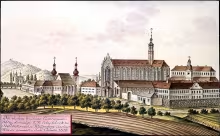
The Church of Saints Philip and James in Sedlec, Kutná Hora, stands as a testament to the region's rich religious history. Originally built in the late 13th century, it served the spiritual needs of lay members associated with the Cistercian order. Although demolished in 1817, fragments of its walls remain integrated into surrounding structures on Zámecké Street, offering insight into its historical significance.
The church first appeared in records in 1267, during a period when Bohemia experienced significant religious and architectural developments. The Cistercian order played a crucial role in monastic life across Europe, influencing both spiritual practices and economic activities. By the late 14th century, Gothic architecture flourished, leading to the church's expansion after 1389 with an additional nave and polygonal closure.
Architecturally, the Church of Saints Philip and James began as a single-nave structure with an undivided closure. In 1389, it underwent significant changes when a second nave was added from the north, along with a polygonal closure. The church featured a western tower and various structural elements such as blind arches, porticoes, and windows that have been preserved in nearby buildings.
The dissolution of the associated Cistercian monastery in 1783 marked a turning point for the church, leading to its eventual demolition in 1817. Despite this, remnants of its architectural heritage remain visible today. Notably, a high silver monstrance created around 1390 by Peter Parléř's workshop is preserved in the Sedlec Monastery Museum, highlighting artistic contributions linked to the church.
Interestingly, stones from the demolished church were reportedly used in constructing a bridge over the Vrchlice River, linking Kutná Hora with Poličany. This reuse of materials underscores the enduring legacy of the church within the local landscape.
Today, while the original structure no longer stands, its historical fragments and associated artifacts continue to draw interest. Visitors can explore these remnants on Zámecké Street and visit the Sedlec Monastery Museum to view the silver monstrance. The Church of Saints Philip and James remains a significant cultural landmark, offering insights into the region's monastic history and architectural evolution.
This site invites visitors to reflect on its historical value and appreciate the enduring legacy it leaves behind in Kutná Hora.
Historical milestones
- 1267
- Church first appeared in records.
- konec 13. století
- Original construction of the church.
- 1389
- Expansion with an additional nave and polygonal closure.
- 1783
- Dissolution of the associated Cistercian monastery.
- 1817
- Demolition of the church.
Architectural development
The Church of Saints Philip and James was originally a single-nave structure with an undivided closure. It underwent significant architectural changes after 1389, including the addition of a second nave from the north and a polygonal closure. The church featured a western tower and had various structural elements such as blind arches, porticoes, and windows that have been preserved in nearby buildings.
Historical events
First mentioned in records in 1267 as serving the needs of lay members associated with the Cistercian order.
Expanded after 1389 to include an additional nave and polygonal closure.
Dissolution of the associated Cistercian monastery in 1783.
Demolition of the church in 1817.
Points of interest
- The Church of Saints Philip and James was originally built to serve the spiritual needs of lay members associated with the Cistercian order, highlighting its unique role beyond monastic confines.
- Despite its demolition in 1817, fragments of the church's walls were integrated into surrounding structures on Zámecké Street, preserving a piece of its history within the urban fabric.
Guide
Show guide text
Welcome to the historical site of Kostel svatého Filipa a Jakuba in Sedlec, Kutná Hora. Before you stands a place steeped in history and architectural significance, where fragments of its past still whisper stories to those who listen closely.
The Church of Saints Philip and James first appeared in records back in 1267, marking the beginning of its journey through time. Initially constructed at the end of the 13th century, it served as a spiritual haven for lay members associated with the Cistercian order. This unique role highlights its significance beyond monastic confines, catering to the spiritual needs of those not within the monastery walls.
As you stand here today, imagine the church in its former glory, an architectural marvel that underwent significant expansion around 1389. An additional nave and a polygonal closure were added, enhancing its structure and capacity. Although the architects remain unknown, their vision contributed to a building that stood as part of a larger complex including a monastery, which was later dissolved in 1783.
The church's walls, though no longer standing since their demolition in 1817, have left an indelible mark on the landscape. Fragments were integrated into surrounding structures, ensuring that its legacy continues to be a tangible part of Kutná Hora's historical tapestry.
As you explore this site, let your imagination wander through time. Visualize the church as it once was—a place of worship and community for those connected to the Cistercian order. While specific architectural details are lost to history, the essence of its purpose remains a fascinating glimpse into the past.
This location is not just about what has been lost; it's also about the stories that have survived. The church's role in serving lay members highlights an intriguing aspect of medieval religious life, where boundaries between monastic and secular communities were navigated with care and consideration.
As we conclude this auditory journey, I invite you to continue exploring Kutná Hora, a city rich with history and heritage. Each corner holds stories waiting to be discovered, much like the fragments of Kostel svatého Filipa a Jakuba that remind us of the enduring legacy of places past. Thank you for joining me on this exploration, and may your curiosity lead you to many more historical treasures.
Businesses nearby
Accommodation nearby
Trips and activities nearby
Guided tours, tickets and activities nearby from GetYourGuide
Search tours and activities →Themed route
Tematická výletní trasa: Kostel svatého Filipa a Jakuba, Kutná Hora
1. Kostel svatého Filipa a Jakuba (Kutná Hora) *Typ:* Religiózní památka *Proč stojí za návštěvu:* Tento barokní kostel je známý pro svou bohatou architekturu a historickou významnost. Je považován za jednu z nejkrásnějších sakrálních budov v České republice, s vynikajícím interiérem a fascinujícími freskami.
2. Kostel svatého Václava (Kutná Hora) *Typ:* Religiózní památka *Proč stojí za návštěvu:* Tento gotický kostel je dalším důležitým historickým monumentem v Kutné Hoře. Je známý svou architektonickou krásou a pohledem na město z jeho vysokého umístění, což nabízí jedinečný pohled na oblast.
3. Kutnohorská radnice *Typ:* Historická budova *Proč stojí za návštěvu:* Kutnohorská radnice je klíčovou historickou památkou, která představuje bohaté obchodní a politické dějiny města. Je známá svým gotickým vzhledem a architektonickými detaily, což ji činí fascinujícím místem pro návštěvu.
4. Kutnohorské muzeum *Typ:* Muzejní expozice *Proč stojí za návštěvu:* Toto muzeum nabízí hluboký vhled do historie a kultury Kutné Hory. Je známé svou vynikající sbírkou uměleckých děl, mincí a historických artefaktů, které představují bohatou minulost města.
5. Kutnohorský hrad *Typ:* Historická pevnost *Proč stojí za návštěvu:* Kutnohorský hrad je jedním z nejstarších a nejlépe zachovaných hradeb v České republice. Nabízí pohled na historickou architekturu a přírodní krásy okolního kraje, což ho činí ideálním místem pro návštěvu po prozkoumání kostela svatého Filipa a Jakuba.
Tato trasa nabízí pohled na bohatou historii a kulturu Kutné Hory prostřednictvím jejích klíčových památek, každá s vlastním jedinečným příběhem a architektonickou krásou.
Seasonal recommendations
Jaro: In the springtime, as Kutná Hora awakens from its winter slumber, the area around the Church of Saints Philip and James is filled with the quiet life of blooming flowers. The first rays of sunlight illuminate historical fragments and create delicate shadows that lend a romantic touch to the atmosphere. This is the perfect time for admiring the renewing nature with its diverse floral tapestries and sweet bird songs. Visitors should dress in light layers, as temperatures can change quickly. Days are usually calmer than during summer, so it's ideal to arrive early in the morning to explore the site without unnecessary crowds.
Léto: Summer in Kutná Hora offers long days of sunshine and warm nights, making this an ideal time for exploring historical sites. The atmosphere is enlivened by summer events and activities in the area, even though the church itself no longer stands as a structure. Visitors should be prepared for hot weather with scarves or hats and sun protection. Days during peak summer season are often crowded, so it's best to visit early in the morning or late in the evening when local shops and restaurants begin to slow down to a more relaxed pace. Bring water along and enjoy a peaceful moment in the historic setting.
Podzim: Autumn brings Kutná Hora stunning foliage that provides an idyllic backdrop for the Church of Saints Philip and James. Sunlight transforms into softer, warmer light that glows on historical structures, adding a melancholic touch to the atmosphere. This is also a time when various cultural events and markets take place, enriching the experience of visiting. Visitors should be prepared for cooler weather and rapid temperature changes, so layered clothing is advisable. Due to attractive autumn events, the area can become crowded as people seek relaxation and cultural entertainment.
Zima: Winter Kutná Hora offers a tranquil atmosphere with cold nights and crisp, clear air. Sunlight reflects off snow-covered grounds, creating a local magical ambiance that further highlights the historical character of the region. Although the church no longer stands, its ruins are often illuminated at night, offering a unique way to explore their beauty in the dark. Visitors should dress warmly with cozy sweaters, scarves, and protection against moisture. Winter days are typically shorter, and sites may have limited opening hours, so it's best to visit early in the morning or late in the evening when the atmosphere is calm and quiet.
Visualizations and artistic views

Vizualizace jsou generovány umělou inteligencí a slouží jako inspirace.


Tips from visitors
No tips yet. Be the first!
Log in and add your tip.




Reviews and comments