





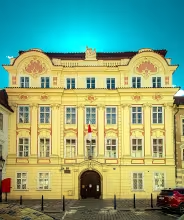
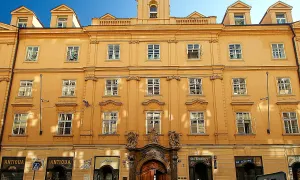
Palác Turbů, also known as Turbovský palác or Dům U Černého gryfa, is a Rococo palace located in Prague's Malá Strana district on Maltézské náměstí 477/6. Originally a Renaissance house, it was transformed into its current Rococo style after a fire in 1765. The redesign, completed between 1767 and 1768 by architect Josef Jäger for František Xaver Turba, is renowned for its elegant façade featuring pilasters with Ionic capitals and preserved Rococo interior decorations, particularly in the first-floor salon. Since becoming the residence of the Japanese Embassy in 1957, it has been a significant cultural landmark.
The original Renaissance house was destroyed by fire in 1765, leading to its reconstruction into the Rococo style under Josef Jäger's design for František Xaver Turba. This transformation occurred during the mid-18th century, an era marked by the Enlightenment across Europe, which significantly influenced art and architecture. In Bohemia, this period saw cultural development under Habsburg rule, with Prague emerging as a center of artistic innovation.
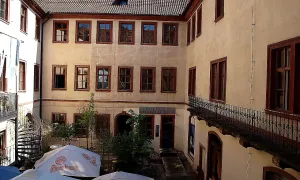
Architecturally, Palác Turbů is distinguished by its two-story structure with a low attic, surrounded on two sides by lower wings enclosing a smaller courtyard. The seven-bay façade features a pilaster order with Ionic capitals in the upper stories and a string course separating the first-floor windows from those above. Despite modern adaptations around 1932 for embassy use, the palace retains much of its original Rococo charm, particularly evident in the preserved stucco decorations of the salon on the first floor.
Ownership of the palace transitioned significantly over time. Initially owned by František Xaver Turba following its transformation into a Rococo palace, it later served as the residence for the Mexican Embassy from 1924. In 1957, it became the official residence of the Japanese Embassy in Prague, reflecting its continued importance and adaptability through changing political landscapes.
Key events in the history of Palác Turbů include its reconstruction after the fire in 1765, marking a significant architectural shift to Rococo style. The building's role as an embassy began in 1924 when it became the residence for the Mexican Embassy, followed by its current function as the Japanese Embassy since 1957. These transitions highlight the palace's enduring significance and adaptability.
Today, Palác Turbů stands as a protected cultural monument, maintaining much of its original street façade despite modern adaptations. Its location in Malá Strana places it near other historical sites, offering visitors a rich cultural atmosphere within this historic district. The palace is not only an architectural gem but also a testament to Prague's dynamic history and international relations.
Palác Turbů invites visitors to explore its elegant Rococo architecture and appreciate its role as a cultural bridge between nations. Its preservation as a cultural monument ensures that future generations can continue to enjoy and learn from this remarkable piece of Prague's heritage.
Historical milestones
- 1767
- Reconstruction into Rococo style completed.
- 1924
- Became residence of the Mexican Embassy.
- 1957
- Became residence of the Japanese Embassy.
Architectural development
The palace underwent significant architectural changes after a fire in 1765, transitioning from its original Renaissance style to Rococo under Josef Jäger's design. The façade features pilasters with Ionic capitals and a distinctive three-story structure with an attic separated by a cornice. Interior adaptations were made around 1932 for embassy use, but the palace retains much of its original Rococo charm.
Historical events
1765: The original Renaissance house was destroyed in a fire, leading to its reconstruction in the Rococo style.
1924: The building began serving as the residence of the Mexican Embassy.
1957: It became the official residence of the Japanese Embassy.
Owners
Originally owned by František Xaver Turba after its transformation into a Rococo palace; later served as the Mexican embassy from 1924, and currently houses the Japanese Embassy.
Points of interest
- The palace's transformation into the Rococo style was completed in just one year, from 1767 to 1768, which is remarkably quick for such an elaborate architectural redesign during that era.
- Despite its adaptation around 1932 for embassy use, Palác Turbů has retained much of its original Rococo charm, particularly evident in the preserved stucco decorations of the first-floor salon, showcasing a rare preservation of interior design from the mid-18th century.
Guide
Show guide text
Welcome to the historical gem of Prague's Malá Strana district—Palác Turbů, or as it is also known, Turbovský palác and Dům U Černého gryfa. As you stand here, imagine yourself stepping back in time to witness a remarkable transformation that took place centuries ago.
Let’s begin with the origins of this elegant structure. Originally a Renaissance house, Palác Turbů underwent a dramatic metamorphosis after a devastating fire in 1765. It was architect Josef Jäger who masterfully redesigned it into its current Rococo splendor between 1767 and 1768 for František Xaver Turba. This transformation is particularly impressive considering the speed at which it occurred—just one year, an astonishing feat for such elaborate architectural work of that era.
As you gaze upon the palatial façade, take a moment to admire its elegant features. The pilasters and refined details are quintessential Rococo elements that capture your attention with their grace and charm. This style was characterized by ornate decorations and intricate designs, which Jäger executed flawlessly, making this palace an enduring symbol of beauty in Prague.
Now, let’s delve into the stories and personalities tied to this place. František Xaver Turba, for whom the palace was redesigned, played a pivotal role in its history. Over time, Palác Turbů has served as more than just a residence; it became an important diplomatic site. In 1924, it transformed into the residence of the Mexican Embassy and later, in 1957, it took on another international role as the residence for the Japanese Embassy.
One fascinating aspect of this palace is its ability to adapt while retaining much of its original Rococo charm. Despite being modified around 1932 for embassy use, Palác Turbů has preserved its historical essence, a testament to both its architectural resilience and cultural significance.
As we conclude our brief exploration, I invite you to continue discovering the layers of history surrounding this enchanting palace. Each corner holds stories waiting to be uncovered, inviting you to immerse yourself in the rich tapestry of Prague's past. Thank you for joining me on this journey through time at Palác Turbů. Enjoy your visit and may it inspire a deeper appreciation for the city’s historical treasures.
Tips for visitors
The best time to visit Palác Turbů is during the late spring or early fall when the weather is pleasant, allowing you to comfortably explore both the palace and its surroundings. These seasons offer a balance of good lighting for photography and manageable crowd levels, enhancing your experience in this historic district. Additionally, visiting on weekdays can provide a more tranquil atmosphere compared to weekends.
Transportation options are convenient as Palác Turbů is accessible by public transport with several tram lines passing nearby. For those driving, there are parking facilities within the Malá Strana area, though it's advisable to check for availability and restrictions in advance due to its central location. Walking around the neighborhood is also a delightful option given the compact nature of the district.
When planning your visit, consider bringing comfortable walking shoes as you'll likely explore more than just Palác Turbů. A camera or smartphone with a good camera will be essential for capturing the intricate Rococo details and charming streetscapes. Additionally, carrying a water bottle and some snacks can enhance your comfort during the exploration.
For photography enthusiasts, early morning light is ideal for capturing the palace's façade without harsh shadows, while late afternoon offers warm lighting that accentuates its architectural features. The courtyard provides an excellent vantage point for interior shots, assuming access is permitted. Nearby Maltézské náměstí also serves as a picturesque backdrop.
In terms of nearby attractions within 30 minutes walking distance, consider visiting the Church of St. Nicholas and the Wallenstein Garden, both offering unique historical insights and beautiful views. For families with children, Malá Strana's winding streets are perfect for leisurely strolls, and the area is filled with small shops and cafes where you can take a break.
Businesses nearby
Nearby
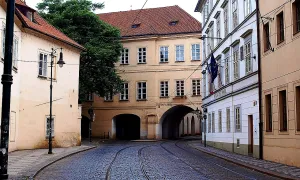
Located in Malá Strana, Palác Turbů is near Maltézské náměstí and surrounded by other historical sites and charming streets typical of this historic district. The area offers a rich cultural atmosphere with numerous monuments and natural features within close proximity.
Accommodation nearby
Trips and activities nearby
Guided tours, tickets and activities nearby from GetYourGuide
Search tours and activities →Themed route
Tematická výletní trasa: Historické srdce Malé Strany
1. Palác Turbů *Typ:* Palác *Proč stojí za návštěvu:* Palác Turbů je krásným příkladem barokní architektury v Praze, nacházejícím se uprostřed historického jádra Malé Strany. Jeho elegantní design a bohatá historie nabízí návštěvníkům pohled na život šlechtických rodin v 17. století.
2. Maltézské náměstí *Typ:* Náměstí *Proč stojí za návštěvu:* Toto místo je centrem Malé Strany, kde se setkávají historie a modernost. Maltézské náměstí je známé svým původním barokním charakterem a krásnou fontánou s andělem, který symbolizuje mír.
3. Kostel Panny Marie Sněžné *Typ:* Kostel *Proč stojí za návštěvu:* Tento kostel je jedním z nejstarších a nejkrásnějších gotických sakrálních památek v Praze. Jeho bohaté interiér, zejména krásné sochy a fresky, přitahují návštěvníky z celého světa.
4. Kostel svatého Mikuláše *Typ:* Kostel *Proč stojí za návštěvu:* Nacházející se na jednom ze strmých vrcholů Malé Strany, tento kostel nabízí nejen bohatou historii a architektonický zázrak, ale také vynikající pohledy na Prahu. Jeho gotická fasáda a interiér jsou skutečným důvodem pro návštěvu.
5. Kostel svatého Františka z Pauly *Typ:* Kostel *Proč stojí za návštěvu:* Tento barokní kostel je známý svou elegantní architekturou a bohatou historií. Jeho interiér, včetně soch a fresk, představuje důležité umělecké dílo z doby baroka.
Tato trasa nabízí návštěvníkům pohled na bohatou historii a architekturu Malé Strany, s Palácem Turbů jako centrálním bodem.
Seasonal recommendations
Spring: Visiting the Palác Thun during spring offers a unique experience as nature begins to awaken around the historic site. The soft, dappled light filtering through budding trees creates an enchanting atmosphere that enhances the palatial architecture's elegance. Spring is characterized by milder temperatures and longer daylight hours, making it an ideal time for leisurely exploration without the summer crowds. Visitors should dress in layers to accommodate fluctuating weather conditions and consider arriving early in the day to enjoy a quieter experience before larger groups gather.
Summer: The Palác Thun shines brightly under the clear summer skies, with vibrant greenery surrounding the palace adding a lush backdrop to its stately presence. This is the peak tourist season, so visitors can expect larger crowds, especially during midday hours. It's advisable to arrive early in the morning or later in the afternoon to avoid the heat and the throngs of tourists. Comfortable walking shoes and light clothing are recommended, along with staying hydrated throughout your visit.
Autumn: Autumn brings a stunning transformation to the Palác Thun as the surrounding foliage turns into a palette of warm colors. The cooler temperatures make for a pleasant stroll through the area, while the soft autumnal light casts a golden hue over the palace's facade. This season is less crowded than summer, allowing visitors to appreciate the site in relative tranquility. Layered clothing is recommended to adjust to the varying temperatures throughout the day.
Winter: The Palác Thun takes on a magical quality during winter, with its historic architecture set against a backdrop of snow-covered landscapes and festive lights. Although colder weather may limit some outdoor activities, it creates an atmospheric setting perfect for photography and enjoying the serene beauty of Prague in the off-season. Visitors should dress warmly in coats, hats, gloves, and scarves to stay comfortable during their visit. It's also wise to check opening hours as they can be shorter in winter months.
Visualizations and artistic views

Vizualizace jsou generovány umělou inteligencí a slouží jako inspirace.


Tips from visitors
No tips yet. Be the first!
Log in and add your tip.
Location on the map

Příběhy a pověsti
Legendy, pověsti a příběhy spjaté s touto památkou
Reviews and comments