






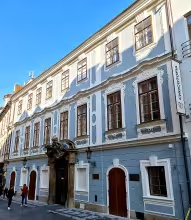
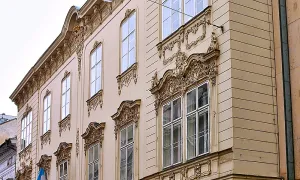
Millesimovský Palace is a notable example of Baroque architecture on Celetná Street in Prague 1. This cultural monument has been protected since 1964 for its historical and architectural importance. The palace features ornate Rococo stucco decoration on the first floor and a monumental stone portal with the Carretto family crest. Its history reflects a transformation from a noble residence to an educational institution, marking it as culturally significant.
The origins of Millesimovský Palace date back to two or three Romanesque structures that evolved into a single Gothic building. This was later modified during the Renaissance period. By the early 18th century, under Count Kryštof Cavriani's ownership, the palace underwent major Baroque renovations. The transformation concluded around 1756 when Jan Josef Caretto-Millesimo completed construction and added his family crest above the entrance.
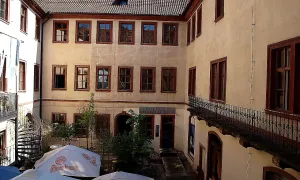
Architecturally, Millesimovský Palace showcases a blend of styles over centuries. It includes Rococo stucco work, late-Gothic arches, and preserved vaulted rooms from Gothic, Renaissance, and Baroque periods. The main façade facing Celetná features an eight-window design with a monumental stone portal, while the simpler rear façade in Štupartské has seven window axes.
Throughout its history, Millesimovský Palace has had various owners influencing its fortunes. Initially owned by the Černín family, it later passed to the Hrzánové z Harrasova and then to the Vratislavů z Mitrovic in the 17th century. The Baroque transformation began with Count Kryštof Cavriani and was completed by Jan Josef Caretto-Millesimo. In the mid-19th century, it housed a noble casino and luxury restaurant, reflecting its prestigious status.
The late 20th century marked another significant chapter when it served as an educational institution for the Institute of Marxism-Leninism. Since 1990, the University of Charles has used the space, continuing its legacy as a center of learning and culture. The building retains historical features such as vaulted rooms, Baroque doors, stucco ceilings, and a memorial plaque commemorating its significance.
Today, Millesimovský Palace remains accessible to visitors interested in Prague's architectural heritage. Its blend of styles and preserved elements make it an intriguing destination for history and architecture enthusiasts. The palace stands as a testament to the cultural evolution of Prague, inviting exploration and appreciation from all who visit.
Historical milestones
- c. 1100
- The creation of the first two or three Romanesque structures.
- 14th to 16th century
- Transformation into a single Gothic building.
- 17th century
- Ownership by the Černín, Hrzánové z Harrasova, and Vratislavů z Mitrovic families.
- 1756
- Completion of Baroque reconstructions by Jan Josef Caretto-Millesime.
- 1964
- The palace is preserved as a cultural monument.
Architectural development
The palace was built on the site of two or three Romanesque houses, evolving into a single Gothic structure later modified in the Renaissance. The Baroque transformation around 1756 was completed by Jan Josef Caretto-Millesimo, who added his family crest above the entrance. The building features a mix of architectural styles with its Rococo stucco work and preserved elements like late-Gothic arches.
Historical events
In the early 18th century, the palace underwent Baroque renovations under the ownership of Count Kryštof Cavriani.
By the mid-19th century, it housed a noble casino and luxury restaurant.
In the late 20th century, it served as an educational institution for the Institute of Marxism-Leninism.
Owners
Černínové
Hrzánové z Harrasova
Vratislavů z Mitrovic
hrabě Kryštof Cavriani (17th century)
Jan Josef Caretto-Millesimo
Points of interest
- The Millesimovský Palace has a fascinating transformation history from Romanesque and Gothic structures to its current Baroque form, showcasing the evolution of architectural styles over centuries in Prague.
- An intriguing aspect of the palace is its Rococo stucco decoration on the first floor, which contrasts with the preserved late-Gothic arches and vaulted rooms, highlighting a blend of artistic influences within a single building.
Guide
Show guide text
Welcome to the historic Millesimovský Palác, a stunning example of Baroque architecture nestled in the heart of Prague 1 on Celetná Street. As you stand here, take a moment to soak in the grandeur before you: an elegant façade that whispers tales from centuries past.
The story of this palatial structure begins around the year 1100 with the emergence of two or three Romanesque buildings. Over time, these structures transformed into a singular Gothic edifice during the 14th to 16th centuries. The palace as you see it today is largely thanks to its Baroque renaissance in 1756 under the guidance of Jan Josef Caretto-Millesimo. This transformation was not just an architectural endeavor but a reflection of Prague's evolving cultural landscape.
As your eyes wander across the façade, notice the ornate Rococo stucco decoration that adorns the first floor—a testament to the intricate craftsmanship of its era. The monumental stone portal with the Carretto family crest is also worth appreciating; it stands as a silent guardian of history and heritage.
Throughout its existence, this palace has been home to notable families like the Černín, Hrzánové z Harrasova, and Vratislavů z Mitrovic in the 17th century. The architectural vision was brought to life by Anselmo Martin Lurago and František Ignác Prée, whose contributions have left an indelible mark on this historic site.
An intriguing aspect of Millesimovský Palác is its fascinating transformation from Romanesque and Gothic structures into the Baroque masterpiece you see today. This evolution showcases the dynamic architectural styles that have shaped Prague over the centuries.
As we conclude our brief journey through time, I invite you to continue exploring this remarkable site. Each corner holds a story waiting to be discovered. Thank you for joining me in appreciating the rich history of Millesimovský Palác. Enjoy your exploration!
Tips for visitors
The best time to visit Millesimovský Palác is during the late spring or early autumn months, when the weather is mild and pleasant for exploring the architectural details of this Baroque masterpiece. Visiting during these times also allows you to enjoy outdoor cafes in nearby areas without the summer crowds or winter chill. Additionally, visiting on a weekday can provide a more serene experience as weekends tend to attract larger tourist groups.
Parking near Millesimovský Palác can be challenging due to its central location in Prague 1. Public transportation is highly recommended; you can easily access the area via trams and buses that run through Celetná Street. If driving, consider using parking facilities a bit further away from the center and walking or taking public transport for the last leg of your journey. Always check current routes and schedules online before your visit to ensure smooth travel.
When visiting Millesimovský Palác, it's advisable to bring comfortable walking shoes as you'll likely explore more than just the palace grounds. A small backpack with water, snacks, a map or guidebook of Prague, and perhaps a camera for capturing the stunning architecture is also recommended. Since weather can be unpredictable, carrying an umbrella or light raincoat might be wise.
For photography enthusiasts, the best spots to capture Millesimovský Palác are from Celetná Street, where you can get a full frontal view of its grand Baroque facade. Early morning or late afternoon is ideal for lighting, as the soft sunlight enhances the intricate details and provides beautiful shadows. Additionally, consider capturing images from across the street to include more of the surrounding historical context in your shots.
Nearby attractions within a 30-minute walk include Prague Castle, which offers stunning views and rich history, and the Old Town Square with its iconic Astronomical Clock. Both are perfect for extending your visit beyond Millesimovský Palác. For families with children, consider visiting the nearby National Museum or exploring the charming streets of Malá Strana, where you can enjoy a leisurely stroll and discover quaint shops and cafes.
Businesses nearby
Accommodation nearby
Trips and activities nearby
Guided tours, tickets and activities nearby from GetYourGuide
Search tours and activities →Themed route
Tematická výletní trasa: Millesimovský palác a jeho okolí
1. Millesimovský palác (Palác) *Proč stojí za návštěvu:* Jeden z nejcharakterističtějších příkladů secesní architektury v Praze, Millesimovský palác je dílem architekta Karla Kořínka. Jeho bohaté dekorativní prvky a historická hodnota činí z něj nezbytnou zastávku pro milovníky architektury a historie.
2. Náměstí Republiky *Proč stojí za návštěvu:* Toto centrální náměstí je známé svým symetrickým designem, který vytvořil architekt Josef Fanta. Je to klíčové místo pro pochopení urbanistického plánování Prahy a slouží jako spojnice mezi různými historickými památkami.
3. Kostel svatého Václava *Proč stojí za návštěvu:* Nacházející se na Náměstí Republiky, tento barokní kostel je nejen důležitým náboženským centrem, ale také poskytuje vynikající pohled na okolní architekturu a historii Prahy.
4. Národní divadlo *Proč stojí za návštěvu:* Tento monumentální sochařský komplex je dílem architekta Jospeha Zítky a představuje vrchol českého historického romantismu. Jeho bohatá dekorace a významná role ve kulturním životě Prahy ho činí nezbytnou zastávkou.
5. Kostel svatého Mikuláše *Proč stojí za návštěvu:* Tento gotický kostel je jedním z nejstarších a nejznámějších v Praze, známý svou historií a architektonickými detaily. Jeho poloha na Náměstí Republiky ho činí snadno přístupným z Millesimovského paláce.
Tato trasa nabízí pohled na klíčové architektonické a historické památky v Praze 1, které jsou propojeny s Millesimovským palácem.
Seasonal recommendations
Spring: Visiting Millesimovský Palace during spring offers a unique experience as the city of Prague awakens with vibrant colors and blooming flowers, creating an enchanting atmosphere around the historic site. The soft natural light enhances the architectural details of the palace, making it ideal for photography enthusiasts. Spring is generally less crowded than summer months, allowing visitors to explore at their own pace. It's advisable to wear layers as temperatures can vary; mornings might be cool while afternoons warm up. Early spring visits are recommended to avoid potential rain showers typical of this season.
Summer: Summer in Prague brings long daylight hours and warm weather, perfect for exploring Millesimovský Palace with its lush surroundings. The palace gardens come alive with vibrant flowers and greenery, providing a picturesque backdrop. This is the peak tourist season, so expect larger crowds, especially during weekends and holidays. Arriving early in the morning can help avoid the busiest times. Comfortable walking shoes and light clothing are recommended due to the warmer temperatures, along with sunscreen and a hat for sun protection.
Autumn: Autumn at Millesimovský Palace offers a magical experience as Prague is adorned with fiery reds, oranges, and yellows of falling leaves. The cooler weather makes it pleasant to stroll through the palace gardens, which are transformed into a colorful tapestry. This season sees fewer tourists compared to summer, providing a more serene visit. It's advisable to wear layers, as temperatures can fluctuate between warm days and chilly evenings. Carrying an umbrella is also wise due to occasional autumn rains.
Winter: Winter transforms Millesimovský Palace into a picturesque scene with snow-covered surroundings, creating a fairy-tale-like atmosphere that captivates visitors. The shorter daylight hours mean the palace is best visited in the morning when it's less crowded and well-lit by natural light. Prague during winter can be quite cold, so dressing warmly in layers, including hats, gloves, and scarves, is essential. Keep in mind that some outdoor areas may have limited access due to snow or ice, but the palace itself remains open for visitors seeking a unique winter experience.
Visualizations and artistic views

Vizualizace jsou generovány umělou inteligencí a slouží jako inspirace.


Tips from visitors
No tips yet. Be the first!
Log in and add your tip.

Reviews and comments