






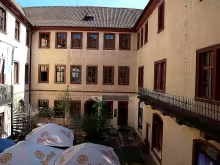
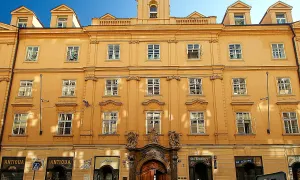
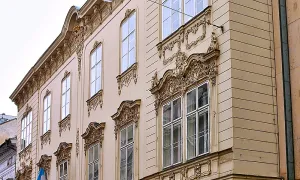
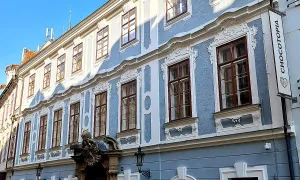
Menhartovský Palác, also known as the House of Šrámkův or U koz, is a distinguished Baroque palace located in Prague's Old Town at the intersection of Celetná and Štupartská streets. Built around 1700 on land that previously housed several older buildings, this architectural gem has served various purposes over the centuries, including as a brewery and later housing the Piarist order. Today, it is home to Divadlo v Celetné and the Institute of Arts – Theatre Institute. Its historical significance and architectural evolution make it a notable landmark in Prague.
The origins of Menhartovský Palác trace back to around 1700 when it was constructed on land that previously accommodated several older structures. Historical records indicate that one of these earlier buildings, known as "U koz," existed since at least the early 15th century, with documented mentions in 1402 and 1413. Following the Hussite Wars, this property underwent expansion to its current size. Notably, it was once owned by prominent figures such as Kryštof Harant z Polžic a Bezdružic and Adam z Valdštejna. By the early 17th century, part of the palace near Štupartská street had been extended to serve as a brewery.
Architecturally, Menhartovský Palác is characterized by its Baroque style, established during its initial construction in the early 18th century. The building underwent significant transformations under Vít Václav Kaňka and his son František Maxmilián Kaňka, who were responsible for its early Baroque redesign. In the late 18th century, the palace was adapted into a manufactory for silk fabrics and tailored in an early Classical style, likely by architect František Heger. The façade facing Štupartská street is composed of two distinct sections that emerged during the 18th century due to temporary division.
Throughout its history, Menhartovský Palác has seen a series of notable owners and administrators. After its initial construction, Jan Kristian Stubig became an owner post-1700, followed by Jan Bedřich Manhart. In the mid-18th century, František Mikuláš Hartmann z Klarsteinu took ownership, during which time artist Jan Petr Molitor resided there and created frescoes that no longer exist today. A significant change occurred in 1752 when the Piarist order purchased the palace for their college, with historian Gelasius Dobner serving as its head. This period also saw the preservation of a statue of Saint John Nepomuk on the façade.
Menhartovský Palác is home to several intriguing features and historical curiosities. Inside, visitors can find a wooden sculpture of Hercules with a lion by Jan Jiří Bendl, dating from around 1675–1680. Additionally, in the courtyard stands a replica of Lehkomyslnost from Matyáš Bernard Braun's Virtues series. These artistic elements add to the palace's rich historical tapestry.
Today, Menhartovský Palác is not only an architectural landmark but also a vibrant cultural hub. It houses Divadlo v Celetné and the Institute of Arts – Theatre Institute, making it accessible for those interested in performing arts and history. Its location in Prague's Old Town places it near other historic sites such as the Church of Our Lady before Týn and the Astronomical Clock on the Old Town Hall. The palace's blend of historical significance, architectural beauty, and cultural relevance makes it a must-visit destination for anyone exploring Prague.
Menhartovský Palác stands as a testament to the rich history and artistic evolution of Prague. Its journey from a site of older buildings to a Baroque masterpiece reflects the dynamic changes in ownership and purpose over centuries. Visitors are invited to explore this remarkable palace, where history and culture converge, offering a unique glimpse into the past while enjoying contemporary cultural offerings.
Historical milestones
- 1752
- The Piarists purchased the palace for their college.
Architectural development
The Menhartovský Palác underwent significant architectural transformations during its history. Initially built in the early 18th century with a Baroque style, it was later modified by Vít Václav Kaňka and his son František Maxmilián Kaňka. In the late 18th century, the palace was adapted into a manufactory for silk fabrics and tailored in an early Classical style.
Historical events
Around 1700, the palace was constructed on the site of older buildings.
In 1752, the Piarists purchased the palace for their college.
Owners
Jan Kristian Stubig (post-1700)
Jan Bedřich Manhart
František Mikuláš Hartmann z Klarsteinu
Řád zbožných škol (piaristé) from 1752
Points of interest
- The Menhartovský Palác has a rich history of ownership by notable figures such as Kryštof Harant z Polžic a Bezdružic and Adam z Valdštejna, linking it to prominent personalities in Czech history.
- In the mid-18th century, artist Jan Petr Molitor resided at Menhartovský Palác and created frescoes that have since disappeared, adding an air of mystery to its artistic legacy.
Guide
Show guide text
Welcome to the historic Menhartovský Palác, an exquisite Baroque gem nestled in Prague's Old Town at the intersection of Celetná and Štupartská streets. As you stand here, take a moment to appreciate its grandeur—a testament to centuries of history that have unfolded within these walls.
The palace was constructed around 1700 on a site that previously housed several older buildings. Its rich tapestry begins with notable figures such as Kryštof Harant z Polžic a Bezdružic and Adam z Valdštejna, whose ownership links the palác to prominent personalities in Czech history.
Architecturally, Menhartovský Palác is a masterpiece crafted by Vít Václav Kaňka and František Maxmilián Kaňka. As you gaze upon its façade, notice the intricate details that speak of Baroque elegance—each element meticulously designed to captivate and inspire.
The palace's history is filled with fascinating stories. In 1752, it became a significant site when the Piarists purchased it for their college. This period marked an era where education and artistry intertwined within its walls. Notably, in the mid-18th century, artist Jan Petr Molitor resided here, leaving behind his creative legacy through frescoes that still echo the artistic spirit of the time.
One intriguing aspect of Menhartovský Palác is its transformation over centuries—from a brewery to a home for the Piarist order. Each phase contributed layers to its storied existence, inviting you to ponder the lives and stories it has witnessed.
As we conclude this auditory journey, I invite you to explore further, perhaps wandering along Celetná Street or delving deeper into the tales that Prague's Old Town has to offer. Thank you for joining me in discovering the timeless allure of Menhartovský Palác. Enjoy your exploration!
Tips for visitors
The best time to visit Menhartovský Palác is during the late spring or early fall when the weather is pleasant, and the crowds are thinner compared to the summer months. This timing allows for a more relaxed exploration of the palace's intricate Baroque architecture and its surroundings in Prague’s Old Town. Additionally, visiting outside peak tourist seasons can enhance your experience by providing better opportunities for photography with softer natural light.
Transportation to Menhartovský Palác is convenient via public transport or on foot. The palace is centrally located within the historic core of Prague's Old Town, making it easily accessible from various parts of the city using trams and buses. For those driving, there are parking facilities nearby, though they can be limited due to the area’s popularity. It's advisable to check current public transport routes or use a navigation app for real-time updates.
When visiting Menhartovský Palác, it is recommended to bring comfortable walking shoes as you’ll likely explore on foot. A camera is also suggested to capture the palace's architectural details and vibrant surroundings. Since the area can be busy, especially during peak tourist seasons, consider bringing a light snack or water if planning an extended visit.
For photography enthusiasts, the best spots around Menhartovský Palác include its front façade, which showcases stunning Baroque elements. Early morning or late afternoon is ideal for capturing soft lighting that accentuates the palace’s details. Additionally, photographing from across the street can provide a unique perspective of the building against Prague's historic backdrop.
Nearby attractions within a 30-minute walk include the Church of Our Lady before Týn and the Astronomical Clock on the Old Town Hall. These sites offer rich historical insights and are perfect for extending your visit in the area. For families with children, these locations provide engaging stories about Prague's history, making them educational as well as entertaining.
Businesses nearby
Nearby
The Menhartovský Palác is situated in Prague's Old Town, surrounded by historic streets and landmarks. Nearby are notable sites such as the Church of Our Lady before Týn and the Astronomical Clock on the Old Town Hall.
Accommodation nearby
Trips and activities nearby
Guided tours, tickets and activities nearby from GetYourGuide
Search tours and activities →Themed route
Tematická výletní trasa: Historické středověké Praha
1. Menhartovský palác - Typ: Palác - Proč stojí za návštěvu: Menhartovský palác, nacházející se v srdci Starého Města, je příkladem historické architektury a bohaté minulosti Prahy. Původně postaven pro pražského arcibiskupa Jana Očku z Vlašimi, tento palác svědčí o významu církevních i politických sil ve středověkém období. Jeho elegantní gotický design a historie ho činí nezbytnou zastávkou pro každého, kdo se zajímá o dějiny Prahy.
2. Kostel Panny Marie před Týnem - Typ: Kostel - Proč stojí za návštěvu: Nacházející se pouhých pár minut chůze od Menhartovského paláce, kostel Panna Marie před Týnem je jedním z nejvýznamnějších gotických chrámů v Praze. Jeho impozantní věže a bohaté historie ho činí klíčovou památkou, která nabízí pohled na středověký život ve Starém Městě. Kostel je známý svými sochami a architekturou, což jej činí nezbytným pro každého historického cestovatele.
3. Staroměstská radnice s Astronomickým hodinářem - Typ: Historická budova - Proč stojí za návštěvu: Staroměstská radnice, nacházející se na Královském náměstí, je domovem slavného Astronomického hodináře. Tato ikonická památka přitahuje pozornost svým komplikovaným mechanizmem a historií, která sahá do 15. století. Je to nejen technologický úspěch, ale také umělecký skvost, který nabízí fascinující pohled na časování a středověkou astronomii.
Tato trasa vás provede krátkým prozkoumáním historických památek Starého Města Prahy, každá z nich nabízí jedinečný pohled na bohatou minulost a architektonický majestát této oblasti.
Seasonal recommendations
Spring: Visiting Menhartovský Palace during spring offers a unique experience as the city of Prague awakens with vibrant colors and blooming flowers. The natural light is softer, casting a gentle glow that highlights the architectural details of the palace. Spring's mild weather makes it an ideal time to explore outdoor spaces without the summer crowds. Visitors are encouraged to wear layers, as temperatures can vary throughout the day. Early mornings or late afternoons provide the best conditions for photography and sightseeing, avoiding midday when shadows may obscure some features.
Summer: Summer at Menhartovský Palace is characterized by long daylight hours and a lively atmosphere. The palace grounds are lush with greenery, making it perfect for leisurely walks. However, this season also attracts larger crowds, particularly during the peak tourist months of July and August. To make the most of your visit, arrive early in the morning to enjoy the site with fewer people and cooler temperatures. Light clothing is recommended due to the warm weather, and don't forget sunscreen if you plan to spend time outdoors.
Autumn: Autumn brings a magical transformation to Menhartovský Palace, as the surrounding foliage turns into shades of gold, red, and orange. The cooler temperatures create a cozy atmosphere, ideal for enjoying hot drinks while exploring the palace's historical interiors. This is also one of the less crowded times to visit, allowing for a more intimate experience with fewer tourists around. Layered clothing is advisable to adapt to fluctuating temperatures throughout the day, and carrying an umbrella might be wise due to occasional autumn rains.
Winter: The winter months at Menhartovský Palace offer a serene and enchanting setting, often blanketed in snow, which adds a picturesque quality to the historic architecture. Although some outdoor areas may be less accessible due to weather conditions, the palace's interiors remain open for visitors seeking warmth and shelter from the cold. Winter attire is essential, with heavy coats, hats, gloves, and boots recommended to stay comfortable during your visit. The shorter daylight hours mean planning ahead is crucial; arriving early ensures you have ample time to explore before closing.
Visualizations and artistic views

Vizualizace jsou generovány umělou inteligencí a slouží jako inspirace.


Tips from visitors
No tips yet. Be the first!
Log in and add your tip.

Reviews and comments