






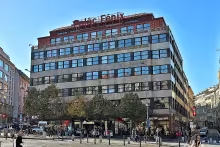
Palác Fénix stands as a testament to Czech functionalist architecture in Prague's vibrant New Town. Located at Václavské náměstí 802/56, this monumental commercial building is not only an architectural marvel but also a cultural landmark of the Czech Republic. Its significance lies in its innovative design and historical context, reflecting the modernist aspirations of early 20th-century Czechoslovakia.
The site where Palác Fénix now stands has a rich history dating back to the 14th century when three buildings occupied the space. By the mid-16th century, only two structures remained, which were later replaced by two neoclassical two-story houses at the beginning of the 19th century. In 1927, these properties were acquired by the Viennese "Životní pojišťovací společnost Fénix," setting the stage for a transformative architectural project.
Construction began in 1927 under architects Josef Gočár and Bedřich Ehrmann. The building's design is emblematic of Czech functionalism, characterized by its practical yet aesthetically pleasing form. Viennese professor Nowak contributed significantly to structural integrity through static calculations and devising the load-bearing system. Engineer Franke provided detailed drawings for reinforcement and construction execution.
One remarkable feature of Palác Fénix is its cinema hall, which accommodates 760 people without any supporting columns. This was achieved using Vierendeel trusses, showcasing technical ingenuity during construction. The building's facade and interior were meticulously designed by Gočár and Ehrmann, incorporating modern techniques of the era.
The passageway within Palác Fénix is adorned with mosaics created by renowned Czech painter Rudolf Kremlička, adding an artistic dimension to the structure. After several minor modifications, the building was commissioned on February 12, 1930, marking its readiness for public use.
Today, Palác Fénix houses a variety of shops, restaurants, and entertainment venues, including a cinema and Studio dva theatre. Its status as a cultural monument underscores its historical and architectural importance. Visitors to Prague can explore this iconic building on Václavské náměstí, where it continues to serve as a hub of commercial and cultural activity.
Palác Fénix is more than just an architectural landmark; it embodies the spirit of innovation and modernism that defined its era. Its unique design elements and historical significance make it a must-visit destination for anyone interested in Czech architecture and history.
Historical milestones
- circa 1350
- Three buildings were located at the site of Palác Fénix.
- mid-16th century
- Only two buildings remained on the site.
- early 19th century
- Two neoclassical two-story houses were built on the site.
- 1927
- The property was taken over by the 'Životní pojišťovací společnost Fénix' company.
- 1927
- Begun construction under the direction of architects Josef Gočár and Bedřich Ehrmann.
Architectural development
Palác Fénix was constructed using modern techniques of its time, with a focus on technical innovation. The design incorporated advanced structural solutions like Vierendeel trusses for the cinema hall, allowing it to support large spans without columns. The building's facade and interior were designed by Josef Gočár and Bedřich Ehrmann, while static calculations and the load-bearing system were developed with input from Viennese professor Nowak.
Historical events
Construction completed in 1927, marking the introduction of Czech functionalist architecture.
Final commissioning of the building on February 12, 1930.
Owners
Vídeňská 'Životní pojišťovací společnost Fénix' (1927)
Points of interest
- The Palác Fénix originally stood on a site with three buildings dating back to the 14th century, which were reduced to two by the mid-16th century before being replaced in the early 19th century. - Viennese professor Nowak played a crucial role in the construction of Palác Fénix by providing static calculations and designing its load-bearing system, highlighting international collaboration in its creation. - The cinema hall within Palác Fénix is notable for seating 760 people without any supporting columns, achieved through the innovative use of Vierendeel trusses.
Guide
Show guide text
Welcome to the historic heart of Prague’s New Town, where you now stand before the iconic Palác Fénix. This remarkable building captures your attention with its distinctive Czech functionalist style, a testament to architectural innovation from the early 20th century.
As you gaze upon this impressive structure, imagine the rich tapestry of history that unfolds over centuries on this very site. Originally, around 1350, three buildings stood here, their presence diminishing by the mid-16th century until only two remained. These were replaced at the dawn of the 19th century with neoclassical twin-story houses. The transformation reached a pivotal moment in 1927 when the Životní pojišťovací společnost Fénix acquired the site, setting the stage for the creation of this architectural marvel.
The Palác Fénix was envisioned by two renowned architects, prof. Ing. arch. Josef Gočár and Ing. arch. Bedřich Ehrmann. Their vision came to life between 1927 and its completion in 1930. As you stand here today, take a moment to appreciate the unique elements that define this building, such as the innovative use of Vierendeel trusses within its cinema hall—a feature that was groundbreaking at the time.
Now, let’s delve into some fascinating stories linked to Palác Fénix. A key figure in its construction was Viennese professor Nowak, who played a crucial role by providing the structural expertise necessary for such an ambitious project. His contributions were instrumental in bringing Gočár and Ehrmann's vision to fruition.
There’s also an intriguing layer of mystery surrounding this site. Consider how it transformed from medieval structures to neoclassical buildings before emerging as the modernist icon we see today. This evolution reflects not only architectural trends but also the dynamic cultural shifts within Prague over centuries.
As you continue your exploration, I invite you to immerse yourself in the atmosphere of Palác Fénix. Feel its presence as a living monument that bridges past and present. Whether you’re drawn by its history or captivated by its architecture, there’s always more to discover here.
Thank you for joining me on this journey through time at Palác Fénix. I encourage you to delve deeper into its stories and perhaps uncover new insights during your visit. Until next time, enjoy the wonders of Prague!
Tips for visitors
The best time to visit Palác Fénix is during the late spring or early fall when the weather is pleasant, allowing you to comfortably explore both the building's interior and its surroundings on Václavské náměstí. During these seasons, Prague experiences moderate temperatures and fewer tourists compared to peak summer months, making it an ideal time for a leisurely visit. Additionally, visiting during weekdays can help avoid larger crowds that typically gather over weekends.
Parking near Palác Fénix can be challenging due to its central location in Prague's New Town. It is recommended to use public transportation or park at designated areas outside the immediate vicinity and walk to your destination. The building is well-served by trams, buses, and metro lines, making it convenient for visitors arriving from various parts of the city. For those driving, checking a local parking app or website for real-time availability can be helpful.
When visiting Palác Fénix, consider bringing comfortable walking shoes as you may want to explore nearby attractions on foot. A camera is advisable for capturing the building's unique Czech functionalist architecture and the vibrant atmosphere of Václavské náměstí. If planning a longer stay in Prague, carrying a map or using a navigation app can help navigate the city efficiently.
For photography enthusiasts, Palác Fénix offers several vantage points to capture its distinctive architectural features. The best light for photographs is typically during the golden hours of early morning or late afternoon when the sunlight enhances the building's facade. Additionally, capturing images from the square provides a broader context of the structure within Prague’s urban landscape.
Nearby attractions within a 30-minute walk include other historical and cultural landmarks on Václavské náměstí, such as the National Museum and the Czech National Theatre. These sites offer a glimpse into Prague's rich history and architectural diversity. For families with children, visiting these nearby attractions can provide an engaging and educational experience, allowing for breaks between exploring indoor exhibits.
Businesses nearby
Nearby
Palác Fénix is situated on Václavské náměstí, a central square in Prague's New Town. The area features other historical and cultural landmarks, including nearby buildings from various architectural periods.
Accommodation nearby
Trips and activities nearby
Guided tours, tickets and activities nearby from GetYourGuide
Search tours and activities →Themed route
Thematic Walking Tour: Architectural and Historical Journey through Prague's New Town
1. Palác Fénix (Palace) *Type:* Historic Building *Why Visit:* Located on Václavské náměstí, the Palác Fénix is a striking example of Art Nouveau architecture in Prague's vibrant New Town. Its unique design and historical significance make it an essential stop for anyone interested in exploring the architectural evolution of this central area.
2. Národní divadlo (National Theatre) *Type:* Cultural Landmark *Why Visit:* Just a short walk from Palác Fénix, Národní divadlo is an iconic symbol of Czech national pride and cultural heritage. Its grandiose architecture and storied history offer insight into the nation's artistic achievements and serve as a testament to Prague’s rich theatrical tradition.
3. Václavské náměstí (Wenceslas Square) *Type:* Historical Square *Why Visit:* As one of Prague's most important historical squares, Václavské náměstí is surrounded by architectural marvels from various periods and has been the site of significant political events. Visitors can appreciate its dynamic atmosphere and explore the diverse buildings that line the square.
4. Muzeum architektury a designu (Museum of Architecture and Design) *Type:* Museum *Why Visit:* Situated near Václavské náměstí, this museum offers an in-depth look at Czech architecture and design from the 19th century to contemporary times. It provides valuable context for understanding the architectural developments that have shaped Prague's urban landscape.
5. Národní galerie (National Gallery) *Type:* Art Museum *Why Visit:* Close by, Národní galerie houses a vast collection of Czech and international art spanning centuries. Its proximity to Palác Fénix makes it an ideal spot for those interested in exploring the intersection of art and architecture within Prague's historical context.
This tour offers a comprehensive exploration of architectural styles and cultural history in one of Prague’s most historically significant areas, providing visitors with both visual delight and educational enrichment.
Seasonal recommendations
Jaro: During the spring season, Palác Fénix transforms into a radiant haven of blooming trees and shrubs that adorn the surrounding parks and streets. The gentle sunlight illuminates the architectural details of the palace with soft hues, creating a stunning atmosphere for strolls. Although the first tourists begin to appear, the paths are not yet crowded, allowing for a more relaxed visit. We recommend visiting the palace in the early afternoons when the temperature is pleasant and there are fewer people. A good tip is to wear clothing suitable for mild weather with an option to add layers for colder conditions.
Léto: In summer, Palác Fénix offers visitors a full bloom of flowers and a bright, warm atmosphere. The sun showcases the architecture of the palace in its best light, while the surrounding parks serve as green sanctuaries from city life. Summer is the peak tourist season, so we recommend arriving early in the morning or later in the evening to avoid peak visitor times. Warm clothing and sun protection are key to a comfortable experience.
Podzim: In autumn, Palác Fénix offers a unique view cloaked in colorful leaves that add a romantic atmosphere to the palace's architecture. Sunny days are ideal for visiting when the temperature is still pleasant, and the surrounding parks offer beautiful lighting effects. Despite a slightly reduced frequency of tourists, some areas may be more crowded during Advent, so it’s good to plan your visit according to preferred times. Clothing suitable for mild cold weather is essential.
Zima: During winter, Palác Fénix becomes a refuge from the snow and ice flowers that adorn its surroundings. Sunny days offer a beautiful contrast of lights and shadows on the architectural face of the palace, while cooler nighttime hours bring a tranquil atmosphere. Winter visits may encounter shorter opening times and fewer tourists, allowing for a more intimate exploration of the monument. Warm clothing is essential, as well as protection against wind and moisture, and we recommend arriving early in the morning to avoid the cold day.
Visualizations and artistic views

Vizualizace jsou generovány umělou inteligencí a slouží jako inspirace.


Tips from visitors
No tips yet. Be the first!
Log in and add your tip.

Reviews and comments