





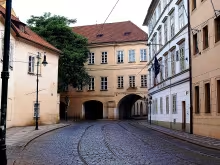
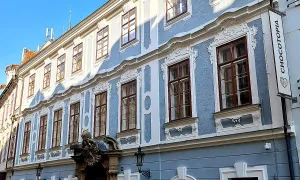
Oettingenský Palace, also known as Lobkovický dům, stands at the intersection of Letenská and Josefská streets in Prague's Malá Strana district. This baroque palace showcases architectural evolution over centuries, reflecting its historical significance and cultural heritage. The site was first mentioned in 1406, with evidence of a Gothic structure existing before its destruction during the Hussite Wars. By 1456, land for new construction had been provided on this historically rich site.
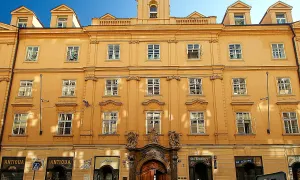
The origins of Oettingenský Palace trace back to when Ladislav z Lobkovic acquired it in 1548. Under Jan Václav z Lobkovic's direction, a Renaissance transformation began over existing medieval foundations. The architectural journey continued through the 17th century with contributions from Giovanni Marini and Campion de Bossi. A significant turning point came after a fire in 1723, leading to its baroque reconstruction under Antonín Ritžich and František Maxmilián Kaňka. This period marked the completion of the palace's current form, characterized by an asymmetrical facade with pilasters and a central portal.
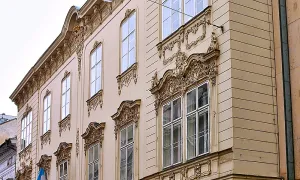
The architectural style is predominantly baroque, featuring elements such as rusticated ground floors, Ionic order pilasters, and suprafenestrae adorned with cartouches. The design includes an unusual ramp that once connected its first floor to the gallery in St. Thomas Church, used by both the Lobkovic and Oettingen-Wallerstein families for attending services. Additionally, Fabián Hárovník contributed murals painted on canvas rather than directly onto walls.
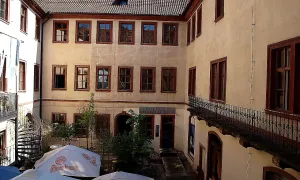
Ownership has seen several notable figures over its history. After two centuries under the Lobkovic family, it was sold in 1806 and later purchased by Prince Bedřich Oettingen-Wallerstein in 1841. The property underwent further modifications, including a neoclassical wing added to the courtyard in 1887. By 1898, the palace became part of Malá Strana's municipal assets, eventually serving as a gymnasium before being converted into rental apartments.
Throughout its history, Oettingenský Palace has witnessed various key events and transformations. The fire of 1723 was pivotal, leading to significant baroque renovations that shaped its current appearance. In the late 19th century, changes were made to accommodate educational purposes, reflecting evolving community needs. Today, the palace is home to the Czech Chamber of Architects, continuing its legacy as a site of cultural and historical importance.
Visitors today can explore Oettingenský Palace's rich history and architectural beauty. Its location in Prague's Malá Strana places it near significant landmarks such as St. Thomas Church and St. Joseph's Church, offering a glimpse into the area's storied past. The palace stands as a protected cultural monument of the Czech Republic since 1958, inviting those interested in architecture and history to discover its unique charm.
Oettingenský Palace is more than just a building; it is a narrative woven through time, reflecting artistic and historical currents that have shaped Prague. Its preservation allows visitors to connect with the past while appreciating the architectural ingenuity of its creators. A visit offers an opportunity to immerse oneself in the cultural tapestry of one of Europe's most enchanting cities.
Historical milestones
- 1406
- First mention of the building site.
- 1456
- The town provided land for new construction.
- 1548
- Ladislav z Lobkovic acquired the property.
- 1723
- Baroque reconstruction following a fire.
Architectural development
The Oettingenský Palác has evolved through several architectural phases. Initially built on Renaissance foundations with a Gothic core in the early 15th century, it underwent baroque renovations after a fire in 1723. The palace features an asymmetrical facade with pilasters and a central portal, reflecting its baroque style.
Historical events
In 1723, a fire led to significant baroque renovations of the palace.
In 1887, a neoclassical two-story wing was added to the courtyard.
Owners
The property has had several notable owners: Ladislav z Lobkovic acquired it in 1548; Jan Václav z Lobkovic initiated its Renaissance transformation; the Lobkovic family owned it for two centuries until selling it in 1806. In 1841, Prince Bedřich Oettingen-Wallerstein purchased the palace.
Points of interest
- The Oettingenský Palace once featured an unusual ramp connecting its first floor to the gallery in St. Thomas Church, which was used by both the Lobkovic and Oettingen-Wallerstein families for attending church services.
- After a devastating fire in 1723, the palace underwent significant baroque renovations under architects Antonín Ritžich and František Maxmilián Kaňka, resulting in its current asymmetrical facade with distinctive pilasters and cartouches.
Guide
Show guide text
Welcome to the Oettingenský Palác, a remarkable baroque treasure tucked away at the corner of Letenská and Josefská streets in Prague's Malá Strana district. As you stand here, take a moment to absorb the grandeur of this architectural masterpiece. The asymmetrical facade, with its elegant curves and intricate details, invites you into a world where history and artistry intertwine.
The story of this palác begins in 1406 when the site was first mentioned, marking the start of centuries of transformation. By 1456, the town had provided land for new construction on these Renaissance foundations that harbored a Gothic core. It wasn't until 1548 that Ladislav z Lobkovic acquired the property, setting the stage for its future evolution.
Fast forward to 1723—a pivotal year when a devastating fire led to significant baroque reconstruction. Architects Antonín Ritžich and František Maxmilián Kaňka masterfully reshaped the palác into the stunning structure you see today. As you gaze at the facade, notice how it harmoniously blends historical elements with baroque elegance.
This site has been home to many notable figures, including members of the Lobkovic and Oettingen-Wallerstein families. Giovanni Marini, Campion de Bossi, Fabián Hárovník, and Bedřich Oettingen-Wallerstein are just a few who have left their mark here.
One intriguing feature that once connected this palác to St. Thomas Church was an unusual ramp. This architectural marvel allowed the Lobkovic and Oettingen-Wallerstein families to attend church services with ease, symbolizing the close ties between the palác and its spiritual surroundings.
As you continue your exploration, let yourself be drawn into the layers of history that envelop this place. Each corner tells a story, each detail holds a secret waiting to be discovered. We invite you to delve deeper into the mysteries and marvels of Oettingenský Palác.
Thank you for joining us on this journey through time. May your visit inspire curiosity and wonder as you uncover more about Prague's rich heritage.
Tips for visitors
The best time to visit Oettingenský Palác is during the late spring or early fall when the weather is pleasant, allowing you to comfortably explore both the palace and its surroundings. These seasons offer a good balance of mild temperatures and fewer crowds compared to summer, making it easier to appreciate the architectural details and historical ambiance. Additionally, visiting in these months allows for better lighting conditions for photography, especially during golden hours.
Transportation to Oettingenský Palác is convenient via both public transport and car. The palace is accessible by tram lines that run through Malá Strana, with stops nearby on Letenská Street. For those driving, there are parking options in the vicinity of Malá Strana, though it's advisable to check for availability as spaces can be limited during peak tourist seasons. Public transport is generally recommended due to the compact nature of Prague's city center and potential traffic congestion.
When visiting Oettingenský Palác, consider bringing a camera or smartphone with a good camera to capture its baroque architecture and intricate details. Comfortable walking shoes are also advisable as you'll likely explore nearby attractions on foot. Additionally, carrying a map or using a navigation app can help in navigating the area efficiently. Since the palace is located in an urban setting, sun protection such as sunscreen or hats might be useful during sunny days.
For photography enthusiasts, some of the best spots to capture Oettingenský Palác are from Letenská Street, where you can get a clear view of its facade, and from nearby St. Thomas Church, which offers an excellent vantage point for capturing both the palace and surrounding architecture in one frame. Early morning or late afternoon light is ideal for photography as it enhances the textures and colors of the building.
Nearby attractions within 30 minutes include St. Joseph's Church and St. Wenceslas Church, both offering stunning baroque interiors and historical significance. For families with children, Malá Strana itself provides a charming environment to explore, with its narrow streets, quaint shops, and nearby Charles Bridge for a leisurely walk or bike ride.
Businesses nearby
Nearby
Located in Prague's Malá Strana, the palace is near significant landmarks such as St. Thomas Church and St. Joseph's Church. The area is rich with historical architecture and cultural heritage.
Accommodation nearby
Trips and activities nearby
Guided tours, tickets and activities nearby from GetYourGuide
Search tours and activities →Themed route
Tematická výletní trasa: Oettingenský palác a jeho okolí
1. Oettingenský palác (Palác) - Proč stojí za návštěvu: Oettingenský palác je krásným příkladem barokní architektury v Praze, známý svou historií a impresivními interiéry. Původně postaven pro hraběte Františka Antonína Oettingena-Baldernského, dnes slouží jako sídlo národních kulturních institucí. Navštívte jeho výzdobu a užijte si pohled na Prahu z okolních věží.
2. Kostel svatého Tomáše (Kostel) - Proč stojí za návštěvu: Tento barokní kostel je jednou z nejznámějších památek Malé Strany, známý svým vysokým štítem a krásnými interiéry. Kostel svatého Tomáše byl postaven na místě starobylé kaple z 12. století a je spojen s legendou o Janu Husovi, který zde pronesl svou poslední kázání.
3. Kostel svatého Josefa (Kostel) - Proč stojí za návštěvu: Kostel svatého Josefa je dalším významným barokním kostelem na Malé Straně, známým zejména svou impresivní fasádou a bohatou interiérovou výzdobou. Postavený mezi lety 1679–1704, je to dílo architekta Domenica Orsiho a jeho umělecké prvky zasvěceny svatému Josefovi.
4. Náměstí Mikoláše Aleše (Náměstí) - Proč stojí za návštěvu: Toto náměstí je centrem Malé Strany a nabízí pohled na několik historických budov, včetně Oettingenského paláce. Je pojmenováno po Mikoláši Alešovi, českém malíři známém svými díly pro Národní divadlo a Narodni muzeum. Procházka zde nabídne přehled o kulturním významu oblasti.
5. Klášter Strahov (Klášter) - Proč stojí za návštěvu: I když je mírně dál, klášter Strahov nabízí jedinečný pohled na Prahu z jeho vysokého vrcholu. Je známý svou knihovnou a historickými budovami, které představují klíčová místa české kulturní a duchovní historie.
Tato trasa nabízí pohled na bohatou historii a architekturu Prahy, s důrazem na barokní památky a jejich význam.
Seasonal recommendations
Spring: The arrival of spring brings a refreshing atmosphere to the Oettingen Palace, with blooming flowers and lush greenery enhancing its historical charm. Natural light plays beautifully across the palace's architecture during this season, creating an inviting ambiance for visitors. As the weather warms up gradually, it’s advisable to wear layers that can be adjusted throughout the day. While spring tends to attract moderate crowds, arriving early in the morning allows you to enjoy a quieter experience before the daily influx of tourists.
Summer: Summer at Oettingen Palace offers vibrant colors and long daylight hours, perfect for exploring its grandeur. The lush gardens surrounding the palace are particularly enchanting during this season, with well-manicured lawns and blooming plants providing a picturesque backdrop. Given that summer is peak tourist season, it’s wise to visit early in the morning or late afternoon to avoid large crowds. Comfortable walking shoes and light clothing are recommended due to warmer temperatures.
Autumn: Autumn transforms Oettingen Palace into a stunning tapestry of warm colors, with golden leaves providing a picturesque setting for visitors. The cooler weather makes it an ideal time to stroll through the palace's grounds without the summer heat. As the days begin to shorten, planning your visit during daylight hours is recommended to maximize your experience. Layered clothing will help you stay comfortable as temperatures can vary throughout the day.
Winter: Winter at Oettingen Palace offers a magical atmosphere with its historical architecture beautifully illuminated against the backdrop of shorter, colder days. The palace grounds may be quieter in this season, providing a more serene visit. However, it’s important to dress warmly and wear sturdy footwear due to potentially icy conditions. Keep in mind that some areas might have reduced opening hours or limited accessibility during winter months, so checking ahead is advisable.
Visualizations and artistic views

Vizualizace jsou generovány umělou inteligencí a slouží jako inspirace.

Tips from visitors
No tips yet. Be the first!
Log in and add your tip.

Reviews and comments