



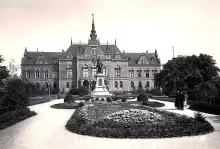
The German House, originally known as Deutsches Haus, stands out in Brno's historical landscape as a significant public building that existed from 1891 until its demolition in 1945. Located on what is now Moravské náměstí, this structure served as a vibrant social center for the German community in Brno before World War I. Its eclectic architectural style and role in cultural life make it a notable monument of historical interest.
The origins of the German House are rooted in the late 19th century, during a period marked by rising national tensions within the Austro-Hungarian Empire. The building was designed by the Berlin studio Ende & Böckmann, with contributions from local architect German Wanderley. It was established as a social center for Brno's German community in 1891, reflecting the cultural and political movements of various ethnic groups seeking greater influence during this era.
Architecturally, the German House is distinguished by its eclectic mix of styles, including neo-Gothic, German Renaissance, neo-Baroque, and Romanticism. The design emphasizes symmetry with brickwork featuring stone cladding, drawing inspiration from Northern Germany, Belgium, and the Netherlands. Inside, large windows and portals create a sense of Renaissance airiness, enhancing the building's aesthetic appeal.
Throughout its history, the German House played a crucial role in Brno's cultural scene. Before World War I, it hosted significant municipal events and served as the main venue for theater performances, which were previously held at Mahenov divadlo. The building also housed various German associations such as Deutsches Haus, Mährischer Gewerbeverein, Deutscher Club, Schlaraffia, Deutscher Journalisten- und Schriftstellerverein, and Deutsche Lesehalle. These organizations contributed to the social and cultural fabric of Brno's German community.
The building became a symbol of German nationalism during national struggles between Czechs and Germans, reflecting its broader socio-political significance. Its architecture was not only a statement of style but also an emblem of identity for the German-speaking population in Brno.
Today, while the German House no longer stands, its historical footprint remains significant. The site on Moravské náměstí continues to be a point of interest for those exploring Brno's rich cultural heritage. Visitors can appreciate the legacy of this once-prominent social hub through the stories and history it represents.
The German House offers a fascinating glimpse into the past, illustrating the complex interplay of architecture, culture, and national identity in Brno. Its historical significance makes it an essential stop for anyone interested in understanding the city's diverse heritage.
Historical milestones
- 1891
- Establishment of the German House as a social center for Brno's German community.
- 1914
- End of World War I, marking a shift in the building's role and significance.
- 1945
- Demolition of the German House following World War II.
Architectural development
The building, designed by Ende & Böckmann with input from German Wanderley, features a mix of historical styles. Its architecture includes elements of neo-Gothic, German Renaissance, neo-Baroque, and Romanticism. The design emphasizes symmetry and uses brickwork with stone cladding. The interior is characterized by large windows and portals that provide ample daylight and create a sense of Renaissance airiness.
Historical events
1891: Německý dům was established as a social center for Brno's German community.
Before World War I: It hosted significant municipal events and served as the main venue for theater performances in Brno.
Points of interest
- The German House was designed by the Berlin studio Ende & Böckmann, but it also involved local architect German Wanderley, highlighting a blend of international and regional influences in its creation.
- Before World War I, the building served as Brno's main venue for theater performances, taking over from Mahenov divadlo, which underscores its central role in the city’s cultural life during that era.
Guide
Show guide text
Welcome to the site of the former Německý dům, a historical landmark that once stood proudly in Brno-město, Jihomoravský kraj. As you stand here today, imagine the eclectic architecture that once captured the eyes and hearts of those who passed by. Though the building no longer stands, its story remains deeply woven into the fabric of this city.
The Německý dům was established in 1891 as a vibrant social center for Brno's German community. Designed by the renowned Berlin studio Ende & Böckmann and local architect German Wanderley, it served as a testament to the rich cultural exchange between international and regional influences during that era. This building wasn't just an architectural marvel; it was a hub of activity, a place where people gathered for theater performances before World War I.
Take a moment to envision its architectural grandeur. The Německý dům featured an eclectic mix of styles, including neo-Gothic, German Renaissance, and neo-Baroque elements. These stylistic choices reflected the diverse influences that shaped its creation. As you stand here, imagine the intricate details that would have adorned its façade, each telling a story of artistic ambition and cultural pride.
Throughout its existence, the Německý dům played a pivotal role in the community's social life. Before World War I, it was Brno's main venue for theater performances, drawing crowds eager to experience the arts. This period marked a time when the building thrived as a center of cultural exchange and entertainment.
However, history took its toll on this iconic structure. By 1945, following the end of World War II, the Německý dům was demolished. Its absence today serves as a poignant reminder of the shifting tides of history that have shaped Brno's landscape over the decades.
As you reflect on what once stood here, consider the blend of international and regional influences brought together by Ende & Böckmann and German Wanderley. Their collaboration highlights a fascinating chapter in architectural history where global ideas met local execution.
We invite you to continue exploring this historic site, imagining its past vibrancy as you walk through the space it once occupied. Let your curiosity lead you further into Brno's rich tapestry of history, discovering more stories and landmarks that tell the tale of this remarkable city. Thank you for joining us on this journey through time.
Businesses nearby
Do you run a restaurant, accommodation, shop, museum, rental, wellness or other visitor service near this monument? Show yourself directly to the people heading to it — this is how they will see you in the app and on the web:
Events nearby


Event source: Kudy z nudy and open data of the Czech Republic
Accommodation nearby
Trips and activities nearby
Guided tours, tickets and activities nearby from GetYourGuide
Search tours and activities →Themed route
Tematická výletní trasa: Německý dům a jeho okolí
1. Německý dům (Dům s červenou hvězdou) Typ: Historický památník Proč stojí za návštěvu: Německý dům, známý také jako Dům s červenou hvězdou, je jedním z mála přeživších domů ze starého židovského ghetto v Brně. Je to klíčová památka, která svědčí o tragických událostech druhé světové války a poskytuje hluboký vhled do historie města.
2. Staroměstské náměstí Typ: Historické náměstí Proč stojí za návštěvu: Nachází se jen pár minut chůze od Německého domu a je centrem historie Brna. Staroměstské náměstí s jeho barokním charakterem, starobylými budovami a památkou Jindřišky nabízí pohled na bohatou minulost města.
3. Katedrála svatých Petra a Pavla Typ: Náboženská památka Proč stojí za návštěvu: Tato gotická katedrála, nacházející se na Staroměstském náměstí, je nejvýznamnějším sakrálním stavbou v Brně. Je známá svým působivým interiérem a historickými reliéfy, které přitahují mnoho návštěvníků.
4. Mikulášská kaple Typ: Historická kaple Proč stojí za návštěvu: Nachází se na Staroměstském náměstí vedle katedrály a je jednou z nejstarších stavb v Brně. Kaple svatého Mikuláše, s jejím unikátním gotickým interiérem, nabízí pohled na starobylou architekturu města.
5. Kostel svaté Kateřiny Typ: Historický kostel Proč stojí za návštěvu: Tento barokní kostel je další významnou památkou na Staroměstském náměstí. Jeho bohaté interiér a historie přitahují mnoho turistů, kteří chtějí prozkoumat kulturní dědictví Brna.
Tato trasa nabízí pohled na klíčová historická místa v centru Brna a umožňuje návštěvníkům hluboce se ponořit do bohaté minulosti města.
Seasonal recommendations
Jaro: Visiting the German House in spring offers a unique atmosphere where the historical character of the monument blends with newly revitalized nature. Flowers and trees begin to bloom, creating beautiful backdrops for photography or simply relaxing on outdoor terraces. This time of year is ideal for visiting as crowds are usually smaller compared to summer. Visitors should be prepared for mild weather and wear clothing suitable for cooler mornings but also warmer afternoons.
Léto: Summer is the period when the German House in Brno experiences the most visitors, resulting in a lively atmosphere full of tourist streams. Sunny days are perfect for exploring outdoor spaces and enjoying seating on the terrace under the shade of ancient trees. The climate is typically warm, so visitors should be well-prepared with shorts or sundresses and sufficient hydration. It's recommended to arrive early in the morning or later in the evening to avoid peak daytime temperatures and crowds.
Podzim: Autumn offers a calm and intimate atmosphere at the German House in Brno. The leaves of trees change into vibrant shades of gold, pink, and orange, creating beautiful backdrops for visiting this historic monument. Nature is at its most stunning autumnal peak and crowds are usually less present, ensuring a more comfortable tour. Visitors should be prepared for cooler weather with mild rains and wear clothing suitable for climate changes, such as sweaters or warm jackets.
Zima: A winter visit to the German House offers a peaceful experience without many crowds. While outdoor areas may be cold and covered in snow, the interior spaces of the monument are warm and welcoming, allowing visitors to enjoy the historical interiors. Although opening hours may be shorter than in other seasons, a winter visit provides a unique atmosphere with the possibility of viewing snowy landscapes. Visitors should wear warm clothing and appropriate footwear, such as dry-soled boots, to enjoy the outing without discomfort.
Visualizations and artistic views

Vizualizace jsou generovány umělou inteligencí a slouží jako inspirace.


Tips from visitors
No tips yet. Be the first!
Log in and add your tip.



Reviews and comments