





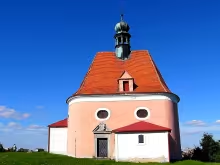
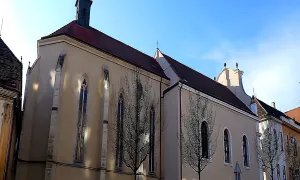
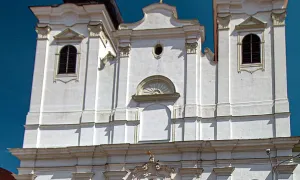
The Church of Saint Anthony of Padua in Znojmo is a notable Baroque church situated on a rocky outcrop above the Gránický potok valley. Built in 1622 by Probošt Tomáš ze Šlesinu and consecrated under Archbishop Arnošt Vojtěch z Harrachu in 1623, it stands as a testament to Counter-Reformation efforts during the Thirty Years' War. Its significance is enhanced by its transformation into a pilgrimage site with the addition of a chapel dedicated to Saint Elijah and a path resembling a Stations of the Cross, restructured in 1992.
The church's origins are deeply rooted in the religious and political upheavals of early 17th-century Bohemia. During this period, Catholic forces were reinforcing their influence amidst the Thirty Years' War. Its construction by Probošt Tomáš ze Šlesinu, a counselor to Emperor Leopold I, reflects these Counter-Reformation efforts aimed at strengthening Catholicism in the area.
Architecturally, the church is characterized by its Baroque style. Built in 1622, it features elements typical of this period, though specific architectural details are not extensively documented. The addition of a small chapel dedicated to Saint Elijah and the restructuring of the surrounding path into a Stations of the Cross in 1992 further contribute to the site's religious significance.
Throughout its history, the church has been associated with key figures such as Probošt Tomáš ze Šlesinu and Archbishop Arnošt Vojtěch z Harrachu. Consecrated in 1623 under Archbishop Harrachu's patronage, it marked its official recognition within the Catholic Church. In 1992, the path leading to the church was restructured into a Stations of the Cross, enhancing its role as a pilgrimage destination.
The site has witnessed several key events that have shaped its history and significance. The consecration in 1623 under Archbishop Harrachu was pivotal, establishing the church's religious importance. Later, in 1992, the path to the church was restructured into a Stations of the Cross, further solidifying its status as a pilgrimage site.
Today, the Church of Saint Anthony of Padua remains an accessible and significant landmark for visitors. Its location offers scenic views over the Gránický potok valley, adding to its allure. The transformation into a pilgrimage site with the Stations of the Cross path makes it meaningful for those interested in religious history and architecture.
The church is not only a remarkable example of Baroque architecture but also a symbol of historical resilience and spiritual significance. Its rich history, coupled with its scenic location, makes it a must-visit site for anyone exploring Znojmo's cultural heritage. Visitors are invited to experience this unique blend of natural beauty and religious devotion, making their journey both enlightening and memorable.
Historical milestones
- 1622
- Foundation of the Church of Saint Anthony of Padua.
- 1623
- The church was consecrated under the protection of Archbishop Arnošt Vojtěch z Harrachu.
- 1992
- The path leading to the church was rebuilt as a Stations of the Cross pathway.
Architectural development
The small baroque church was initially built in 1622, with subsequent additions including a chapel dedicated to Saint Elijah. In 1992, the surrounding path was restructured into a Stations of the Cross, enhancing its role as a pilgrimage site.
Historical events
- 1623
- Consecration of the church under Archbishop Arnošt Vojtěch z Harrachu.
- 1992
- Reconstruction and redesign of the path to resemble a Stations of the Cross.
Points of interest
– The Church of Saint Anthony of Padua was built during a time when Bohemia was engulfed in the Thirty Years' War, reflecting its role as part of broader Counter-Reformation efforts to reassert Catholic dominance.
– Architectural details about the church are sparse; however, it is known for its Baroque style, which often includes dramatic elements and grandeur, although specific features at this site remain undocumented.
Guide
Show guide text
Welcome to the historic Church of Saint Anthony of Paduánského in Znojmo, a remarkable testament to architectural and spiritual history nestled on a rocky outcrop above the Gránický potok valley. As you stand here, take a moment to absorb the serene beauty that surrounds this Baroque church, its presence both commanding and inviting against the backdrop of nature.
The Church of Saint Anthony of Paduánského was founded in 1622 by Probošt Tomáš ze Šlesinu during a tumultuous period marked by the Thirty Years' War. This era saw Bohemia engulfed in conflict, with religious tensions at their peak. The church's establishment was part of broader Counter-Reformation efforts aimed at reasserting Catholic dominance in the region. Just a year later, in 1623, it was consecrated under the patronage of Archbishop Arnošt Vojtěch z Harrachu, marking its significance not only as a place of worship but also as a beacon of faith during challenging times.
As you look around, notice how the church harmoniously blends with its natural surroundings. Though specific architectural details are sparse, it's known for embodying Baroque elements that reflect both grandeur and spiritual depth. The structure perches elegantly on the rocky outcrop, offering views that extend into the valley below. This setting enhances the mystical atmosphere, inviting you to explore further.
The church is intertwined with key historical figures such as Tomáš ze Šlesinu and Arnošt Vojtěch z Harrachu, whose contributions were pivotal in its establishment and consecration. These individuals not only shaped the physical structure but also imbued it with a legacy of faith and resilience that continues to resonate today.
An intriguing aspect of this site is its transformation over the centuries. In 1992, the path leading to the church was restructured as part of the Cesty křížové cesty, reflecting ongoing efforts to preserve and enhance access to this sacred place for pilgrims and visitors alike.
As you conclude your visit, we invite you to linger a moment longer, absorbing the tranquility that envelops this historic site. Whether you're drawn by its architectural beauty, historical significance, or spiritual allure, there's always more to discover here in Znojmo. Thank you for joining us on this journey through time and faith at the Church of Saint Anthony of Paduánského. May your explorations continue to be filled with wonder and insight.
Tips for visitors
The best time to visit Kostel svatého Antonína Paduánského is during the late spring or early autumn months, when the weather is mild and pleasant for exploring both the church and its surrounding natural beauty. Visiting in these seasons allows you to enjoy the lush landscapes and vibrant colors of the region without the discomfort of summer heat or winter cold. Additionally, the lighting conditions are ideal for photography, with softer light enhancing the architectural details and the scenic views.
Parking and transportation options near Kostel svatého Antonína Paduánského are convenient. The church is accessible by both car and public transport, making it easy to reach from Znojmo or other nearby areas. For those driving, there are parking facilities available in the vicinity of the church. If you prefer using public transportation, check current routes and schedules through a local transit search tool to ensure seamless travel to this historic site.
When planning your visit, consider bringing comfortable walking shoes as exploring the rocky outcrops and open landscapes around the church can involve some walking on uneven terrain. A camera is also recommended to capture the stunning views from the Stations of the Cross path and the picturesque setting overlooking the Gránický potok valley. Additionally, carrying a light jacket or sweater might be useful due to variable weather conditions.
For photography enthusiasts, the best spots around Kostel svatého Antonína Paduánského are those offering panoramic views of the church against the backdrop of the valley and rocky outcrops. The early morning or late afternoon light provides a warm glow that beautifully highlights the baroque architecture. Exploring different angles along the Stations of the Cross path can also yield unique perspectives and compositions.
Nearby attractions within a 30-minute drive include other historical sites in Znojmo, such as the Znojmo Castle and the Old Town with its charming streets and buildings. These locations offer additional cultural insights into the region's history and architecture. For families with children, these areas provide an engaging experience with opportunities to learn about local heritage while enjoying outdoor spaces.
For families visiting Kostel svatého Antonína Paduánského, consider bringing along a small picnic for a relaxing break in the natural surroundings. The open landscapes and rocky outcrops are perfect for children to explore safely under supervision. Engaging them with stories about the church's history or having them participate in finding unique photo opportunities can make the visit more interactive and enjoyable.
Businesses nearby
Do you run a restaurant, accommodation, shop, museum, rental, wellness or other visitor service near this monument? Show yourself directly to the people heading to it — this is how they will see you in the app and on the web:
Nearby
The church overlooks the Gránický potok valley and features a Stations of the Cross path. Nearby natural features include rocky outcrops and open landscapes typical of the region.
Accommodation nearby
Themed route
Tematická výletní trasa: Kostel svatého Antonína Paduánského a okolí
1. Kostel svatého Antonína Paduánského (Znojmo) - *Typ:* Historická památka - *Proč stojí za návštěvu:* Tento barokní kostel, postavený v 18. století, je nejen architektonicky působivý, ale také nabízí jedinečnou perspektivu na údolí potoka Gránický potok. Jeho umístění zde poskytuje vynikající příležitost pro pochopení historie a kultury regionu.
2. Stations of the Cross Path - *Typ:* Religiozně-historická trasa - *Proč stojí za návštěvu:* Tato cesta, nacházející se poblíž kostela, nabízí poutníkům možnost prozkoumat 14 zastavení na křížové cestě. Je to ideální místo pro klidný průchod a reflexi, přičemž si můžete užít výhledu na okolní krajinu.
3. Rocky Outcrops - *Typ:* Přírodní atrakce - *Proč stojí za návštěvu:* Tyto skalní útvary jsou přirozenou součástí kraje kolem kostela a nabízejí zajímavé pohledy na místní geologii. Jsou ideální pro krátký procházku nebo fotografování, kde si můžete užít klidného okolí s výhledem na otevřené kraje.
4. Open Landscapes - *Typ:* Přírodní prostor - *Proč stojí za návštěvu:* Otevřené krajiny kolem kostela svatého Antonína Paduánského jsou typickými příklady jihomoravského regionálního charakteru. Jsou to ideální místa pro relaxaci a pochopení místní flóry a fauny, což z něj činí dokonalé místo k odpočinku při výletu.
Tato trasa nabízí kombinaci historických, kulturních i přírodních atrakcí, které společně poskytují hluboký pohled na region kolem kostela svatého Antonína Paduánského.
Seasonal recommendations
Jaro: Návštěva Kostela svatého Antonína Paduánského v jarním období nabízí zvláštní atmosféru, kdy nově vyrostlý listovní porost oživuje okolí a osvětluje interiér kostela svěžím světlem. To přináší jemnou změnu v barvách a stínování, což může zesílit vizuální dojem architektonických detailů. V této době je vhodné se vydat na návštěvu brzy ráno nebo pozdě odpoledne, aby se předešlo středozimním teplým hodinám a potenciálním davům. Dobrý džíny s dekoltovanou košilí v kombinaci s kloboukem jsou ideální volbou oblečení, aby se udržela přiměřená teplota.
Léto: Léto je obdobím největší popularity pro návštěvu Kostela svatého Antonína Paduánského. Sluneční osvětlení zdůrazňuje architektonický vzhled a interiér kostela se může jevit jasněji, ale díky silnému slunci může být také potřeba ochrana očí. Během letních měsíců, zejména ve střední části dne, se zde může shromáždit více návštěvníků, což může ovlivnit pohodlí prozkoumávání. Proto je doporučeno přijít brzy ráno nebo pozdě večer a vždy se vybavit slunečními kapsemi, krátkými rukavicemi a ochrannými brýlemi. Teplé oblečení by mělo být přiměřené teplotě.
Podzim: V podzimním období nabízí Kostel svatého Antonína Paduánského jedinečnou atmosféru, když se listy stromů mění na zlaté a rudé barvy. Tato změna přináší nový pohled na historické místo a jeho okolí. Slunečné dny v této době jsou ideálním časem pro návštěvu, ale je třeba být připraveni i na chladnější počasí. Dobrým časem pro návštěvu je rané odpoledne, když se teplota začíná mírnit a davu je méně. Oblečení by mělo být vrstvené, aby se přizpůsobilo proměnlivým podzimním teplotám.
Zima: Zimní návštěva Kostela svatého Antonína Paduánského nabízí klidnou atmosféru, když je oblast pokryt sněhem nebo chladnými mraky. Slunečné dny mohou osvítit kostel a jeho okolí v úchvatném světle, zatímco studené počasí přidává klidnost a tichost do návštěvy. V této době se otevírací doba může snížit, takže je důležité si ověřit aktuální časy před cestou. Teplé oblečení, jako jsou kožešinové bundy a teplovodivé boty, je nezbytné pro pohodlí během návštěvy. Navíc se doporučuje využít slunečních dnů pro návštěvu, protože stínování může zpomalit otevření dveří kostela.
Visualizations and artistic views

Vizualizace jsou generovány umělou inteligencí a slouží jako inspirace.


Tips from visitors
No tips yet. Be the first!
Log in and add your tip.

Reviews and comments