



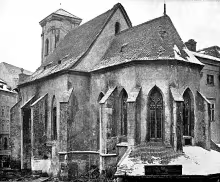
The Church of Saint Nicholas in Brno was a Romanesque structure located at Svobody Square. Despite its historical significance, it no longer stands today. Founded in the early 13th century by French-speaking Walloons who did not speak German or Czech, it served as a filial to the nearby Church of St. Jacob. Over time, the church underwent various transformations and played different roles within the community before being demolished between 1869-1870.
The origins of the Church of Saint Nicholas trace back to the early 13th century when French-speaking Walloons established it in Brno. These settlers needed a place of worship that catered specifically to their linguistic and cultural needs, as they did not speak German or Czech. Initially, the church served as a filial to the nearby Church of St. Jacob on Jakubské Square. Historical sources suggest that before its construction, the site may have been an ironworks area, possibly including a blacksmith's workshop.
Architecturally, the church was Romanesque with distinctive features such as elongated Gothic windows. In 1760, it underwent baroque modifications under František Antonín Grimm, altering its original style. The nave had a square plan, and the presbytery extended to form five sides of an octagon on the eastern side.
Throughout its history, the church experienced several ownerships and administrative changes. In 1231, King Václav I confirmed that it did not possess baptismal, burial, or parish rights. By 1425, Cardinal Jan XII. Železný reaffirmed its affiliation with St. Jacob's Church, designating it as a 'beneficium manuale,' meaning it was more closely tied to the nearby church than before. In 1645, during Swedish sieges, the church served temporarily as a hospice for Capuchin monks. Later, in 1760, František Antonín Grimm made baroque modifications to its structure.
The church's history is marked by several key events and curiosities. For instance, in 1353, Jan, then rector of the Church of Saint Nicholas, sold a house adjacent to the church due to disturbances caused by local lower nobility. The proceeds allowed him to acquire a larger property on Veselá Street. In the late 15th century, it received an annual income from Brno's citizens amounting to 15 hřiven and 22 Hungarian ducats.
Today, the Church of Saint Nicholas no longer exists as a physical structure; however, its footprint is preserved in the pavement of Svobody Square. This historical marker serves as a reminder of the church’s past presence and significance within Brno's urban landscape. The square itself has become a central area, surrounded by other historical buildings that contribute to its importance.
The Church of Saint Nicholas holds value not only for its architectural history but also for its role in the cultural and social fabric of medieval Brno. Visitors to Svobody Square can appreciate this monument’s legacy through its preserved footprint, offering insight into the city's rich past. This site invites exploration and reflection on the layers of history that have shaped Brno over the centuries.
Historical milestones
- 1231
- King Václav I confirmed the church's rights.
- 1425
- Cardinal Jan XII. Železný confirmed the affiliation with St. Jacob's Church and designated it as a 'beneficium manuale'.
Architectural development
The Church of Saint Nicholas was originally Romanesque, featuring elongated Gothic windows. It underwent baroque renovations in 1760 by František Antonín Grimm. The church's nave had a square plan with an extended presbytery ending in five sides of an octagon.
Historical events
- 1231
- King Václav I confirmed that the Church of Saint Nicholas had no baptismal, burial, or parish rights.
- 1645
- The church served as a temporary hospice for Capuchin monks during Swedish sieges.
- 1760
- Baroque modifications were made to the church under František Antonín Grimm.
Points of interest
- The Church of Saint Nicholas was originally founded by French-speaking Walloons in the early 13th century, highlighting Brno's diverse linguistic and cultural history. - Before becoming a church site, the area may have been an ironworks zone, suggesting its industrial past before religious significance took hold. - In 1645, during Swedish sieges, the Church of Saint Nicholas was temporarily used as a hospice for Capuchin monks, showing its adaptability in times of conflict.
Guide
Show guide text
Welcome to the historic site of Kostel svatého Mikuláše in Brno-město, a place where layers of history and culture converge at Svobody Square. Though no longer standing, this Romanesque church once graced this location, leaving behind tales of its vibrant past.
The Church of Saint Nicholas was founded by French-speaking Walloons in the early 13th century. These settlers brought with them their language and traditions, embedding a unique cultural tapestry into Brno's history. The church initially served as a filial to the nearby Church of St. Jacob, marking its humble beginnings within the community.
As you stand here today, imagine the architectural elegance that once defined this site. While specific details of the architecture are lost to time, envision the Romanesque style with its characteristic rounded arches and robust structure. Over centuries, it underwent transformations, including baroque modifications—a testament to its evolving role in Brno's religious life.
Key figures linked to this church include King Václav I., who confirmed its rights in 1231, ensuring its place within the community. Later, Cardinal Jan XII. Železný reaffirmed its connection with St. Jacob’s Church and designated it as a 'beneficium manuale' in 1425. These endorsements highlight the church's significance through turbulent times.
An intriguing aspect of this site is its potential industrial past before becoming a sacred space. It’s believed that the area may have been an ironworks zone, suggesting a fascinating transition from industry to spirituality—a narrative thread woven into Brno's diverse heritage.
As we conclude our journey here at Svobody Square, reflect on the stories and transformations that unfolded in this very spot. While Kostel svatého Mikuláše no longer stands, its legacy continues to inspire curiosity and exploration. I invite you to delve deeper into Brno’s rich history as you explore more of what this remarkable city has to offer.
Thank you for joining me on this historical tour. May your journey through time continue to be filled with discovery and wonder.
Businesses nearby
Do you run a restaurant, accommodation, shop, museum, rental, wellness or other visitor service near this monument? Show yourself directly to the people heading to it — this is how they will see you in the app and on the web:
Events nearby


Event source: Kudy z nudy and open data of the Czech Republic
Nearby
Svobody Square, where the church once stood, is now a central urban area in Brno. The nearby Church of St. Jacob and historical buildings contribute to the square's significance.
Accommodation nearby
Trips and activities nearby
Guided tours, tickets and activities nearby from GetYourGuide
Search tours and activities →Themed route
Thematic Walking Tour: Svobody Square and its Historical Gems
1. Svobody Square - *Type:* Urban square - *Why Visit:* Begin your journey at the heart of Brno, where the historical Church of St. Nicholas once stood. Today, Svobody Square is a vibrant urban area that reflects the city's rich past and dynamic present. The square serves as a central meeting point and offers insight into the architectural evolution of Brno.
2. Church of St. Jacob - *Type:* Historical church - *Why Visit:* A short walk from Svobody Square, the Church of St. Jacob is an architectural marvel that captures the essence of Baroque design. Its stunning façade and intricate details make it a must-see for anyone interested in religious architecture or the history of Brno.
3. Historical Buildings around Svobody Square - *Type:* Architectural ensemble - *Why Visit:* Explore the surrounding historical buildings that contribute to the significance of Svobody Square. These structures showcase various architectural styles and periods, offering a glimpse into the city's development over centuries. Each building tells its own story, adding depth to your understanding of Brno's urban landscape.
This tour provides a comprehensive experience of Svobody Square and its immediate surroundings, highlighting key historical and architectural sites that define this central area in Brno.
Seasonal recommendations
Spring: Visiting the site of St. Nicholas Church during spring offers a unique experience as nature begins to awaken, with blooming flowers and fresh greenery surrounding the area. The gentle sunlight and mild temperatures create an inviting atmosphere for exploration. This is a great time for photography enthusiasts who can capture the contrast between historical remnants and vibrant natural landscapes. However, be mindful of unpredictable weather changes; carrying a light rain jacket or umbrella might be wise. Springtime often sees fewer visitors compared to summer, allowing for a more peaceful visit.
Summer: Summer at the site of St. Nicholas Church in Brno is characterized by long days and warm temperatures, ideal for outdoor exploration. The lush greenery and abundant sunshine create a vibrant atmosphere, perfect for leisurely strolls around the area. This season typically attracts larger crowds, especially during peak tourist months, so arriving early can help avoid the busiest times. Dressing comfortably in light clothing is recommended to stay cool under the sun. Don’t forget to bring water and wear sunscreen to protect against UV rays.
Autumn: The autumnal visit to St. Nicholas Church's site offers a stunning display of fall colors as leaves transform into shades of red, orange, and yellow. The cooler temperatures and crisp air enhance the historical ambiance, making it an ideal time for photography or simply enjoying the serene environment. This season is less crowded than summer, providing a more intimate experience with fewer tourists around. It's advisable to wear layers to accommodate fluctuating temperatures throughout the day and carry a light jacket as evenings can be quite chilly.
Winter: Winter at the site of St. Nicholas Church brings a quiet and contemplative atmosphere, with snow often blanketing the area in a serene white cover. The stark beauty of the landscape under winter skies creates a unique backdrop for historical reflection. This season tends to see fewer visitors due to colder weather, offering a peaceful experience. It's essential to dress warmly in insulated clothing, including hats and gloves, as temperatures can be quite low. Be aware that some facilities may have reduced hours or closures during this time, so checking ahead is recommended.
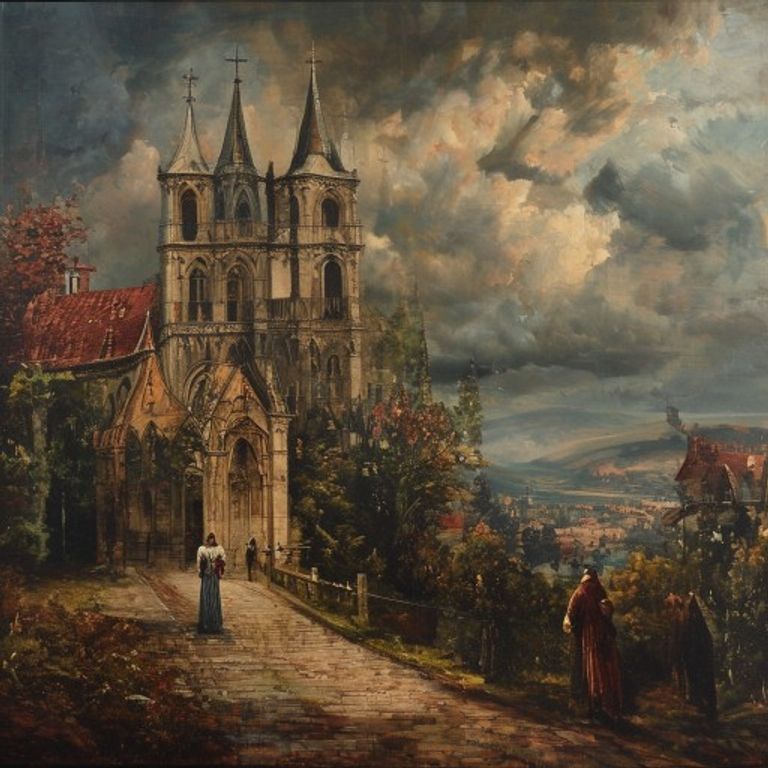
Visualizations and artistic views

Vizualizace jsou generovány umělou inteligencí a slouží jako inspirace.

Tips from visitors
No tips yet. Be the first!
Log in and add your tip.
Location on the map




Příběhy a pověsti
Legendy, pověsti a příběhy spjaté s touto památkou
Reviews and comments