



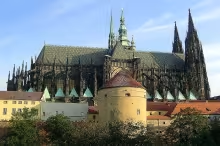
The Mihulka, also known as the Powder Tower, is a cylindrical stone tower situated on the north side of Prague Castle, one of the three preserved late medieval fortifications. Built in the second half of the 15th century, it was constructed as a gunpowder tower, serving various purposes throughout its history. This unique monument is notable for its association with alchemist Tomáš Jaroš, who worked there in the 16th century, and its role as a gunpowder storage facility, earning it the nickname Powder Tower.
The Mihulka was built during the late medieval period, a time of significant change and development in Bohemia and Europe. The tower's construction reflects the growing need for fortifications and defense systems in the region. Little is known about its earliest history, but it is clear that the tower was built using stone and has undergone several reconstructions and repairs. In the 16th century, it was rebuilt after a fire and served as a residence for a gunsmith.
The tower's architecture is characterized by its cylindrical shape, offering stunning views of the surrounding area. The Mihulka has undergone several reconstructions, including a major renovation in 1967-1980. It was opened as a museum in 1982, but the windows leading to the moat were initially blocked to prevent visitors from seeing the presidential residence. This restriction was lifted in 1990.
Throughout its history, the Mihulka has changed hands several times. In the 16th century, it was used as a residence for a gunsmith, and later, during the 17th century, it was used as a gunpowder storage facility. In the 20th century, it was reconstructed and opened as a museum. The tower is also associated with Tomáš Jaroš, who worked there in the 16th century.
The Mihulka has a rich history, with several notable events taking place within its walls. It was damaged during the Swedish invasion in 1649 and was later used as a residence for the clergy of the nearby St. Vitus Cathedral. In the 20th century, it was reconstructed and opened as a museum, featuring a permanent exhibition on the history of military headgear and helmets.
Today, the Mihulka is a must-visit attraction for anyone interested in history and architecture. The tower offers stunning views of the surrounding area and provides a unique glimpse into the past. Visitors can explore the tower's exhibitions and learn about its fascinating history, making it a valuable addition to any Prague itinerary.
Historical milestones
- 1541
- Rebuilt after a fire
- 1649
- Damaged during the Swedish invasion
- 1967
- Reconstructed
- 1982
- Opened as a museum
Architectural development
The tower was built using stone and has undergone several reconstructions and repairs throughout its history. In the 16th century, it was rebuilt after a fire and served as a residence for a gunsmith. In the 17th century, it was used as a storage facility for gunpowder. In the 20th century, it was reconstructed and opened as a museum.
Historical events
Built in the second half of the 15th century
Damaged during the Swedish invasion in 1649
Reconstructed in 1967-1980
Opened as a museum in 1982
Owners
Prague Castle, various owners and occupants throughout history
Points of interest
– The Mihulka tower has a unique association with alchemist Tomáš Jaroš, who worked there in the 16th century.
– The tower's architecture is characterized by its cylindrical shape, offering stunning views of the surrounding area, however, it was initially built using stone and has undergone several reconstructions and repairs.
– The Mihulka has a rich history, with several notable events taking place within its walls, including being damaged during the Swedish invasion in 1649.
Guide
Show guide text
Welcome! You are standing before Mihulka, one of the three remaining remnants of medieval fortifications at Prague Castle. Mihulka is a round stone tower located on the northern side of the castle. As you look up, take note of its unique architecture and observe how this structure complements the surrounding environment.
Mihulka was built in the second half of the 15th century as an artillery tower. Throughout history, it served as a grain storehouse, residence for an artilleryman, and laboratory for an alchemist. It was also used as a storage facility for various purposes. In 1541, it was restored after a fire, damaged during the Swedish invasion in 1649, and reconstructed in 1967. In 1982, it opened as a museum.
Let's move on to the architecture of this unique structure. Mihulka is characterized by its round shape, offering stunning views of the surroundings. You may have noticed that it is built from stone? That is truly remarkable. Over time, however, Mihulka has had to undergo many repairs to maintain its condition.
Now pay attention to the interesting stories and personalities associated with this place. Mihulka is closely linked to alchemist Tomáš Jaroš, who worked here in the 16th century. His work and research took place in this very unique atmosphere.
Mihulka is full of mysteries and enigmas. What captured your interest the most? Is it its unique architecture, or something else? Stay a while and take a look around. You can notice various details and highlight the most intriguing ones.
Thank you for your attention. Mihulka is truly a unique monument that offers many interesting details and historical connections. If you are curious about why historical buildings develop in this way, or how architecture has evolved over centuries, Mihulka is an excellent place to familiarize yourself with this fascinating topic.
Tips for visitors
The best time to visit Mihulka is during spring and autumn when the weather is mild and sunny. These seasons offer the best light for photography and comfortable walking conditions.
Parking is available in the surrounding streets, but be aware that it can be limited. Consider using public transportation, such as bus or tram, which is easily accessible from the city center.
Bring comfortable walking shoes and clothing suitable for the season. It's also a good idea to bring a camera and binoculars to capture the stunning views of Prague Castle and the surrounding area.
For photography, the best spots are around the tower itself, as well as from the nearby walls of the castle. The golden hour, just before sunset, provides the most flattering light for photography.
If you're interested in exploring more of Prague's history and architecture, consider visiting the nearby St. Vitus Cathedral, which is located within Prague Castle. It's a short walk from Mihulka and offers breathtaking views of the city.
Businesses nearby
Nearby
The Mihulka is located on the north side of Prague Castle, surrounded by the castle's fortifications and the St. Vitus Cathedral.
Accommodation nearby
Trips and activities nearby
Guided tours, tickets and activities nearby from GetYourGuide
Search tours and activities →Themed route
Trasa: Mihulka and the Surroundings of Prague Castle
1. Mihulka (main destination) Mihulka is an observation tower located on the northern side of Prague Castle. It is a unique monument offering a distinctive view of Prague and its surroundings. Its unique architecture and history make it an interesting destination for every visitor to Prague.
2. St. Vitus Cathedral St. Vitus Cathedral dominates Prague Castle and is one of the most famous cathedrals in Europe. Its beautiful architecture and rich history make it an ideal place for a visit. Visitors can explore its interior and exterior façade.
3. Prague Castle Prague Castle is one of the most renowned castles in Europe and the seat of Czech kings and emperors. Its history dates back to the 9th century and offers visitors a unique opportunity to explore historical buildings and courtyards. Visitors can stroll through the castle courtyards and see some of its famous landmarks, such as St. George's Church.
4. St. George St. George is a church located at Prague Castle. It is a unique monument offering a distinctive view of Prague and its surroundings. The church is known for its beautiful architecture and rich history.
Seasonal recommendations
Jaro: In the spring season, Mihulka is surrounded by blooming trees and vibrant greenery, creating a pleasant atmosphere. The lighting is mild, and sunlight illuminates the details of this historic landmark. We recommend visiting Mihulka during the spring season when it's open until late afternoon, and come to see it before larger crowds start to form.
Léto: During the main summer season, Mihulka is a very popular tourist destination, so it’s best to arrive early to avoid large crowds. The lighting is more intense, and sunlight illuminates the details of this historic landmark. We recommend visiting Mihulka in the late morning or early afternoon to avoid the largest number of visitors.
Podzim: In the autumn season, Mihulka is surrounded by beautiful fall foliage colors, creating a pleasant atmosphere. The lighting is mild, and sunlight illuminates the details of this historic landmark. We recommend visiting Mihulka during the autumn season when it's open until late afternoon, and come to see it before larger crowds start to form.
Zima: In the winter season, Mihulka is surrounded by calmness and quiet, creating a pleasant atmosphere. The lighting is mild, and sunlight illuminates the details of this historic landmark. We recommend visiting Mihulka during the winter season when it's open until late afternoon, and come to see it with warm clothing, as outdoor temperatures can be lower.
Visualizations and artistic views

Vizualizace jsou generovány umělou inteligencí a slouží jako inspirace.


Tips from visitors
No tips yet. Be the first!
Log in and add your tip.

Reviews and comments