





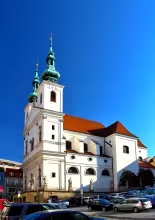
The Church of St. Michael Archangel in Brno is a Roman Catholic parish church with an adjoining Dominican monastery, located on Dominikánské Square near the New Town Hall. Originally built in the Gothic style during the 13th century, it was transformed into its current Baroque form after destruction during the Swedish siege of 1645. Recognized as a cultural monument since 1964, it is notable for its historical ties to Moravian Diet meetings held at the Dominican monastery.
The church's origins date back to around 1228 when Moravian margrave Přemysl donated a chapel dedicated to Archangel Michael to the Dominicans. This marked the beginning of its association with the order and was pivotal as it served both religious purposes and political gatherings, such as the Moravian Diet meetings. The Thirty Years' War and subsequent Swedish siege in 1645 led to the destruction of the original Gothic structure, necessitating reconstruction.
Architecturally, the church underwent transformation between 1658 and 1679 under Brno stonemason Jan Křtitel Erna, who redesigned it into the Baroque style. Around 1740, two symmetrical towers were added, enhancing its grandeur. The church features two original bells from the early 16th century and a bell from 1667, crafted by master Streckfuse. A notable artistic element is the monumental statue of Archangel Michael placed on the church’s gable in 1728, later restored and relocated to Brno's Justice Area.
Throughout its history, the Church of St. Michael experienced significant administrative changes, particularly with the closure of the Dominican convent in 1785 due to religious reforms by Emperor Joseph II. Despite these shifts, it maintained cultural and historical significance within the region.
Today, the church remains accessible for regular services on Tuesdays, Thursdays, and Saturdays at 6:30 PM, with additional masses on Sundays at 10:30 AM and 6:30 PM. The Tridentine Mass is celebrated every Sunday at 3:00 PM. Managed by the Roman Catholic spiritual administration of St. Michael's Church under rector Pavel Kafka, it continues to be a site of religious importance.
Adjacent to the church is the Chapel of the Holy Sepulchre, built in 1707 with an oblong ground plan and a polygonal presbytery. This chapel features a large baldachin over its central grave chamber, one of the largest on Moravia, reflecting the influence of Jerusalem's Church of the Holy Sepulchre.
Visitors to Brno can appreciate this monument for both its architectural beauty and rich historical narrative that intertwines religious devotion with political history. The Church of St. Michael Archangel stands as a testament to the resilience and cultural heritage of Brno, inviting exploration and reflection on its storied past.
Historical milestones
- 1228
- Donation of a chapel by Moravian margrave Přemysl to the Dominicans.
- 1645
- Destruction during the Swedish siege.
- 1658
- Baroque reconstruction began by Jan Křtitel Erna.
Architectural development
Originally built in the Gothic style, the church was destroyed and later reconstructed into its baroque form between 1658 and 1679. The twin towers were added around 1740, enhancing the church's symmetry. Notable features include two surviving original bells from the early 16th century and a bell from 1667.
Historical events
- 1228
- Moravian margrave Přemysl donated a chapel dedicated to Archangel Michael to the Dominicans.
- 1645
- The church was destroyed during the Swedish siege of Brno.
- 1785
- Closure of the Dominican convent due to religious reforms by Emperor Joseph II.
Points of interest
- The Church of St. Michael Archangel is renowned for its historical connection to the Moravian Diet meetings, which were significant political gatherings in the region's history. - Despite being rebuilt after destruction during the Swedish siege of 1645, the church retained two original bells from the early 16th century and a bell from 1667 by master Streckfuse, showcasing resilience through turbulent times.
Guide
Show guide text
Welcome to the historic Church of St. Michael Archangel in Brno-město, a remarkable blend of history and architecture that stands proudly on Dominikánské Square near the New Town Hall. As you stand here, take a moment to appreciate the grandeur of this Roman Catholic parish church with its adjoining Dominican monastery. The air is filled with centuries of stories, waiting for you to uncover them.
Let's delve into the origins and historical context of this fascinating site. It all began in 1228 when Moravian margrave Přemysl generously donated a chapel to the Dominicans, planting the seeds for what would become an architectural marvel. However, history took its dramatic turns, especially during the Swedish siege of 1645, which led to the destruction of the original Gothic structure. The phoenix rose from these ashes through the vision and craftsmanship of Jan Křtitel Erna, who began its baroque reconstruction in 1658. This transformation not only restored the church but also imbued it with a new spirit that has captivated visitors for centuries.
As you take in your surroundings, notice how the architecture speaks volumes about its storied past. The baroque style dominates, characterized by dynamic forms and elaborate details—a testament to Erna's skill. Although specific architectural elements aren't detailed here, allow yourself to be immersed in the atmosphere of resilience and rebirth that envelops this sacred space.
The church is not just a place of worship but also a witness to pivotal moments in history. It has been intimately connected with the Moravian Diet meetings, significant political gatherings that shaped the region's destiny. Figures such as Přemysl, Ludwig Wilhelm von Kounic, and Maria Eleonora von Dietrichstein are woven into its narrative, highlighting the church’s role beyond spiritual confines.
A particularly intriguing aspect of this site is how it has retained a piece of its original identity despite the ravages of time. Among the many bells that once called to prayer, two survived the destruction of 1645 and continue to resonate through the ages—a tangible link to the past that adds depth to your visit.
As our journey together comes to an end, I invite you to linger a little longer, to explore every corner, and perhaps even venture into the adjoining Dominican monastery. Each step is a step back in time, offering insights into the resilience, creativity, and spirit of those who came before us. Thank you for joining me on this exploration of the Church of St. Michael Archangel. May your curiosity lead you to many more discoveries as you continue to explore Brno-město and its rich tapestry of history.
Tips for visitors
The best time to visit the Church of St. Michael Archangel is during late spring or early fall when the weather is pleasant, allowing you to comfortably explore both the church and its surroundings without the crowds typical of peak tourist seasons. The lighting at this time of year enhances the baroque architecture's details, making it ideal for photography enthusiasts.
Parking near the Church of St. Michael Archangel can be challenging due to its central location in Brno-město. Public transportation is recommended; buses and trams are readily available and provide convenient access to Dominikánské Square. For those driving, nearby parking facilities may offer short-term options, but it's advisable to check availability in advance.
When visiting the church, consider bringing comfortable walking shoes as you'll likely explore more than just the church grounds. A camera or smartphone is recommended for capturing the stunning baroque architecture and the serene atmosphere of the adjoining Dominican monastery. Additionally, carrying a light jacket can be useful due to variable weather conditions.
For photography enthusiasts, the best spots are around Dominikánské Square where you can capture the church in relation to its historical surroundings. Early morning or late afternoon provides soft lighting that accentuates the baroque details of the church and monastery. Inside, natural light filtering through stained glass windows offers unique photo opportunities.
Nearby attractions within a 30-minute walk include the New Town Hall and other historical sites around Dominikánské Square, offering a glimpse into Brno's rich architectural heritage. These locations provide additional context to the church's significance in the area and are perfect for extending your visit.
Families with children will find the Church of St. Michael Archangel and its surroundings engaging. The historical sites around Dominikánské Square offer educational opportunities, while the open spaces nearby allow for leisurely walks or picnics. Keep an eye out for any guided tours that might be available, as they can provide interesting insights into the church's history in a family-friendly manner.
Businesses nearby
Do you run a restaurant, accommodation, shop, museum, rental, wellness or other visitor service near this monument? Show yourself directly to the people heading to it — this is how they will see you in the app and on the web:
Events nearby


Event source: Kudy z nudy and open data of the Czech Republic
Nearby
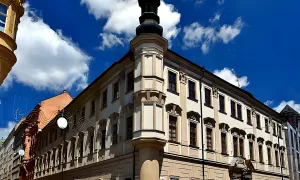
Located near Dominikánské Square, the church is close to the New Town Hall and other historical sites within Brno. The area offers a blend of architectural styles from different eras.
Accommodation nearby
Trips and activities nearby
Guided tours, tickets and activities nearby from GetYourGuide
Search tours and activities →Themed route
Tematická výletní trasa: Historické a architektonické památky Brna-města
1. Kostel svatého Michaela archanděla (Church of Saint Michael the Archangel) - *Typ:* Kostel - *Proč stojí za návštěvu:* Tento barokní kostel, nacházející se poblíž Dominikánského náměstí, je nejstarším kostelem v Brně. Jeho historie sahá až do 13. století, což jej činí klíčovým místem pro pochopení rané urbanizace Brna. Vnitřek kostela nabízí bohatou barokní výzdobu a důležité umělecké prvky.
2. Dominikánské náměstí (Dominikánské Square) - *Typ:* Náměstí - *Proč stojí za návštěvu:* Toto historické náměstí je centrem Dominikánského kláštera, který byl založen v 13. století a sloužil jako důležité kulturní a vzdělávací centrum. Náměstí nabízí krásnou architekturu s gotickými prvky, které odrážejí bohatou historii kláštera.
3. Nová radnice (New Town Hall) - *Typ:* Historický památník - *Proč stojí za návštěvu:* Nová radnice, nacházející se blízko Dominikánského náměstí, je vynikajícím příkladem barokní architektury z 18. století. Její slavná hodinová věž a historický sál poskytují pohled na bohatou politickou a kulturní minulost Brna.
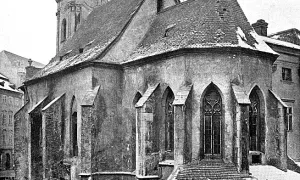
4. Klášterní kostel Panny Marie (Convent Church of the Virgin Mary) - *Typ:* Kostel - *Proč stojí za návštěvu:* Tento gotický kostel je součástí Dominikánského kláštera a sloužil jako duchovní centrum pro mnišstvo. Jeho architektura a historie představují významný příspěvek k náboženskému životu Brna.
5. Dominikánský klášter (Dominican Monastery) - *Typ:* Klášterní komplex - *Proč stojí za návštěvu:* Tento historický klášterní komplex, nacházející se v srdci Brna, je známý svou gotickou architekturou a bohatou historií. Sloužil jako důležité kulturní a vzdělávací centrum po staletí, což přispívá k jeho významu pro město.
Tato trasa nabízí pohled na klíčové historické a architektonické památky Brna-města, které společně vyprávějí příběh jeho bohaté minulosti.
Seasonal recommendations
Spring: Visiting the Church of Saint Michael Archangel during spring offers a unique experience as nature begins to awaken around this historic site. The blooming flowers and fresh greenery create a vibrant backdrop, enhancing the church's architectural beauty with natural light filtering through stained glass windows in new, colorful patterns. This period often sees moderate crowds, making it an ideal time for those who appreciate tranquility while exploring historical sites. When planning your visit, consider wearing comfortable layers to accommodate the variable temperatures typical of spring weather. Early mornings or late afternoons are recommended as they provide a more serene atmosphere and softer lighting conditions that beautifully complement the church's features.
Summer: Summer at the Church of Saint Michael Archangel is characterized by long daylight hours and warm weather, making it an excellent time for extended exploration. The lush summer foliage adds to the charm of the church, with vibrant greenery framing its historic facade. However, this season also brings larger crowds, especially during peak tourist months, so arriving early in the day can help avoid the busiest times. Light, breathable clothing is advisable due to the heat, and carrying a hat or sunglasses will provide comfort during your visit. The bright summer light accentuates the intricate details of the church's architecture, offering a visually stunning experience.
Autumn: Autumn transforms the Church of Saint Michael Archangel into a picturesque setting with its rich tapestry of fall colors. The changing leaves create a warm and inviting atmosphere as they blanket the grounds in shades of red, orange, and gold. This season tends to attract fewer visitors compared to summer, allowing for a more relaxed exploration of the site. Cooler temperatures make it necessary to dress warmly, perhaps layering with sweaters or jackets. Visiting during this time also provides an opportunity to appreciate the church's architecture against the backdrop of autumnal hues, which can be particularly striking in the softer light of early morning or late afternoon.
Winter: Winter at the Church of Saint Michael Archangel offers a serene and magical experience as snow may blanket the area, adding a layer of quiet beauty to this historic site. The stark contrast between the white landscape and the church's architecture creates a picturesque scene reminiscent of classic European winter imagery. During this season, it is essential to dress warmly in layers and wear comfortable footwear suitable for potentially slippery conditions. Keep in mind that opening hours might be shorter due to the colder weather, so checking ahead is advisable. Despite fewer visitors compared to summer months, the chilly air can make exploring more invigorating, especially when enjoying the peaceful ambiance of a winter's day at this historic church.
Visualizations and artistic views

Vizualizace jsou generovány umělou inteligencí a slouží jako inspirace.


Tips from visitors
No tips yet. Be the first!
Log in and add your tip.
Location on the map


Příběhy a pověsti
Legendy, pověsti a příběhy spjaté s touto památkou
Reviews and comments