





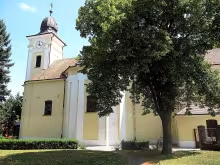
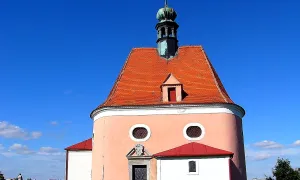
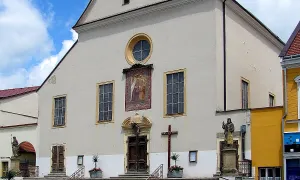
The Church of Saint Isidore in Prušánky is a Roman Catholic church located in the village of Prušánky, Hodonín District. Consecrated on November 11, 1758, it serves as the parish church for the local community and holds cultural monument status in the Czech Republic. This historical edifice stands out for its religious significance, architectural resilience, and rich history marked by numerous restorations.
The origins of this church trace back to 1712 when a chapel dedicated to Saint Isidore was initially constructed in Prušánky. However, after forty years, the chapel deteriorated beyond repair and was subsequently demolished. In response, the current structure was built on its site and consecrated in 1758. The church's construction during the mid-18th century coincided with the Baroque period, which emphasized grandeur and intricate detail, significantly influencing religious architecture across Europe, including Bohemia under Habsburg rule.
Architecturally, the Church of Saint Isidore is a testament to the challenges posed by its unstable foundations. Built on clayey ground, the church began showing signs of structural distress relatively early in its history. By 1880, significant reinforcement was necessary; iron ties were introduced, and a concrete band encircled the roofline to stabilize the structure. These measures highlight the adaptive strategies employed over time to preserve this monument.
The church has witnessed several key events throughout its existence. During World War II, it suffered damage from artillery fire, necessitating extensive post-war restoration efforts. Additionally, the church's bells have a notable history of being confiscated twice—first in 1917 and again in 1942—reflecting the turbulent times during which they were seized.
In recent decades, the Church of Saint Isidore has undergone further renovations to ensure its preservation for future generations. The most significant restoration occurred after World War II, addressing war-related damage. In the mid-1990s, a comprehensive repair was undertaken in 1995, followed by the construction of a new sacristy between 1996 and 1997. Additionally, at the beginning of 2003, the church's stained glass windows were reconstructed, further enhancing its aesthetic appeal.
Today, the Church of Saint Isidore stands as a well-preserved example of Baroque architecture in the Czech Republic. It remains an active place of worship and is accessible to visitors who wish to explore its historical and architectural significance. The presence of four bells in the church tower adds to its auditory charm, inviting both worshippers and tourists alike.
Visiting the Church of Saint Isidore offers a unique opportunity to connect with the rich cultural heritage of the region. Its storied past, marked by resilience and restoration, makes it a compelling destination for those interested in history, architecture, or simply seeking a serene place of reflection. The church's enduring presence is a testament to its importance within the community and beyond, making it well worth a visit.
Historical milestones
- 1758
- The church was consecrated on November 11.
- 1880
- The nave was reinforced with iron ties and a concrete band around the roofline.
- 1945
- Post-war restoration addressed damage from artillery fire during World War II.
Architectural development
The Church of Saint Isidore has undergone several phases of construction and repair. Initially built in 1758 to replace a deteriorated chapel, it faced structural issues due to unstable foundations, leading to reinforcement with iron ties and concrete bands by 1880. Post-World War II restoration addressed damage from artillery fire, and further renovations included the addition of a new sacristy between 1996 and 1997.
Historical events
In 1712, a chapel dedicated to Saint Isidore was constructed in Prušánky but was demolished after forty years due to deterioration. In 1758, the current church structure was consecrated on November 11.
During World War II, the church suffered damage from artillery fire and underwent significant post-war restoration.
Points of interest
- The Church of Saint Isidore's initial chapel was built in 1712 but had to be demolished due to deterioration just four decades later, illustrating the challenges of early construction techniques and materials.
- During its history, the church has been fortified with iron ties and a concrete band around the roofline by 1880, showcasing innovative engineering solutions for stabilizing structures on unstable clayey ground.
Guide
Show guide text
Welcome to Prušánky, a small yet historically rich village in the South Moravian Region, where you stand before the awe-inspiring Church of Saint Isidore. This church is not only a spiritual home for the local community but also a protected cultural monument of the Czech Republic. As you look at its solid structure and serene façade, you feel the tangible weight of history.
Let's delve into its origins. Originally, there was a chapel built in 1712 that served the local community for forty years. Its sad demise came due to maintenance issues and material degradation, which were common fates for buildings of that era. In 1758, a new chapel was constructed on its site, consecrated on November 11th, serving as a monument to the community's enduring determination to protect their spiritual center.
Look up at the church, with its sturdy foundation and elegant lines. Although specific architectural details are unknown, the structure bears the marks of its times. In 1880, significant reinforcement was undertaken by adding steel rods and a concrete spine around the roof, enhancing its resilience against the ravages of time. This effort is still visible today in the church's robustness.
In 1945, during World War II, the church suffered damage from gunfire that caused harm. Post-war reconstruction efforts helped preserve its historical appearance and function as a spiritual haven.
While no specific architects or key figures are known to be associated with its creation, every stone block tells a story of the local community and their determination to maintain their spiritual foundation.
Now let's look at an interesting tidbit that might pique your interest. The original chapel built in 1712 was demolished just forty years after construction due to decay. This tale illustrates not only the challenges associated with early building techniques and materials but also the community's resolve to rebuild and fortify their spiritual base.
While you're here, take a moment to look around and let yourself be reminded of the atmosphere of this place. If you feel inclined to explore further, Prušánky offers many more historical and cultural experiences.
Thank you for visiting the Church of Saint Isidore. I hope you enjoyed our exploration of this esteemed site and that you'll return with new questions or friends who also wish to experience its history.
Businesses nearby
Do you run a restaurant, accommodation, shop, museum, rental, wellness or other visitor service near this monument? Show yourself directly to the people heading to it — this is how they will see you in the app and on the web:
Accommodation nearby
Themed route
Tematická výletní trasa - Kostel svatého Isidora (Prušánky)
1. Kostel svatého Isidora (Prušánky) - Typ: Náboženská památka - Proč stojí za návštěvu: Tento barokní kostel je architektonickým dílem s bohatou historií, kterému věnují pozornost i kvůli jeho uměleckým prvkům a poutavé atmosféře. Vnější a vnitřní prostor kostela nabízí návštěvníkům možnost prozkoumat historické detaily a získat hlubší pochopení místního duchovního života.
2. Památník válečných obětí - Typ: Památník - Proč stojí za návštěvu: Tento památník je významným místem pro vzpomínku na oběti válek, které ovlivnily region. Poskytuje klidné místo k reflektování a uctívání památky těch, kteří zde žili a bojovali.
3. Místní fara - Typ: Náboženský objekt - Proč stojí za návštěvu: Fara je nejen administrativním centrem místního kostela, ale také nabízí pohled na historickou architekturu a poskytuje možnost prozkoumat její interiér s bohatými dekoracemi. Je to místo, kde se dějiny obce prolínají s náboženským životem.
4. Kostelní zahrada - Typ: Zelené prostory - Proč stojí za návštěvu: Tato zahrada je klidným útočištěm s krásnou vegetací a umožňuje si uvolnit se v přírodě. Je ideálním místem pro relaxaci a prohlídku, kde lze ocenit harmonii mezi architekturou a přírodním prostředím.
Tato trasa nabízí návštěvníkům možnost se ponořit do historie a duchovního života obce Prušánky, zatímco si užívají klidné a krásné okolí.
Seasonal recommendations
Spring: The spring season at Church of Saint Isidorus in Prušánky is marked by a gentle awakening of nature, with the surrounding landscape blooming into vibrant colors as wildflowers dot the fields and trees begin to bud. This period offers a serene atmosphere, ideal for photography enthusiasts who wish to capture the church against a backdrop of lush greenery. Visitors should dress in layers to accommodate the unpredictable weather, which can range from mild days to sudden rain showers. The springtime is less crowded than summer, making it an excellent time for those seeking a more tranquil experience.
Summer: Summer at Church of Saint Isidorus brings long daylight hours and warm temperatures, perfect for exploring the church's architectural details and enjoying the lush countryside in its full glory. This season often sees increased visitor numbers due to the favorable weather conditions, so arriving early is advisable to avoid crowds. Light clothing and comfortable shoes are recommended, along with sun protection such as hats or sunglasses. The summer atmosphere is lively, making it a great time for families and groups looking to combine their visit with outdoor activities in the surrounding Jihomoravský region.
Autumn: Autumn transforms the Church of Saint Isidorus into a picturesque scene, with golden hues from falling leaves creating a stunning contrast against the historic architecture. The cooler temperatures make it an ideal time for leisurely walks and exploring the church without the summer heat. Visitors should dress warmly in layers to adapt to the brisk weather, which can vary throughout the day. This season is particularly appealing for photography lovers and those who enjoy the beauty of nature's transition, offering a peaceful yet vibrant atmosphere with fewer tourists compared to peak summer months.
Winter: Winter at Church of Saint Isidorus offers a unique charm as snow blankets the landscape, providing a serene and almost mystical setting that enhances the church’s historic appeal. The colder temperatures mean shorter opening hours for the church, so planning your visit in advance is crucial. Warm clothing, including coats, hats, gloves, and sturdy boots, is essential to comfortably enjoy the site during this season. While winter may bring fewer visitors, it offers a quieter experience that allows for reflection and appreciation of the church’s architectural beauty against the stark yet beautiful backdrop of snow-covered fields.
Visualizations and artistic views

Vizualizace jsou generovány umělou inteligencí a slouží jako inspirace.


Tips from visitors
No tips yet. Be the first!
Log in and add your tip.


Reviews and comments