






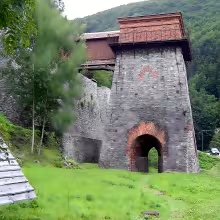
Stará Huť u Adamova, also known as Huť Františka, stands as a significant national cultural monument in the historic mining reserve of Josefovské údolí Křtinského potoka. This site is notable for its preserved structures and pivotal role in Moravia's iron production during the late 18th century. Declared the first technical reserve in Czechoslovakia in 1971, it offers a unique glimpse into the region's industrial past and technological advancements.
The origins of Stará Huť u Adamova trace back to when Bohemia was part of the Habsburg Monarchy, experiencing significant industrial growth. The area has been associated with iron production since at least the 8th century. However, it wasn't until around the turn of the 15th and 16th centuries that a nearby forge known as Althamr emerged. In 1746, Huť Františka was established, featuring a high charcoal furnace named after its founder. This period marked an era of technological innovation in iron production across Europe, with Huť Františka contributing significantly to the region's output.
Architecturally, the site is dominated by the preserved skeleton of a high charcoal furnace dating back to the early 19th century. This structure stands at 10 meters tall with a base measuring 12 by 12 meters, showcasing the industrial prowess of its time. Other notable structures include a modelárna from the same period and a hutní hostinec known as Švýcárna. The technical reserve also features areas where reconstructions of Slavic iron smelting techniques are demonstrated, providing insight into early medieval practices.
Throughout its operational history, Huť Františka played a crucial role in Moravia's iron industry, accounting for 7.5% of the region's production by the late 18th century. However, the ironworks operations ceased in 1877, marking the end of an era for this industrial site. Despite the closure, the area retained its historical significance and was later recognized as a technical reserve.
Today, Stará Huť u Adamova is under the administration of the Technické muzeum v Brně. The site remains accessible to visitors, offering a window into the past with its preserved structures and educational exhibits. Located near the confluence of Křtinský potok and Svitava, it sits within a historic mining landscape that adds to its allure. Visitors can explore the modelárna, which now houses a museum dedicated to ironworking, and witness demonstrations of early medieval bloomery furnaces.
Stará Huť u Adamova is not just a monument but a testament to the ingenuity and industrial heritage of the region. Its preservation allows us to appreciate the technological advancements that shaped Moravia's history. For those interested in industrial archaeology or the evolution of iron production, this site offers an enriching experience. A visit to Stará Huť u Adamova is both educational and inspiring, inviting exploration into a pivotal chapter of Czech industrial history.
Historical milestones
- 8
- Iron production associated with the area since at least the 8th century.
- kolem 1500
- Emergence of a nearby forge known as Althamr.
- 1746
- Establishment of Huť Františka with a high charcoal furnace.
- 19.0
- Preservation of the high charcoal furnace skeleton from early 19th century.
- 1877
- Closure of ironworks operations at Huť Františka.
- 1971
- Declared as the first technical reserve in Czechoslovakia.
Architectural development
The site includes a preserved skeleton of a high charcoal furnace, dating back to the early 19th century. Other structures include a modelárna from the same period and a hutní hostinec named Švýcárna. The technical reserve also features reconstruction areas showcasing Slavic iron smelting techniques.
Historical events
1746: Establishment of Huť Františka with a high charcoal furnace named Františka.
1877: Closure of the ironworks operations.
Points of interest
- Despite its name suggesting an ancient origin, Stará Huť u Adamova was actually established in 1746 by František, and the term "Stará" refers to its historical significance rather than age. - The high charcoal furnace at Stará Huť u Adamova is a rare surviving example of early industrial architecture from the late 18th century, standing as one of the tallest structures of its kind in Europe.
Guide
Show guide text
Welcome to Stará Huť u Adamova, a remarkable testament to the industrial heritage of Moravia. As you stand here in Adamov, Jihomoravský kraj, you're enveloped by an aura of history that whispers stories from centuries past. Before you lies a preserved high charcoal furnace, its skeletal remains standing as a proud relic of early 19th-century iron production.
Let's delve into the origins and historical context of this site. Although it might seem ancient due to its name, Stará Huť u Adamova was actually established in 1746 by František. The term "Stará" reflects its historical significance rather than age. Iron production has been associated with this area since at least the 8th century, and around 1500, a nearby forge known as Althamr emerged. However, it was in 1746 that Huť Františka came into being, marking a significant development in regional ironworking.
Now, turn your attention to the architecture before you. The high charcoal furnace is not just any structure; it's one of the rare surviving examples of early industrial architecture. As you gaze upon its towering form, imagine the fiery heart that once beat within, fueling Moravia's iron production during the late 18th century.
While specific architects and historical figures tied to this site remain unknown, the furnace itself tells a story of innovation and industry. Its preservation from the early 19th century offers us a glimpse into the technological advancements of its time.
Here’s an intriguing detail: despite its name suggesting ancient origins, Stará Huť u Adamova's establishment in 1746 marks it as a site of historical rather than chronological significance. This nuance adds depth to its legacy, inviting you to ponder the layers of history embedded within its walls.
As we conclude this brief exploration, I invite you to continue your journey through this historic reserve. Each step here is a step back in time, offering insights into the industrial past that shaped this region. Thank you for joining me on this auditory tour, and may your curiosity lead you to discover even more hidden gems within Moravia's rich tapestry of history.
Tips for visitors
The best time to visit Stará huť u Adamova is during the late spring or early fall when the weather is pleasant, allowing for comfortable exploration of the historic mining landscape. These seasons offer vibrant natural scenery and milder temperatures, enhancing your experience as you walk through the area near Křtinský potok and Svitava. Additionally, visiting outside peak tourist times can provide a more serene atmosphere to appreciate this cultural monument.
Parking is available in the vicinity of Adamov village, with access via local roads leading from Olomučany. Public transportation options are also accessible; however, it's recommended to check current routes and schedules through a travel planner or local transport websites for the most accurate information. This ensures you can plan your visit efficiently without any last-minute surprises.
When visiting Stará huť u Adamova, consider bringing comfortable walking shoes as there may be uneven terrain in the historic mining area. A camera is advisable to capture the picturesque landscapes and architectural details of Huť Františka. Additionally, carrying a water bottle, sunscreen, and perhaps a light jacket can help ensure comfort throughout your visit, regardless of weather changes.
For photography enthusiasts, early morning or late afternoon provides the best natural lighting conditions for capturing Stará huť u Adamova. The soft golden hues during these times accentuate the textures and details of the historic structures near Křtinský potok and Svitava. Exploring different angles along the paths can also reveal unique perspectives of this cultural monument.
Nearby, within a 30-minute drive or walk, is the village of Adamov, which offers local charm and additional historical insights into the region's mining past. Families with children might enjoy exploring these nearby areas, where they can learn about local history in an engaging way. The historic landscape itself provides a natural playground for curious minds.
Businesses nearby
Do you run a restaurant, accommodation, shop, museum, rental, wellness or other visitor service near this monument? Show yourself directly to the people heading to it — this is how they will see you in the app and on the web:
Events nearby


Event source: Kudy z nudy and open data of the Czech Republic
Nearby
Located near the confluence of Křtinský potok and Svitava, the area features a historic mining landscape. Nearby is the village of Adamov, with access to Olomučany via local roads.
Accommodation nearby
Trips and activities nearby
Guided tours, tickets and activities nearby from GetYourGuide
Search tours and activities →Themed route
Thematic Walking Tour: Adamov's Historic Mining Landscape
1. Stará huť u Adamova (Technical Monument) - *Type:* Industrial Heritage Site - *Why Visit:* Explore the remnants of a historic ironworks that played a crucial role in the region's industrial past. The site offers a glimpse into traditional mining and metallurgical techniques, providing insight into the area's economic history.
2. Confluence of Křtinský Potok and Svitava - *Type:* Natural Landscape - *Why Visit:* This picturesque spot marks where two streams meet, offering serene views and a peaceful setting to reflect on the natural beauty that has surrounded Adamov for centuries. It's an ideal place to appreciate the harmony between nature and historical industry.
3. Village of Adamov - *Type:* Historic Settlement - *Why Visit:* Wander through this charming village, which offers insights into rural life in the Jihomoravský region. The architecture and layout reflect centuries-old traditions, providing a living history lesson that complements your visit to Stará huť.
4. Olomučany Access Road - *Type:* Scenic Route - *Why Visit:* As you travel along this local road connecting Adamov to Olomučany, enjoy the scenic views of rolling hills and lush landscapes. This route offers a gentle walk that connects the historical sites with the natural beauty of the region.
This tour provides a comprehensive exploration of Adamov's rich industrial heritage intertwined with its natural surroundings, offering both educational insights and tranquil experiences.
Seasonal recommendations
Spring: Visiting Stará huť u Adamova during spring offers a unique experience as nature reawakens around the industrial heritage site. The landscape is adorned with blooming flowers and fresh greenery, creating a picturesque backdrop that enhances the historical ambiance of the old ironworks. This season often sees fewer visitors compared to summer, allowing for a more tranquil exploration of the area. It's advisable to wear comfortable walking shoes as paths may be muddy from spring rains. Early morning visits are ideal to enjoy cooler temperatures and softer natural lighting, which beautifully illuminates the structures.
Summer: The summer months bring lively energy to Stará huť u Adamova, with longer daylight hours perfect for exploring the expansive site. The lush greenery and vibrant wildflowers offer a stunning contrast against the historical ironworks, making it an ideal time for photography enthusiasts. However, this is also peak tourist season, so arriving early in the day can help avoid larger crowds. Comfortable, breathable clothing and sun protection are essential due to the warm weather. Late afternoon visits might be less crowded as many tourists leave after a full day of sightseeing.
Autumn: Autumn at Stará huť u Adamova is characterized by its rich tapestry of colors, with the surrounding landscape transforming into shades of red, orange, and yellow. The cooler temperatures make for comfortable walking tours, and the site often feels more serene as visitor numbers dwindle compared to summer. This season provides an excellent opportunity to capture the historical structures in a different light, as the softer autumn sun creates dramatic shadows. Layered clothing is recommended to accommodate changing weather conditions throughout the day.
Winter: Visiting Stará huť u Adamova during winter offers a unique and atmospheric experience, with snow often blanketing the site and adding a magical quality to its industrial charm. The cold air can make for crisp, clear days ideal for photography, capturing the ironworks against a serene snowy landscape. Visitor numbers are typically low, providing a peaceful setting to appreciate the historical significance of the area. Warm clothing is essential due to the chilly temperatures, and it's advisable to check opening hours as they may be shorter during this season.
Visualizations and artistic views

Vizualizace jsou generovány umělou inteligencí a slouží jako inspirace.


Atmosphere of the place
Atmospheric visualization of the setting and era
Tips from visitors
No tips yet. Be the first!
Log in and add your tip.

Reviews and comments