





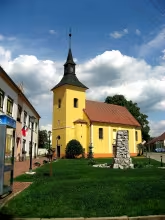
The Church of Saint Lawrence in Malhostovice is a filial church located in the village of Malhostovice, within the Brno-venkov District of the South Moravian Region. This historical monument dates back to at least the late 13th century, with its first documented mention on February 20, 1407. Recognized as a cultural monument of the Czech Republic, it stands as a testament to the architectural and religious history of the region.
The origins of the Church of Saint Lawrence are rooted in the late 13th century, during a time when Bohemia experienced significant political and social changes under King Wenceslaus II. Although specific details about its initial construction remain sparse, historical records suggest it likely existed by the turn of the 14th century. The church's early history is intertwined with local disputes involving notable figures such as Anně, widow of Jaroslav ze Šelmberka, and Vilém z Kunštátu a z Loučky. These conflicts highlight the church's significance within the community, particularly regarding its ownership and administration by Olomouc bishops who played a crucial role in its establishment.
Architecturally, the original medieval structure of the Church of Saint Lawrence has largely been lost over time. The only surviving element from this period is a Gothic sanctuary. In the late 15th century, a late-Gothic sacristy was added to the early Gothic core of the church, reflecting architectural evolution during its history. However, by the mid-19th century, structural issues caused by high groundwater levels necessitated a complete reconstruction in 1834. This led to the creation of the current structure, which replaced the deteriorating original building.
Throughout its history, the Church of Saint Lawrence has experienced various administrative changes and challenges. After the Thirty Years' War, it fell into disrepair due to a lack of clergy, leading to its administration being managed from Lomnice between 1658 and 1707. The establishment of the Brno bishopric in 1777 revitalized local ecclesiastical governance, eventually resulting in Malhostovice coming under the jurisdiction of Drásov's local chaplaincy. Despite these challenges, the church continued to serve its community until a new building was deemed necessary.
Several key events and curiosities mark the history of this monument. Notably, during the 19th century, the original main altar, reportedly acquired from a church in Zábrdovice, contained an inscription indicating it was crafted by Frant. Maltz in 1733. Despite being moved due to groundwater issues, Malhostovice did not experience a cholera outbreak when its cemetery was relocated in 1832. The reconstruction of the church in 1834, completed and consecrated on June 28, 1835, marked a significant chapter in its history.
Today, the Church of Saint Lawrence stands as a cultural monument open to visitors who wish to explore its rich history and architectural features. Its significance is underscored by its resilience through centuries of change and adversity. The church's story offers a glimpse into the historical and religious fabric of Malhostovice, making it a worthwhile destination for those interested in Czech heritage. Visitors are invited to appreciate this enduring symbol of faith and community spirit.
Historical milestones
- 1407
- First documented mention of the Church of Saint Lawrence.
- 1835
- Consecration of the newly reconstructed church.
Architectural development
The original medieval structure of the Church of Saint Lawrence has been largely lost over time. The only surviving element from the initial construction is a Gothic sanctuary. In the late 15th century, a late-Gothic sacristy was added to the early Gothic core of the church. A significant reconstruction in 1834 led to the current structure, which replaced the deteriorating original building.
Historical events
First documented mention in 1407, indicating its existence prior to this date.
Reconstruction completed and church consecrated on June 28, 1835.
Points of interest
- The Church of Saint Lawrence has a mysterious connection to local disputes involving Anně, the widow of Jaroslav ze Šelmberka, and Vilém z Kunštátu a z Loučky, highlighting its historical significance beyond just religious purposes.
- Despite being relocated due to high groundwater levels in 1832, Malhostovice remarkably did not suffer from a cholera outbreak during this period, which was unusual for the time given the common association between cemetery relocations and disease outbreaks.
Guide
Show guide text
Welcome to the Church of Saint Lawrence in Malhostovice, a serene and historical gem nestled in this charming village. As you stand here, take a moment to absorb the tranquil atmosphere that surrounds you. This church, with its modest yet dignified presence, invites you into centuries of history.
The origins of this sacred site trace back at least to the late 13th century, though it was first documented in the year 1407. Over the years, the Church of Saint Lawrence has witnessed significant transformations. In the late 15th century, a sacristy was added, enhancing its structure and function. However, by 1832, high groundwater levels posed severe structural challenges, leading to a complete reconstruction that culminated in the church's consecration in 1835.
As you gaze upon the church now, notice how it stands resiliently against time’s test. While specific architectural details are not extensively documented, its simple yet elegant design speaks volumes of its historical journey and the community it has served for centuries.
The history of this church is interwoven with intriguing tales involving notable figures such as Anně, the widow of Jaroslav ze Šelmberka, and Vilém z Kunštátu a z Loučky. Their disputes highlight the church's significance beyond its religious role, serving as a focal point in local historical narratives.
One fascinating aspect of this site is its relocation due to high groundwater levels back in 1832—a testament to the community’s dedication to preserving their cherished landmark. This story adds an intriguing layer to your visit, inviting you to ponder on the resilience and adaptability that have defined this church throughout history.
As we conclude our brief journey through time at the Church of Saint Lawrence, I encourage you to explore further, perhaps wandering around its vicinity or delving deeper into its stories. Thank you for joining me today, and may your visit be both enlightening and inspiring.
Tips for visitors
The best time to visit the Church of Saint Lawrence in Malhostovice is during late spring or early autumn, when the weather is pleasant for walking around the village and exploring the church's surroundings without the crowds that summer might bring. The natural light during these seasons enhances the architectural details of the church, making it a perfect time for photography enthusiasts.
Parking and transportation to Malhostovice are convenient. Visitors can drive their own vehicles as there is parking available in the vicinity of the village. For those preferring public transport, local buses serve the area, though it's advisable to check current schedules online or at nearby bus stations. The church is accessible on foot from these stops.
When visiting the Church of Saint Lawrence, consider bringing comfortable walking shoes and a camera with a good zoom lens to capture the intricate details of the church architecture. A small backpack with water, snacks, and perhaps a light jacket can enhance your visit, especially if you plan to explore the surrounding area of Malhostovice.
Photography enthusiasts will find several spots around the Church of Saint Lawrence ideal for capturing its beauty. The best natural lighting is usually found in the early morning or late afternoon when the sun casts soft shadows on the church's façade. Inside, the stained glass windows offer vibrant colors that are particularly striking under direct sunlight.
For those interested in exploring nearby attractions within a 30-minute drive from Malhostovice, consider visiting local historical sites and nature trails in the Jihomoravský kraj region. These areas provide a glimpse into the rich cultural heritage and natural beauty surrounding the village.
Businesses nearby
Do you run a restaurant, accommodation, shop, museum, rental, wellness or other visitor service near this monument? Show yourself directly to the people heading to it — this is how they will see you in the app and on the web:
Events nearby


Event source: Kudy z nudy and open data of the Czech Republic
Accommodation nearby
Trips and activities nearby
Guided tours, tickets and activities nearby from GetYourGuide
Search tours and activities →Themed route
Tematická výletní trasa: Kostel svatého Vavřince (Malhostovice)
1. Kostel svatého Vavřince (Malhostovice) - Kostel Začněte svůj výlet u kostela svatého Vavřince, hlavní památky obce Malhostovice. Tento barokní chrám je známý svou architektonickou krásou a bohatou historií. Je to ideální místo pro ty, kteří se zajímají o dějiny českého kostelství a chtějí si užít klidné okolí.
2. Nádvoří kostela svatého Vavřince - Historický areál Prozkoumejte nádvoří kostela, kde můžete najít malebné zahrady a starobylé architektonické prvky. Tento prostor nabízí klidnou atmosféru pro relaxaci a reflektování po návštěvě samotného kostela.
3. Věž kostela svatého Vavřince - Historický výhled Navštivte věž kostela, která nabízí pohled na okolní krajinu. Je to skvělý způsob, jak si užít panoramatické výhledy a pochopit historickou architekturu z jiného úhlu.
4. Expozice kostela svatého Vavřince - Kulturní prohlídka Zajímáte se o historii a umění? Expozice v kostele nabízí cenné informace o jeho minulosti, uměleckých detailech a kulturním významu. Je to ideální místo pro těch, kdo chtějí hlouběji poznat historii obce.
5. Park u kostela svatého Vavřince - Klidná procházka Zavěrte svůj výlet klidnou procházkou v parku kolem kostela. Tento zelený prostor je perfektní pro relaxaci a užívání si přírody, což dokončuje vaši návštěvu tím nejlepším způsobem.
Tato trasa vám umožní hluboce se ponořit do historie a kultury kostela svatého Vavřince, což je středobodem obce Malhostovice.
Seasonal recommendations
Jaro: Návštěva kostela svatého Vavřince v Malhostovicích v jarním období nabízí jedinečný pohled na oživující se přírodu, kdy kvetoucí keře a stromy tvoří živou zelenou krajinu kolem historické památky. Slunečné dny poskytují ideální osvětlení pro fotografii, což vytváří nádherný kontrast s architektonickými detaily kostela. I když začínající turistické sezóny mohou znamenat stále mírnější davy, je vhodné přijít brzy ráno nebo později večer, aby se vyhnuli třesku. Důrazně doporučujeme nosit pohodlné boty pro pochůzky na trávníkových terasách a lehký oblek s kapesníkem nebo pláštěnkou, protože teploty se mohou v jarním období rychle měnit.
Léto: Létě kostel svatého Vavřince nabízí klidný útočiště od horka a života hlavních turistických center, přičemž osvětlení slunečného dne zdůrazňuje historickou architekturu. S nástupem letní sezóny se mohou zvýšit návštěvníci, zejména v pátek a večer, takže je vhodné navštívit památku brzy ráno nebo později večer, aby se vyhnuli davům. Teplé oblečení s kurtkou nebo pláštěnkou by mělo být připraveno pro ranní a večerní chlad, zatímco sluneční brýle a silná ochrana proti UVB paprskům jsou nezbytné pro snížení vystavení slunci. Nosit pohodlné boty je také klíčové pro pochůzky na trávníkových oblastech kolem kostela.
Podzim: V podzimu se návštěva kostela svatého Vavřince stává intimní zážitkem, když listy nabývají živých barev a padají na cestách vedoucích k památce. Slunečné dny poskytují jasné osvětlení, které zdůrazňuje historické detaily, zatímco méně náročný turistický čas znamená menší davu. Je vhodné navštívit památku výjimečně krásných zimních dnů, kdy je atmosféra klidná a příjemná. Pohodlné boty jsou nezbytné pro pochůzky na listnatém povrchu, zatímco teplý oblek s kapucí či pláštěnkou je důležitý kvůli chladnějším ráno a večerem. Přineste si kapesník nebo deku pro ranní mrazivé podmínky.
Zima: Zimní návštěva kostela svatého Vavřince nabízí klidnou atmosféru, když je oblast pokryt sněhem a měsícem osvětluje architektonický majestát. Otevírací doba se často zkracuje kvůli chladu, takže je důležité se podrobně informovat o aktuálních hodinách před návštěvou. Méně turistické období znamená menší davu, což umožňuje klidný prozkoumání památky. Teplé oblečení je nezbytné, včetně kožešinových kapesníků, teplého kabátu a ochranných bot. Při návštěvách během mrazivých dní doporučujeme přinést si zásoby jako deku nebo čaj pro pohodlí na chladném venkovním prostředí.
Visualizations and artistic views

Vizualizace jsou generovány umělou inteligencí a slouží jako inspirace.


Atmosphere of the place
Atmospheric visualization of the setting and era
Tips from visitors
No tips yet. Be the first!
Log in and add your tip.



Reviews and comments