





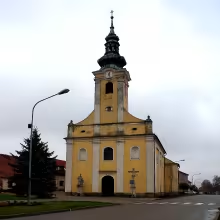
The Church of Saint Andrew in Popice stands as a testament to the Czech Republic's rich historical tapestry. Located in the village of Popice within the Břeclav District, this Roman Catholic church serves both as a place of worship and a cultural monument recognized for its historical significance. Originally built in the Romanesque style, it has undergone significant transformations over the centuries, reflecting broader religious and architectural trends.
The origins of the Church of Saint Andrew date back to the Romanesque period, though specific details about its initial construction are sparse. During this era, Bohemia was part of the Holy Roman Empire, a time marked by considerable religious and political shifts. The church's Baroque renovations between 1696 and 1699 were significant, aligning with a broader Catholic resurgence in response to Protestant Reformation influences. These renovations included extending the building and adding a new tower, which was later destroyed by fire in 1716.
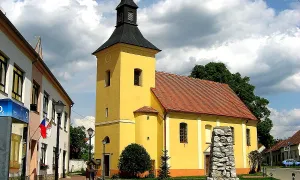
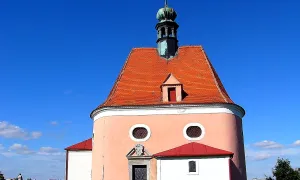
Architecturally, the Church of Saint Andrew is notable for its blend of Romanesque foundations and Baroque embellishments. The original structure underwent extensive modifications during the late 17th century, resulting in an extended building with a newly constructed tower. This shingled tower was destroyed by fire in 1716 but later rebuilt. In 1781, Andreas Voith from Popice redesigned it into its distinctive onion-shaped form, a style emblematic of certain Central European churches. Despite another fire in 1806, the tower's current appearance dates back to 1860.
The church's interior features Baroque decorations that enhance its historical and artistic allure. It includes side altars dedicated to the Virgin Mary of Help and Saint Anthony of Padua, reflecting the religious devotion characteristic of the period. These elements contribute to the church's status as a cultural monument, preserving both its architectural heritage and spiritual significance.
Throughout its history, the Church of Saint Andrew has witnessed several key events that have shaped its current form. The fires of 1716 and 1806 were pivotal moments leading to significant reconstruction efforts. Andreas Voith's contribution in redesigning the tower is particularly noteworthy, as it introduced a unique architectural element distinguishing the church today.
Today, the Church of Saint Andrew remains an active place of worship within the parish of Popice u Hustopečí. Its designation as a cultural monument underscores its importance to both the local community and visitors interested in Czech history and architecture. The church's blend of Romanesque and Baroque elements offers a fascinating glimpse into architectural evolution over centuries.
Visiting the Church of Saint Andrew provides an opportunity to immerse oneself in the historical and cultural narratives that have shaped this region. Its enduring presence as a place of worship and its recognition as a cultural monument make it a worthwhile destination for those interested in history, architecture, or both. The church invites visitors to explore its rich past while appreciating its continued role in the community.
Historical milestones
- 1696
- The church underwent extensive Baroque renovations.
- 1716
- The original shingled tower was destroyed in a fire.
- 1781
- The onion-shaped redesign of the tower by Andreas Voith.
- 1806
- The tower caught fire again, leading to its current form in 1860.
Architectural development
Initially built as a Romanesque structure, the Church of Saint Andrew underwent extensive Baroque renovations between 1696 and 1699. These changes included extending the church and constructing a new tower, which was later destroyed by fire in 1716. The tower was rebuilt with an onion-shaped design in 1781 by Andreas Voith and again after another fire in 1806, resulting in its current form from 1860.
Historical events
- 1716
- The original shingled tower was destroyed in a fire that swept through the village.
- 1781
- The church's tower was redesigned into its current onion-shaped form by Andreas Voith from Popice.
- 1806
- The tower caught fire again, leading to the construction of its present-day appearance in 1860.
Points of interest
- The Church of Saint Andrew's onion-shaped tower is a distinctive architectural feature introduced by Andreas Voith in 1781, setting it apart from typical Central European church designs.
- Despite two significant fires in 1716 and 1806 that destroyed the original shingled tower, the current structure dates back to its reconstruction in 1860, showcasing resilience and historical continuity.
Guide
Show guide text
Welcome to the Church of Saint Andrew in Popice, a cherished gem nestled within this quaint village in the Břeclav District. As you stand here, imagine yourself stepping back into history, surrounded by an aura that whispers tales from centuries past.
This church, originally constructed in the Romanesque style, underwent significant transformations over time. Between 1696 and 1699, it embraced Baroque elegance through extensive renovations that added a new extension and tower, marking a pivotal moment in its architectural evolution. These changes were not merely aesthetic but reflected broader cultural shifts of the era.
As you gaze upon the church's facade, take note of its harmonious blend of styles—a testament to its rich history. The most striking feature is undoubtedly the onion-shaped tower, an unusual design for Central Europe introduced by Andreas Voith in 1781. This distinctive architectural element sets it apart and invites curiosity about its origins.
The church's journey through time has been marked by resilience. In 1716, a devastating fire consumed the original shingled tower, yet the community rose to rebuild. However, fate tested them once more when another blaze struck in 1806. It was these challenges that led to the creation of its current form by 1860, showcasing the enduring spirit of those who cherished it.
While specific historical figures associated with this church may remain unknown, their legacy is etched into every stone and spire. The Church of Saint Andrew stands as a cultural monument of the Czech Republic, not just for its architectural beauty but also for its ability to connect us with the past.
One intriguing aspect that captures the imagination is how the church has weathered adversity—literally and metaphorically. Despite two significant fires, it remains a beacon of faith and history in Popice. This resilience speaks volumes about the community's dedication to preserving their heritage.
As you continue your exploration, let yourself be drawn into the stories embedded within these walls. Each corner, each detail holds a narrative waiting to be discovered. We invite you to delve deeper, to walk around and soak in the atmosphere that has been shaped by centuries of devotion and artistry.
Thank you for joining us on this journey through time at the Church of Saint Andrew. May your visit inspire reflection and appreciation for the layers of history that surround us. Safe travels as you continue to uncover more treasures hidden within our world's rich tapestry.
Tips for visitors
The best time to visit the Church of Saint Andrew in Popice is during late spring or early autumn. During these months, the weather is typically mild and pleasant, making it ideal for exploring both the church's interior and its surrounding areas. Additionally, visiting outside of peak tourist seasons ensures a quieter experience, allowing you to appreciate the historical architecture without large crowds.
Parking at the Church of Saint Andrew in Popice can be convenient as there are local parking options available nearby. For those preferring public transport, it is accessible via regional bus services; however, specific routes and schedules should be checked online prior to your visit. This ensures a smooth journey to this serene location nestled within the Břeclav District.
When visiting the Church of Saint Andrew, consider bringing comfortable walking shoes as you may want to explore the surrounding village of Popice. A camera is also recommended for capturing the intricate Romanesque details of the church's architecture and any picturesque views in the area. Additionally, carrying a light jacket can be useful if weather conditions change unexpectedly.
For photography enthusiasts, the best spots around the Church of Saint Andrew are during the golden hours—shortly after sunrise or before sunset—when natural lighting enhances the textures and colors of the church's architecture. Inside, capturing the stained glass windows in soft daylight provides a vibrant contrast against the stone structure. Families with children will find the peaceful atmosphere conducive to exploration, and there may be local legends or stories about the church that can engage young visitors.
In the vicinity of Popice, you can visit other historical sites within a 30-minute drive. These include nearby castles or manor houses that offer insights into regional history and architecture. Exploring these places provides a broader understanding of the area's cultural heritage and is an excellent way to spend a day immersed in history.
Businesses nearby
Do you run a restaurant, accommodation, shop, museum, rental, wellness or other visitor service near this monument? Show yourself directly to the people heading to it — this is how they will see you in the app and on the web:
Accommodation nearby
Themed route
Tematická výletní trasa: Kostel svatého Ondřeje (Popice) a okolí
1. Kostel svatého Ondřeje (Popice) *Typ:* Historická památka *Proč stojí za návštěvu:* Kostel svatého Ondřeje je architektonickou perli v obci Popice. Jeho gotický design a historie přitahují návštěvníky, kteří mají zájem o duchovní i kulturní dědictví regionu Jihomoravského kraje.
2. Nádvoří kostela *Typ:* Historický areál *Proč stojí za návštěvu:* Nádvoří před kostelem svatého Ondřeje nabízí klidnou atmosféru, kde si můžete užít pohled na okolní krajinu. Je to ideální místo pro odpočinek a reflektování historických událostí spojených s touto památkou.
3. Věž kostela *Typ:* Architektonický prvek *Proč stojí za návštěvu:* Věž kostela svatého Ondřeje poskytuje jedinečný pohled na obec Popice a okolní krajinu. Je to nejen architektonická výstavba, ale také symbol historie místní komunity.
4. Kaple u kostela *Typ:* Religiozní památka *Proč stojí za návštěvu:* Kaple vedle hlavního kostela je menším, ale významným duchovním místem. Její historie a architektura přitahují návštěvníky zájemce o bohatství regionálního duchovního života.
Tato trasa vás provede skrze klíčové body okolo kostela svatého Ondřeje, nabízejíc pohled na jeho historickou a kulturní hodnotu.
Seasonal recommendations
Jaro: In the spring season, St. Andrew's Church in Popice reveals its full beauty as green vegetation and blooming shrubs add vibrancy to the atmosphere. The sun illuminates the architectural details of the church, making it ideal for photography. Visitors can expect mild weather and the presence of hikers enjoying beautiful spring days. It is recommended to visit early in the morning or later in the evening to avoid crowds and prepare for moderate temperatures with light clothing.
Léto: Summer is the main season for visiting St. Andrew's Church, as sunny days enhance its appeal. The architectural complex shines under warm summer sunlight, providing an ideal backdrop for photography and enjoying outdoor spaces. However, with the influx of tourists, larger crowds are expected, especially in midday, so it is advisable to visit the church early in the morning or later in the evening. Visitors should be prepared for a warm atmosphere with sun protection and sufficient water supply.
Podzim: In the autumn months, St. Andrew's Church offers subtle mood changes as trees and shrubs turn into shades of red and yellow. This seasonal color palette provides a unique view of the church while moderate temperatures maintain comfort during walks around its surroundings. Despite fewer tourists, visits may be affected by unpredictable weather, so it is advisable to prepare for possible rain with all-weather clothing. Visitors will enjoy a more tranquil atmosphere and can plan their visit later in the day as the sun begins to set.
Zima: The winter season brings a gentle and calm atmosphere to St. Andrew's Church in Popice, where architecture is illuminated by cold days or soft winter sunlight. Frozen vegetation and snow cover add mild romance to the scene, ideal for peaceful strolls. However, opening hours may be limited on snowy days or in winter conditions, so it is recommended to check current information before visiting. Visitors should be equipped with warm clothing and suitable footwear for cold floors, while early morning visits offer the best lighting for photography.
Visualizations and artistic views

Vizualizace jsou generovány umělou inteligencí a slouží jako inspirace.


Tips from visitors
No tips yet. Be the first!
Log in and add your tip.


Reviews and comments