





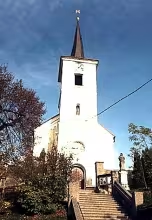
The Church of the Nativity of Saint John the Baptist in Dražovice is a Roman Catholic parish church with a rich history marked by significant architectural transformations over several centuries. Situated in the village of Dražovice within the Vyškov District of the South Moravian Region, this monument stands as a testament to both religious devotion and historical resilience.
Originally constructed in the 14th century, it was destroyed by Swedish troops in 1645 during the tumultuous Thirty Years' War. A Baroque church replaced it in 1729, financed by Wolfgang Hanibal Kardinál Schrattenbach, a prominent patron of that era. Due to its deteriorating condition and inability to accommodate more parishioners, a new neoclassical structure was erected between 1888 and 1889. This current building, consecrated on August 25, 1889 by Bishop František Saleský Bauer, is notable for its classical architectural style and historical significance.
The church's origins trace back to the 14th century when it served as a parish church in Dražovice. Its destruction in 1645 marked a significant loss during widespread European conflict. The subsequent Baroque reconstruction in 1729 was part of a broader cultural and religious revival under the Habsburg Monarchy, which governed Bohemia at that time. This era emphasized grandeur and ornamentation in church architecture, reflecting the Counter-Reformation's influence.
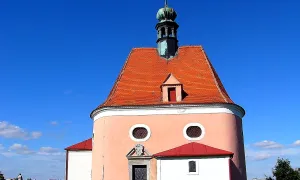
Architecturally, the Church is characterized by its single-nave design with an attached presbytery, separated by a triumphal arch. The facade features white and yellow plasterwork set against a sandstone base, embodying the classical architectural style popular in late 19th-century Europe. Inside, the church maintains a simple yet elegant interior. The roof is flat and divided into panels alternately decorated with ornamental designs. The nave's flooring is made of light limestone, while the presbytery boasts marble tiles. A significant artistic feature within the church is the main altar, crafted in 1889 by Johann Eduard Tomola from Brno. This altar stands on four columns adorned with capitals and panels depicting motifs related to the Passion of Christ. Additionally, a side chapel was added in 1968, featuring an entrance facing the congregation.
Throughout its history, various owners and administrators have played crucial roles in its development and preservation. Wolfgang Hanibal Kardinál Schrattenbach's financial support for the Baroque reconstruction highlights his influence as a patron during that period. Later, Bishop František Saleský Bauer's consecration of the neoclassical building underscores the church's continued importance within the Roman Catholic community.
Key events in the church's history include its destruction by Swedish troops in 1645 and subsequent reconstructions reflecting changing architectural styles and religious needs. The addition of a side chapel in 1968 further illustrates the ongoing evolution and adaptation of this sacred space to meet contemporary requirements.
Today, the Church of the Nativity of Saint John the Baptist remains an active parish church, open to visitors who wish to explore its historical and architectural significance. Its well-preserved neoclassical design offers a glimpse into the late 19th-century revival of classical architecture in Europe. The church's serene atmosphere and rich history make it a worthwhile destination for those interested in religious heritage and architectural evolution.
Visiting this monument provides an opportunity to appreciate not only its aesthetic beauty but also its enduring legacy as a place of worship and community gathering. Its historical layers, from the original 14th-century structure to the current neoclassical building, tell a story of resilience and adaptation that continues to resonate with visitors today.
Historical milestones
- 1729
- Construction of the new Baroque church financed by Wolfgang Hanibal kardinál Schrattenbach.
- 1889
- Consecration of the current neoclassical church building by Bishop František Saleský Bauer.
Architectural development
The church underwent significant architectural changes over the centuries. Initially built in the 14th century, it was destroyed in 1645 and replaced with a Baroque structure in 1729. The current neoclassical building, constructed between 1888-1889, features a single nave and an attached presbytery, reflecting a shift towards classical architectural styles.
Historical events
- 1645
- The original church was destroyed by Swedish troops.
- 1889
- The current church building was consecrated by Bishop František Saleský Bauer.
Points of interest
- The Church of the Nativity of Saint John the Baptist in Dražovice was originally built in the 14th century and serves as a historical witness to the region's turbulent past, including its destruction during the Thirty Years' War. - After being destroyed by Swedish troops in 1645, the church underwent significant architectural transformations, with a Baroque version constructed in 1729 under the patronage of Wolfgang Hanibal Kardinál Schrattenbach, reflecting the Counter-Reformation's influence on religious architecture.
Guide
Show guide text
Welcome to the historic Church of the Nativity of Saint John the Baptist in Dražovice. As you stand before this remarkable structure, take a moment to absorb its serene presence amidst the landscape of Jihomoravský kraj. This church, with its neoclassical elegance, invites you into centuries of history and architectural evolution.
The story of this church begins in the 14th century when it was originally constructed as a Roman Catholic parish church. Its early form witnessed significant historical events, including its destruction by Swedish troops during the tumultuous period of the Thirty Years' War in 1645. This marked a pivotal moment in its history, leading to a remarkable transformation.
In 1729, under the patronage of Wolfgang Hanibal kardinál Schrattenbach, a new Baroque church rose from the ashes of the old. This structure served the community until it too was replaced by what stands before you today—a neoclassical masterpiece completed between 1888 and 1889. The current building's design features a single nave with an attached presbytery, separated by a triumphal arch that guides your eyes towards the altar.
As you gaze upon its facade, notice how the architecture harmoniously blends historical influences. Though the architects remain unknown, their vision is evident in every detail—from the symmetry of the structure to the grandeur of its entrance. The church's design invites contemplation and reverence, embodying a timeless beauty that has withstood the test of time.
Key figures associated with this sacred site include Wolfgang Hanibal kardinál Schrattenbach, whose financial support was crucial for the Baroque reconstruction, and Bishop František Saleský Bauer, who consecrated the neoclassical church in 1889. Their contributions are etched into the very stones of this edifice.
An intriguing aspect of this site is its resilience through adversity. The church's repeated rebuilds reflect not only architectural shifts but also the enduring spirit of the Dražovice community. Each iteration tells a story of faith and perseverance, making it more than just a place of worship—it's a testament to human tenacity.
As you prepare to explore further, consider how each step within this sacred space connects you with those who came before. The church invites you to delve deeper into its history, perhaps by visiting the local archives or speaking with historians familiar with Dražovice’s past.
Thank you for joining us on this journey through time and architecture. We hope your visit here inspires reflection and curiosity as you continue exploring the rich tapestry of Jihomoravský kraj's heritage. Farewell, until we meet again in another chapter of history.
Businesses nearby
Do you run a restaurant, accommodation, shop, museum, rental, wellness or other visitor service near this monument? Show yourself directly to the people heading to it — this is how they will see you in the app and on the web:
Accommodation nearby
Trips and activities nearby
Guided tours, tickets and activities nearby from GetYourGuide
Search tours and activities →Themed route
Tematická výletní trasa: Kostel Narození svatého Jana Křtitele a okolí Dražovic
1. Kostel Narození svatého Jana Křtitele (Dražovice) - Typ: Historický kostel - Proč stojí za návštěvu: Tento barokní kostel je architektonickou perli obce Dražovice, známý svým bohatým historickým pozadím a unikátními interiéry. Je ideálním místem pro ty, kteří mají zájem o dějiny a architekturu regionu.
2. Obecní úřad Dražovice - Typ: Místní správa - Proč stojí za návštěvu: Obecní úřad nabízí vhled do místního života a historie obce. Navštívte pro poznání, jak je organizován život v malé české obci, a možná se setkáte s některými z jejích aktivit.
3. Místní park v Dražovicích - Typ: Místní park - Proč stojí za návštěvu: Park je místo klidu a krásy, kde si můžete užít přírody. Je to ideální místo pro relaxaci po prozkoumání historických památek obce.
4. Dražovice - centrum obce - Typ: Městské centrum - Proč stojí za návštěvu: Procházka po ulicích centra Dražovic vám umožní prozkoumat místní kulturu a atmosféru. Je to skvělý způsob, jak se dozvědět více o každodenním životě obyvatel.
Tato trasa nabízí kombinaci historických objevů a klidných procházek v malebném prostředí Dražovic.
Seasonal recommendations
Spring: As spring unfolds, the Church of the Nativity of St. John the Baptist in Dražovice is enveloped by a vibrant display of blooming flora, creating a picturesque setting that enhances the church's historical charm. The soft morning light casts gentle shadows through stained glass windows, adding to the serene atmosphere. Visitors should consider wearing comfortable shoes for walking on potentially muddy paths and bringing along an umbrella or raincoat due to unpredictable showers typical of this season.
Summer: Summer at Dražovice offers long daylight hours perfect for exploring the church's intricate architecture and surrounding landscapes. The lush greenery provides a refreshing backdrop, while the warm weather invites visitors to enjoy outdoor activities nearby. It is advisable to visit early in the morning or later in the afternoon to avoid crowds, as this is when most tourists flock to the area. Light clothing and sun protection are recommended due to the higher temperatures.
Autumn: The autumnal season transforms Dražovice into a tapestry of rich, warm colors with its deciduous trees shedding leaves in shades of red, orange, and gold. This creates a magical atmosphere around the church, ideal for photography enthusiasts. Cooler temperatures mean visitors should dress warmly, perhaps bringing along a light jacket or sweater. The fewer crowds during this season make it an excellent time to enjoy a peaceful visit.
Winter: Winter brings a quiet, almost mystical beauty to Dražovice as snow blankets the landscape and the church stands serene against frosty surroundings. The shorter days mean that visiting early is wise to fully appreciate the site's features before dusk. Visitors should dress warmly in layers and wear sturdy boots for walking on potentially icy paths. Despite the cold, this season offers a unique opportunity to experience the church in a tranquil setting with fewer visitors.
Visualizations and artistic views

Vizualizace jsou generovány umělou inteligencí a slouží jako inspirace.


Tips from visitors
No tips yet. Be the first!
Log in and add your tip.
Location on the map

Příběhy a pověsti
Legendy, pověsti a příběhy spjaté s touto památkou
Reviews and comments