





The Western Gate in Ústí nad Labem, also known as the Czech Gate, was once an important medieval gate within the town's fortifications. Located in what is now the Ústecký kraj region, it stood at the intersection of Mírového náměstí and ulice 1. máje. It served as one of two main entrances to the town, alongside the Eastern or German Gate. Its strategic position on a major trade route between Litoměřice and Česká Lípa, extending into Lusatia, highlights its role in facilitating commerce and movement during medieval times.
The origins of the Western Gate are deeply rooted in Ústí nad Labem's fortification history. The earliest documented mention of Ústí dates back to 1218, but significant fortification efforts began in 1428 by Václav Carda z Petrovic, a Hussite leader. During this period, the walls were fortified and modernized, with the western side being doubled and equipped with several towers and corner bastions. This reflects broader trends in Bohemian military architecture during the Middle Ages, particularly in response to feudal conflicts and the Hussite Wars.
Architecturally, the Western Gate was constructed using quarry stone and squared blocks, typical materials for medieval fortifications. The gate featured an archway leading into a courtyard, with its design evolving over time. Between 1525 and 1526, under Jan Sezima z Ústí's administration, both main gates underwent significant reconstruction, further shaping their architectural form. Despite these enhancements, the Western Gate was eventually demolished in 1830.
Throughout its history, the gate witnessed various changes in ownership and administration. Initially overseen by Václav Carda z Petrovic, it later came under Jan Sezima z Ústí during its reconstruction phase. These figures played crucial roles in shaping the gate's history through their contributions to its fortification and architectural evolution.
Key events associated with the Western Gate include its initial fortification in 1428, major reconstruction efforts between 1525 and 1526, and its eventual demolition in 1830. These milestones highlight the gate's historical significance within Ústí nad Labem's medieval defenses.
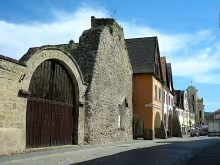
Today, the Western Gate exists only as a ruin but remains an important site for those interested in exploring Bohemia's medieval fortifications. Although no longer standing, remnants of the gate were repurposed into an arch that complements nearby buildings, offering visitors a glimpse into its past architectural grandeur. The area around Mírového náměstí and Štítových domů continues to hold historical significance, with traces of medieval fortifications still visible.
Visiting the site where the Western Gate once stood offers a unique opportunity to connect with Ústí nad Labem's rich history. It serves as a testament to the region's strategic importance and architectural evolution over centuries. For those intrigued by medieval history and architecture, this monument provides valuable insights into the past, making it a worthwhile destination for exploration.
Historical milestones
- 1218
- Earliest documented mention of Ústí nad Labem.
- 1428
- Begins significant efforts to fortify, Václav Carda z Petrovic.
- 1525
- Start of major reconstruction of the gate under Jan Sezima z Ústí.
- 1526
- Completion of reconstruction of both main gates.
- 1830
- Demolition of the Western Gate in Ústí nad Labem.
Architectural development
Originally part of a medieval fortification system, Zápodní brána underwent significant changes over the centuries. In 1428, it was fortified by Václav Carda z Petrovic, who doubled the walls and added towers. Between 1525 and 1526, Jan Sezima z Ústí oversaw a major reconstruction of both main gates. The gate's architecture featured quarry stone and squared blocks, with an archway leading to a courtyard.
Historical events
- 1428
- The walls were fortified and modernized by Václav Carda z Petrovic.
- 1525
- Both main gates, including Západní brána, underwent reconstruction under Jan Sezima z Ústí.
- 1830
- Západní brána was demolished.
Points of interest
- The Western Gate was part of a broader trend in Bohemian military architecture during the Middle Ages, reflecting strategic responses to conflicts like the Hussite Wars. Its construction and subsequent fortifications underscored its importance as both a defensive structure and a symbol of regional power.
- Despite being demolished in 1830, parts of the Western Gate were creatively repurposed into an arch that complements nearby buildings. This transformation highlights how historical structures can be integrated into modern urban landscapes while preserving their legacy.
Guide
Show guide text
Welcome to the historical site of Západní brána in Úštěk, a place where stories from the past echo through time. As you stand at this location, imagine the medieval landscape that once surrounded this significant structure, now just an evocative memory etched into history.
Západní brána, or Česká brána as it was also known, served as a vital gateway in Úštěk's fortifications. It stood proudly at the intersection of Mírového náměstí and ulice 1. máje, marking one of two main entrances to this historic town. The other was the Východní or Německá brána. Positioned strategically on a major trade route between Litoměřice and Česká Lípa, extending into Lusatia, it played an essential role in both defense and commerce.
The earliest documented mention of Ústí nad Labem dates back to 1218, but the significance of this gate grew during the early 15th century. In 1428, Václav Carda z Petrovic began significant efforts to fortify the town. This was a time when Bohemia faced numerous challenges, including conflicts like the Hussite Wars, which necessitated robust defensive structures. The Western Gate's construction and subsequent enhancements underscored its importance as both a protective barrier and a symbol of regional strength.
As you look around, notice how this gate once stood as part of a broader trend in Bohemian military architecture during the Middle Ages. Though much has changed, the remnants here speak to its historical significance. The area around the former location still carries an air of bygone eras, inviting you to ponder what life must have been like when this gateway was bustling with activity.
In 1525, a significant reconstruction began under Jan Sezima z Ústí, marking another chapter in the gate's storied history. By 1526, both main gates were fully reconstructed, reflecting the evolving needs and architectural advancements of the time. However, by 1830, the Západní brána was demolished, leaving behind only its memory and stories.
The lives of individuals like Václav Carda z Petrovic and Jan Sezima z Ústí are intricately linked with this site. Their efforts in fortification and reconstruction highlight their pivotal roles in shaping the history of Úštěk. These figures, through their actions, left a lasting legacy that continues to intrigue historians and visitors alike.
One fascinating aspect of Západní brána is its role during the Hussite Wars. This period was marked by significant military and political upheaval across Bohemia, and fortifications like this gate were crucial in defending towns against invasions. Its strategic location made it a focal point for both defense and trade, illustrating the complex interplay between commerce and conflict in medieval Europe.
As you conclude your visit to this historic site, take a moment to reflect on its storied past. While the physical structure may no longer stand, its legacy endures through the stories and history that continue to captivate those who walk these grounds. We invite you to explore further, discovering more about Úštěk's rich heritage as you venture into this charming town.
Thank you for joining us on this journey through time. May your exploration of Úštěk inspire a deeper appreciation for the layers of history that shape our world today. Safe travels and happy discoveries!
Businesses nearby
Do you run a restaurant, accommodation, shop, museum, rental, wellness or other visitor service near this monument? Show yourself directly to the people heading to it — this is how they will see you in the app and on the web:
Nearby
Located near Mírového náměstí and Štítových domů, Západní brána was part of a historically significant area in Úštěk. The surrounding landscape includes remnants of medieval fortifications.
Accommodation nearby
Trips and activities nearby
Guided tours, tickets and activities nearby from GetYourGuide
Search tours and activities →Themed route
Úštěk Thematic Walking Tour
1. Západní brána (Gate) - *Proč stojí za návštěvu:* Západní brána je klíčovou památkou v historickém srdci Úštěku, která představuje důležitý prvek zbytku středověkých hradeb. Je to ideální místo pro začátek vašeho výletu, kde můžete ocenit architektonickou krásu a historické důležitosti této oblasti.
2. Mírového náměstí (Peace Square) - *Proč stojí za návštěvu:* Toto místo je centrem místní kultury a historie, poskytující klidné prostředí pro relaxaci. Náměstí slouží jako spojovací část mezi různými historickými strukturami v oblasti a nabízí pohled na Štítové domy, které jsou charakteristickým prvkem místní architektury.
3. Štítové domy (Gable Houses) - *Proč stojí za návštěvu:* Tato řada historických domů je vynikajícím příkladem obchodního a bydlení z doby, kdy byla Úštěk důležitým centrem. Jejich jedinečná architektura s charakteristickými štíty nabízí pohled na život v minulosti a představuje kulturní bohatství obce.
Pořadí trasy: Začněte u Západní brány, kde můžete začít svou cestu skrze historii Úštěku. Poté se pohybujte směrem k Mírovému náměstí pro klidný zastavovací bod a příležitost si užít místní atmosféru. Nakonec pokračujte k Štítovým domům, abyste ocenili architektonickou krásu a historii oblasti.
Tato trasa vám umožňuje prozkoumat klíčové historické prvky Úštěku, nabízející pohled na jeho bohatou minulost a kulturu.
Seasonal recommendations
Jaro: V jarním období je návštěva Západní brány v Úštěku zvláštně oslňující díky oživující se přírodě, kdy se okolní parky a zelené prostory začínají kvést. Slunečný svit vytváří jemné stíny a zdůrazňuje historickou architekturu památky. Navštěvovatelé by měli být připraveni na ranní chlad, protože teploty se zvyšují během dne; je vhodné si vzít s sebou lehký plášť nebo bundu. Navzdory oživené atmosféře jsou návštěvníci obecně méně četní, což umožňuje klidnější prozkoumání místa.
Léto: Létě je Západní brána v Úštěku oblíbeným cílem díky teplému slunečnému počasí a dlouhým dnům, což nabízí ideální podmínky pro každodenní návštěvy. Slunce osvětluje historickou lokalitu v plném rozsahu, zatímco příroda je ve své nejkrásnější podobě. Navzdory atraktivitě místa se může stát dostatečně návštěvníků, zejména v pátek a víkendy; doporučuje se přijetí dříve v den pro minimalizaci čekání. Je vhodné si vzít s sebou ochranné sluneční brýle a dostatek pitného, stejně jako lehké oblečení.
Podzim: Podzim nabízí jedinečnou atmosféru na Západní bráně v Úštěku s klenbami listů, které se střídají od živých barev do hlubokých zlatých a rudých. Slunečné dny jsou teplejší než chladnými večery, což vytváří příjemnou kontrastní atmosféru pro návštěvu památky. Navzdory klesajícím teplotám se místní oblast stále často navštěvuje; vhodné oblečení by mělo zahrnovat vrstvení, abyste se přizpůsobili změnám počasí. Krátké dny naznačují brzký návrat domů nebo použití dalšího osvětlení pro bezpečnost.
Zima: Zimní návštěva Západní brány v Úštěku nabízí klidnou a tichou zkušenost, kdy je místní krajinářství pokrytý sněhem nebo jasně bledé. Slunečné dny jsou vzácné, ale poskytují krásné osvětlení pro fotografii památky ve svém zimním oděvu. Počasí může být chladné a návštěvnost je obvykle nižší než v jiných sezónách, což umožňuje klidnější prohlídku. Navštěvovatelé by měli nosit teplé oblečení a ochranné boty; zvažte také použití kvalitního fotoaparátu, protože osvětlení je obvykle slabší. Otevírací doba památky může být omezena kvůli počasím, takže se ujistěte, že si zkontrolujete aktuální časy před návštěvou.
Visualizations and artistic views

Vizualizace jsou generovány umělou inteligencí a slouží jako inspirace.


Tips from visitors
No tips yet. Be the first!
Log in and add your tip.

Reviews and comments