





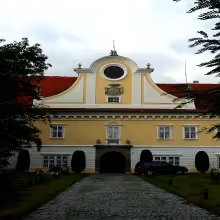
Zámek Ždánice stands as a testament to the rich tapestry of Czech history, encapsulating centuries of architectural evolution and cultural significance in the town of Ždánice within the Hodonín District. Originally documented as a medieval fortress in 1349, this historic site has undergone significant transformations reflecting broader European historical trends. Its journey from a damaged stronghold during the Czech-Hungarian wars to a Renaissance chateau and later a Baroque masterpiece mirrors dynamic shifts in art, culture, and politics over the centuries.
The origins of Zámek Ždánice trace back to its establishment as a medieval fortress, strategically positioned north of Ždánice. The earliest documented reference dates to 1349, marking it as an integral part of regional defense during tumultuous times. By 1468, the castle had suffered damage in the Czech-Hungarian wars, necessitating provisional repairs. This period was characterized by political instability and military conflicts that shaped much of Central Europe's medieval landscape.
Ownership of Zámek Ždánice transitioned through several notable families, each leaving its mark on the estate. In 1500, the Zástřizlové family acquired the property but soon relocated to build a new fortress closer to the town, documented in 1538. The pivotal transformation began when Oldřich z Kounic purchased the site in 1566, initiating its conversion into a Renaissance chateau during the latter half of the 16th century. This era was marked by significant cultural and artistic developments across Europe, with Bohemia experiencing a flourishing of humanist ideals.
The architectural evolution continued under the Lichtenštejnové family, who acquired Zámek Ždánice in 1622. Their tenure saw extensive Baroque renovations in the 18th century, enhancing the castle's grandeur and functionality as a noble residence. The estate served various administrative purposes over time, including housing a district court and tax office post-1850. Notably, from 1878 to the 1940s, the Seidl family resided here, having leased the lands and associated sugar refinery from the Lichtenštejnové.
Zámek Ždánice's architectural features reflect its layered history. The castle is a single-story structure with four wings, distinguished by prominent corner towers that add to its imposing presence. An enclosed courtyard surrounded by arcades forms the heart of the complex, while an English-style garden enhances its southern facade. These elements underscore the blend of Renaissance and Baroque influences that define its aesthetic.
Today, Zámek Ždánice is not only a cultural monument but also a vibrant part of the community. Since 1990, following the Velvet Revolution, it has been under municipal ownership before transitioning to private hands in 1992. The southern wing now houses the Vrbasovo Museum, established by Jakub Vrbas, offering insights into local history and culture. This museum adds an educational dimension to the castle's appeal.
Visitors can explore Zámek Ždánice's rich historical layers, from medieval fortifications to Baroque elegance, while appreciating its role in regional governance and cultural heritage. The surrounding English garden and forecourt with economic buildings provide a picturesque setting that complements the architectural splendor of the castle itself.
Zámek Ždánice stands as a remarkable example of Czech history's enduring legacy, inviting exploration and appreciation from those who seek to understand its storied past. Its preservation as a cultural monument ensures that future generations can continue to engage with this significant historical site.
Historical milestones
- 1349
- The medieval fortress was first documented.
- 1468
- The castle was damaged during the Czech-Hungarian wars.
- 1566
- Oldřich z Kounic purchased and began transforming the site into a Renaissance chateau.
- 1622
- The Lichtenštejnové family acquired the estate.
- 1964
- The castle was listed as a cultural monument.
Architectural development
Zámek Ždánice evolved from a medieval fortress to a Renaissance chateau and later into a Baroque structure. The transformation began with Oldřich z Kounic's purchase in 1566, leading to the construction of a new building on the site of an earlier tower. In the 18th century, the Lichtenštejnové family undertook significant Baroque renovations, enhancing its architectural grandeur.
Historical events
The medieval fortress was damaged during the Czech-Hungarian wars in 1468.
Renaissance transformation occurred under Oldřich z Kounic in the late 16th century.
Baroque renovations were completed by the Lichtenštejnové family in the 18th century.
Owners
The Zástřizlové family acquired the estate in 1500, followed by Oldřich z Kounic who purchased it in 1566. The Lichtenštejnové family took ownership in 1622 and held it until after World War II when it was nationalized. Post-1989, the castle returned to municipal ownership before being privatized.
Points of interest
- Zámek Ždánice was originally documented as a medieval fortress in 1349, making it one of the earliest recorded fortifications in the Hodonín District, highlighting its strategic importance in regional defense during medieval times.
- The castle's transformation into a Renaissance chateau began under Oldřich z Kounic in 1566, reflecting the broader European trend towards humanist ideals and artistic flourishing that characterized the Renaissance period.
Guide
Show guide text
Welcome to the historic Zámek Ždánice, a captivating testament to centuries of architectural evolution and historical significance nestled in the charming town of Ždánice in the Jihomoravský kraj. As you stand before this majestic structure, take a moment to absorb its grandeur—a single-story four-winged building that has stood as a silent witness to the unfolding tapestry of history.
The story of Zámek Ždánice begins in 1349, when it was first documented as a medieval fortress. This early mention highlights its strategic importance during a time when fortifications were crucial for regional defense. Over the centuries, the castle's role and appearance transformed significantly, reflecting the dynamic shifts in architectural styles and ownership.
In 1468, the castle faced adversity during the Czech-Hungarian wars, suffering damage that would eventually lead to its transformation. By 1566, Oldřich z Kounic had acquired the site, initiating a remarkable metamorphosis into a Renaissance chateau—a testament to his vision and the era's architectural aspirations.
As you explore the castle today, notice the harmonious blend of styles. The original medieval fortress foundations give way to the elegance of Renaissance design, with its symmetry and proportionality evident in the structure's layout. Although specific architects remain unknown, their influence is palpable in every stone and archway that has weathered time.
The narrative of Zámek Ždánice took another turn in 1622 when it came under the ownership of the Lichtenštejnové family. Under their stewardship, the castle underwent Baroque renovations, adding a layer of opulence and grandeur to its already impressive facade. These changes reflect not only aesthetic preferences but also the shifting power dynamics and cultural influences of the time.
Among the notable figures associated with this site is Eduard Seidl, who played a role in its later history, ensuring that Zámek Ždánice remained a significant cultural landmark. His contributions are part of what makes this castle not just an architectural marvel but also a repository of stories and legacies.
One intriguing aspect of Zámek Ždánice is its early documentation as one of the first recorded fortifications in the Hodonín District, underscoring its historical importance long before it became the Renaissance chateau we see today. This fact invites us to ponder the countless untold tales that have unfolded within these walls.
As you continue your exploration, let yourself be drawn into the castle's rich tapestry of history and architecture. Each corner offers a glimpse into the past, inviting you to imagine the lives and events that have shaped this enduring monument. Whether it’s the strategic significance during medieval times or its transformation through Renaissance and Baroque influences, Zámek Ždánice is a testament to resilience and change.
We invite you to delve deeper into its history, perhaps wandering around its grounds or visiting nearby attractions in Ždánice that complement this remarkable site. Thank you for joining us on this journey through time at Zámek Ždánice. May your visit inspire curiosity and appreciation for the enduring legacy of this historic castle. Safe travels as you continue to explore the wonders of our world.
Tips for visitors
The best time to visit Zámek Ždánice is during the late spring or early autumn months, when the weather is mild and pleasant for exploring both the castle grounds and its surrounding gardens. During these seasons, you can enjoy the lush greenery of the English-style garden without the discomfort of summer heat or winter cold. Additionally, visiting in these periods often means fewer crowds, allowing for a more serene experience as you explore the historical structures.
Parking at Zámek Ždánice is available nearby, and it's advisable to check online resources or local signage upon arrival for specific details on parking availability. For those preferring public transportation, there are options that can bring you close to the castle; however, it’s recommended to verify current routes and schedules using a transport app or website before your visit. This ensures a smooth journey from nearby towns or cities.
When planning your visit to Zámek Ždánice, consider bringing comfortable walking shoes as there are several areas of interest within the castle grounds that may require some walking. A camera is also recommended for capturing the picturesque views and historical architecture, especially in natural light during mid-morning or late afternoon when shadows add depth to photographs. Don’t forget a hat and sunscreen if visiting during warmer months, along with water to stay hydrated.
For photography enthusiasts, the best spots at Zámek Ždánice include the south-facing English-style garden where the interplay of light and shadow can create stunning images, especially in the golden hours. The forecourt offers a grand view of the castle's architecture against the backdrop of the surrounding landscape. Families with children will find the expansive grounds ideal for exploration, with plenty of space to roam and discover hidden corners.
Within 30 minutes from Zámek Ždánice, visitors can explore additional historical sites such as the economic buildings that complement the castle's grandeur. These structures provide insight into the daily life and operations during the castle’s peak periods. The area is rich in history and offers a glimpse into the past, making it an excellent extension to your visit at Zámek Ždánice.
Businesses nearby
Do you run a restaurant, accommodation, shop, museum, rental, wellness or other visitor service near this monument? Show yourself directly to the people heading to it — this is how they will see you in the app and on the web:
Nearby
Zámek Ždánice is surrounded by natural beauty, including an English-style garden to its south. The area also hosts historical structures like the forecourt and economic buildings that complement the castle's grandeur.
Accommodation nearby
Themed route
Tematická výletní trasa: Zámek Ždánice a jeho okolí
1. Zámek Ždánice *Typ:* Historický zámek *Proč stojí za návštěvu:* Tento barokní zámek je centrem historie a architektury v obci Ždánice. Jeho impresivní stavba, elegantní interiéry a bohatá historie odrážejí kulturní dědictví regionu Jihomoravského kraje.
2. Anglický zahradní park *Typ:* Zahrada *Proč stojí za návštěvu:* Nacházející se na jižní straně zámku, tento anglický zahradní park nabízí klidné procházky mezi krásnou vegetací a pečlivě navrženými krajinami. Je to ideální místo k uvolnění a poznání přírodního okolí zámku.
3. Předhradí *Typ:* Historické nádvoří *Proč stojí za návštěvu:* Předhradí, s jeho historickými stavbami a architektonickou elegance, poskytuje vhled do minulosti zámku. Tento prostor byl kdysi centrem hospodářské činnosti a dodnes zachovává svůj původní vzhled.
4. Hospodářské budovy *Typ:* Historické ekonomické struktury *Proč stojí za návštěvu:* Tyto budovy, které doplňují grandióznost zámku, ukazují na životní styl a hospodářskou činnost minulých obyvatel. Jejich zachování umožňuje návštěvníkům ocenit historický kontext a architekturu té doby.
5. Vnitřní prostory zámku *Typ:* Exponáty a interiéry *Proč stojí za návštěvu:* Prozkoumejte vnitřní prostory zámku, kde expozice představuje historii a umělecká díla spojená s touto lokalitou. Tyto interiéry jsou skvělým příkladem barokního designu a bohaté dekorace.
Tato trasa nabízí návštěvníkům komplexní pohled na historický zámek Ždánice a jeho okolí, kde každý bod přináší jedinečné poznatky o minulosti a architektuře.
Seasonal recommendations
Spring: Visiting Zámek Ždánice during spring offers a unique experience as the castle grounds come alive with vibrant colors and fresh blooms. The lush gardens are particularly enchanting, filled with blossoming flowers that create a picturesque setting for photography or leisurely strolls. The gentle warmth of the season encourages longer exploration times, allowing visitors to fully immerse themselves in the natural beauty surrounding the castle. It's an ideal time to appreciate the interplay of light and shadow as spring sunlight illuminates the historic architecture. Visitors should consider wearing comfortable layers that can be adjusted with changing temperatures throughout the day.
Summer: Summer at Zámek Ždánice is characterized by its lively atmosphere, with longer daylight hours providing ample opportunity for exploration. The castle's exterior takes on a golden hue under the bright sun, enhancing its majestic appearance. This season draws larger crowds due to school holidays and favorable weather conditions, so arriving early in the morning can help avoid peak times. Visitors should wear light clothing and comfortable shoes suitable for walking around the expansive grounds. Don't forget sunscreen and a hat to protect against the summer sun.
Autumn: Autumn at Zámek Ždánice offers a serene and colorful experience as the foliage transforms into rich shades of red, orange, and gold. The cooler temperatures make it an ideal time for leisurely visits without the summer crowds. The castle's architecture is beautifully complemented by the autumnal landscape, creating a picturesque setting that feels almost magical. It’s recommended to wear layers, including a light jacket or sweater, as the weather can be unpredictable with occasional chilly breezes.
Winter: Winter at Zámek Ždánice presents a quiet and enchanting atmosphere, with snow often blanketing the castle grounds, adding a touch of magic to its historic silhouette. The shorter days mean that visiting hours are reduced, so planning your visit in advance is essential. Wearing warm clothing, including thermal layers, gloves, and a hat, will ensure comfort during your exploration. Despite the cold, the winter landscape offers a unique perspective on the castle’s architecture and surrounding gardens, providing a peaceful retreat from the busier seasons.
Visualizations and artistic views

Vizualizace jsou generovány umělou inteligencí a slouží jako inspirace.


Tips from visitors
No tips yet. Be the first!
Log in and add your tip.


Reviews and comments