






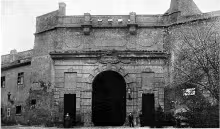
Říšská brána, also known as the New Strahov Gate, was a notable Baroque structure within Prague's historical fortifications. Situated on Pohořelec Hill in the Malá Strana district of Prague 1, it existed from its construction in 1657 until its demolition between 1898 and 1899. This gate replaced the older Strahov Gate and played a strategic role during key invasions in Bohemia's turbulent history, notably by Ferdinand II’s forces in 1620 and Swedish troops in 1648.
The origins of Říšská brána are rooted in the political and military upheavals of 17th-century Bohemia. During this period, Prague was a focal point for conflicts involving major European powers, particularly during the Thirty Years' War. Constructed in 1657 as part of Prague’s fortifications, the gate reflected its strategic importance in defending the city against invasions. It replaced the older Strahov Gate and served as a critical entry point into the city.
Architecturally, Říšská brána was designed as a Baroque fortification gate, embodying the defensive needs and aesthetic preferences of its time. While specific details about its architectural elements are not extensively documented, it is known that the gate was integral to the city's defense system on Pohořelec Hill. Its strategic placement near the Strahov Monastery further underscores its importance in protecting Prague’s Malá Strana district.
Throughout its history, Říšská brána witnessed significant events that shaped Bohemia's political landscape. In 1620, it was used by Ferdinand II’s forces during their invasion of Prague, a pivotal moment leading to the Thirty Years' War. Again in 1648, Swedish troops utilized this route to invade Prague, highlighting the gate's continued strategic relevance. These invasions underscored the gate's role in the broader military and political dynamics of the region.
The demolition of Říšská brána between 1898 and 1899 marked the end of its physical presence but not its historical significance. The reasons for its removal are tied to urban development and changes in defensive needs as Prague evolved into a modern city. Despite no longer standing, the legacy of Říšská brána remains embedded in the history of Prague's fortifications.
Today, while Říšská brána itself is not accessible for visitation due to its demolition, its historical significance continues to be recognized within the context of Prague’s rich architectural and military heritage. The site where it once stood offers a tangible connection to the city's past, inviting visitors to explore the surrounding area and reflect on the events that unfolded there.
Říšská brána stands as a testament to the strategic importance of fortifications in historical Prague. Its story is interwoven with key moments in Bohemia’s history, offering insights into the military and political challenges of its time. For those interested in exploring Prague's past, visiting the area around Pohořelec Hill provides an opportunity to connect with this significant chapter in the city's history.
Historical milestones
- 1657
- Říšská brána was constructed.
- 1620
- Ferdinand II's forces used this route to invade Prague.
- 1648
- Swedish troops invaded Prague via this gate.
- 1899
- Říšská brána was demolished.
Architectural development
Říšská brána was built as a Baroque fortification gate, replacing the older Strahov Gate. It was part of Prague's defensive structures on Pohořelec Hill. The gate was demolished in the late 19th century.
Historical events
In 1657, Říšská brána was constructed as part of Prague's fortifications.
The gate played a role in the invasion by Ferdinand II's forces in 1620 and Swedish troops in 1648.
Říšská brána was demolished between 1898 and 1899.
Points of interest
- Despite its strategic importance, the exact architectural details of Říšská brána are not extensively documented, leaving much to speculation about its design and decorative elements.
- The gate was part of a broader fortification system on Pohořelec Hill that included other defensive structures, which played crucial roles during historical invasions but have since been lost or transformed over time.
Guide
Show guide text
Welcome to the site of the historic Říšská brána, once a majestic Baroque gateway standing proudly on Pohořelec Hill in Prague 1. As you stand here, imagine the grandeur that this structure must have exuded as it served not only as an entrance but also as a formidable part of the city's fortifications.
Constructed in 1657, Říšská brána replaced the older Strahov Gate and was integral to Prague’s defenses. Its strategic importance is underscored by its role during pivotal historical invasions. In 1620, it witnessed Ferdinand II's forces marching through its arches into Prague, marking a significant moment in Bohemian history. Later, in 1648, Swedish troops also used this route as they invaded the city.
While you stand here today, take a moment to envision the architectural splendor that once was. Although specific details of its design are not extensively documented, leaving much to speculation, it's clear that Říšská brána must have been an impressive sight. The gate was part of a broader fortification system on Pohořelec Hill, which included other defensive structures designed to protect the city.
The stories and figures associated with this place are as intriguing as they are pivotal. While specific architects or historical personalities tied directly to the gate remain unknown, its strategic use during significant military events speaks volumes about its importance in Prague's history.
A fascinating aspect of Říšská brána is the mystery that surrounds it. Despite its crucial role and the dramatic events it witnessed, much about its architectural details remains a matter of speculation due to limited documentation. This lack of detailed records adds an element of intrigue, inviting us to imagine what might have been.
As you conclude your visit here, consider exploring more of Prague's rich historical tapestry that surrounds this site. Each corner of the city holds stories waiting to be discovered. Thank you for joining me on this journey through time at Říšská brána. May your exploration continue with curiosity and wonder.
Tips for visitors
The best time to visit the area around Říšská brána is during late spring or early autumn when the weather is pleasant, allowing for comfortable exploration of the historic surroundings without the crowds typical of summer months. The soft light enhances the architectural beauty of nearby landmarks like Strahov Monastery and provides a serene atmosphere ideal for appreciating the rich history of Malá Strana district.
Transportation to the area can be easily managed by both car and public transit. While parking might be limited due to its central location, there are several parking facilities in the vicinity that you can use. Public transport is convenient with multiple bus and tram lines serving the area; however, it's advisable to check current routes and schedules using a transportation app or website for the most accurate information.
When planning your visit, consider bringing comfortable walking shoes as exploring the historic district involves some walking on cobblestone streets. A camera is also recommended to capture the stunning views of Prague Castle and the Vltava River from Strahov Hill. For photography enthusiasts, early morning or late afternoon offers the best light for capturing the picturesque landscapes and architectural details.
For families with children, the area around Říšská brána offers a delightful experience. The nearby Strahov Monastery includes a library with historical manuscripts that can be intriguing for older kids. Additionally, the surrounding parks provide ample space for children to play and explore nature. Don't miss visiting Prague Castle, which is within a 30-minute walk or short public transport ride from Říšská brána, offering more attractions such as St. Vitus Cathedral and the Golden Lane.
Businesses nearby
Nearby
Říšská brána was located near the Strahov Monastery and within the historic Malá Strana district. The area is known for its rich history and architectural heritage.
Accommodation nearby
Trips and activities nearby
Guided tours, tickets and activities nearby from GetYourGuide
Search tours and activities →Themed route
Thematic Walking Tour: Discovering the Historic Heart of Malá Strana
1. Říšská brána (Imperial Gate) - *Type:* Historical Monument - *Why Visit:* The Říšská brána is a stunning Baroque gate that once served as an entrance to Prague Castle. Its intricate architecture and historical significance make it a must-see for anyone interested in the rich history of Prague's Old Town.
2. Strahov Monastery - *Type:* Religious Site - *Why Visit:* Located just a short walk from Říšská brána, Strahov Monastery offers breathtaking views over Prague and houses an impressive library with rare manuscripts. The monastery is a perfect spot to immerse yourself in the spiritual and cultural heritage of Malá Strana.
3. Church of St. Nicholas - *Type:* Church - *Why Visit:* Situated within the grounds of Strahov Monastery, this church features stunning frescoes by Karel Škréta and an impressive organ. Its serene atmosphere provides a peaceful retreat from the bustling city streets.
4. Strahov Convent Garden - *Type:* Historic Garden - *Why Visit:* Adjacent to Strahov Monastery, this garden is one of Prague's oldest and offers a tranquil setting with beautiful baroque fountains and sculptures. It’s an ideal place for a leisurely stroll or simply to enjoy the greenery amidst historic surroundings.
5. Malá Strana Square - *Type:* Historic Square - *Why Visit:* As you explore Malá Strana, make your way to this charming square known for its vibrant atmosphere and picturesque views of Prague Castle across the Vltava River. It's a great spot to experience local life and enjoy traditional Czech cuisine at nearby cafes.
This tour offers an enriching journey through some of Prague’s most historically significant sites in the Malá Strana district, providing insights into both architectural beauty and cultural heritage.
Seasonal recommendations
Spring: Visiting the site of the former Imperial Gate during spring offers a unique experience as nature begins to awaken with blooming flowers and fresh greenery, creating a vibrant atmosphere around this historical location in Prague 1. The mild temperatures make it an ideal time for exploration without the need for heavy clothing, though layers are advisable due to occasional cool breezes. Springtime is generally less crowded than summer, providing a more peaceful visit. To fully appreciate the site's beauty and history, consider arriving early in the day when the light is gentle and illuminates the landscape softly, enhancing the natural charm of the area.
Summer: Summer at the Imperial Gate site brings long days filled with warm sunshine, making it perfect for outdoor exploration of this historical landmark in Prague. The lush greenery and vibrant flowers are at their peak, creating a picturesque setting that complements the rich history of the location. However, summer also attracts more visitors, so arriving early is recommended to avoid larger crowds. Comfortable walking shoes and light clothing are essential due to higher temperatures, and carrying water is advisable for hydration during your visit.
Autumn: Autumn at the Imperial Gate site offers a stunning display of fall colors as leaves turn vibrant shades of red, orange, and yellow, creating a breathtaking backdrop for this historical landmark in Prague. The cooler weather makes it pleasant for walking and exploring without the summer heat, though bringing a light jacket is advisable for chilly evenings. This season sees fewer tourists compared to summer, allowing for a more relaxed visit. To capture the beauty of autumn, visiting during the golden hour—just after sunrise or before sunset—can provide enchanting lighting that enhances the natural scenery.
Winter: Winter at the former site of the Imperial Gate presents a unique charm as snow blankets the landscape, transforming the area into a serene and picturesque scene reminiscent of Prague's historical past. The cooler temperatures necessitate warm clothing, including layers, hats, gloves, and sturdy boots to ensure comfort during your visit. While winter days are shorter, the reduced number of tourists can make for a more intimate experience exploring this historic site. For optimal lighting and atmosphere, visiting in the late morning or early afternoon is recommended when the sun provides soft illumination on the snow-covered surroundings.
Visualizations and artistic views

Vizualizace jsou generovány umělou inteligencí a slouží jako inspirace.


Tips from visitors
No tips yet. Be the first!
Log in and add your tip.
Location on the map


Příběhy a pověsti
Legendy, pověsti a příběhy spjaté s touto památkou
Reviews and comments