





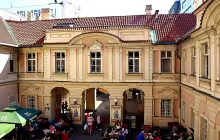
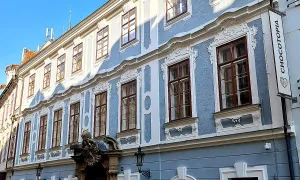
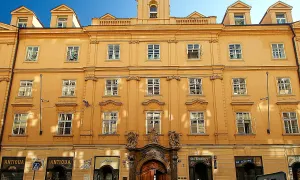
Palác Sylva-Taroucca, also known as the Piccolomini or Savarin Palace, stands majestically in Prague's New Town at Na příkopě 852/10. This late Baroque palace is a testament to the architectural grandeur of its era and has been protected as a national monument of the Czech Republic since its construction between 1743 and 1752. Designed by Kilián Ignác Dientzenhofer, with completion by Anselmo Lurago after Dientzenhofer's death in 1751, the palace is renowned for its symmetrical nine-axis facade featuring a central portico supported by Tuscan columns. Over the centuries, it has served various roles, from housing collections of the National Museum to becoming a cultural center in the 20th century.
The site where Palác Sylva-Taroucca now stands was originally occupied by several houses during the 16th and 17th centuries. These structures were gradually unified into one building before being transformed into its current form between 1743 and 1752. The Baroque design, initiated under Dientzenhofer's guidance, reflects the artistic development of Bohemia in the mid-18th century when it was part of the Habsburg Monarchy. This period saw increased patronage for grand architectural projects across Europe, contributing to the palace's distinctive style.
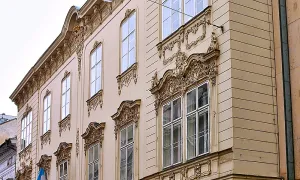
The architecture of Palác Sylva-Taroucca is characterized by its late Baroque elements. The main facade facing Na Příkopě street is nine axes wide and symmetrical, with a central portico supported by four pairs of Tuscan columns. This portico leads to a balcony adorned with ornate wrought-iron railings. Above the ground floor, pilasters with Ionic capitals separate the windows, while three central windows are topped with segmental pediments; the middle one is particularly prominent above the entrance. The facade also features sculptures by Ignác František Platzer, including figures of a Satyr and Nymfa, which were removed in 2018 due to deterioration but are planned for reinstallation as restored copies in 2024.
Ownership of the palace has changed hands several times since its construction. In 1668, Marie Benigna Františka Piccolomini acquired the property, giving rise to one of its names. The current Baroque structure was commissioned by her and later completed for Ottavio Piccolomini. By 1766, the palace had been purchased by Bedřich Mořic z Nostic-Rienecku, followed by his nephew Jan Nepomuk z Nostic-Rienecku as a long-term user. In 1885, through marriage, it passed to Arnošt Emanuel Silva-Taroucca, whose lineage was of Spanish-Portuguese origin. The palace has seen various uses over the years, including housing collections from the National Museum between 1846 and 1892 and serving as a cultural center in the 20th century.
Throughout its history, Palác Sylva-Taroucca has been the site of several key events. After 1948, it was utilized by the state for various purposes, including housing the Central Cultural House for employees of education, science, culture, and press from 1960 onwards. In the late 20th century, it became a commercial property following privatization after 1989. The palace's transformation into a cultural hub in the early 1900s included hosting the Social Club since 1925 and the establishment of the renowned Savarin café in 1927 on the site of its former baroque garden.
Today, Palác Sylva-Taroucca remains an important cultural landmark in Prague. It is accessible to visitors who wish to explore its rich history and architectural beauty. The palace's blend of historical significance and artistic value makes it a must-visit destination for those interested in the Baroque period and Czech heritage. Its ongoing restoration efforts, including the reinstallation of original sculptures, highlight its enduring legacy as a cherished monument. Visitors are invited to experience this remarkable site and appreciate its contribution to Prague's cultural landscape.
Historical milestones
- 1668
- Marie Benigna Františka Piccolomini acquired the property.
- 1743
- Construction of the current Baroque structure began.
- 1751
- Kilián Ignác Dientzenhofer passed away; Anselmo Lurago completed the palace.
- 1766
- The palace was purchased by Bedřich Mořic z Nostic-Rienecku.
Architectural development
Originally a series of houses in the 16th and 17th centuries, the site was unified into one structure. The current Baroque design emerged between 1743 and 1752 under Dientzenhofer's guidance, later completed by Lurago. In 1878, architect Achille Wolf made modifications to the building.
Historical events
The palace was transformed into its current form between 1743 and 1752.
In 1846, the National Museum collections were stored here until 1892.
After 1948, the state utilized the palace for various purposes.
Owners
Marie Benigna Františka Piccolomini (1668)
Bedřich Mořic z Nostic-Rienecku (1766)
Jan Nepomuk z Nostic-Rienecku
Arnošt Emanuel Silva-Taroucca (1885)
Points of interest
- The sculptures of a Satyr and Nymfa by Ignác František Platzer were removed in 2018 due to deterioration but are planned for reinstallation as restored copies in 2024, highlighting ongoing efforts to preserve the palace's artistic heritage.
- Originally, the site where Palác Sylva-Taroucca stands was occupied by several houses during the 16th and 17th centuries before being unified into one building, indicating a gradual transformation leading up to its current Baroque form.
Guide
Show guide text
Welcome to the historic Palác Sylva-Taroucca, a jewel nestled in Prague's vibrant New Town. As you stand here, imagine yourself transported back through time, walking on stones that have witnessed centuries of stories unfold.
The origins of this magnificent palace date back to 1668 when Marie Benigna Františka Piccolomini acquired the property. The vision for a grand Baroque structure began in earnest by 1743, designed initially by Kilián Ignác Dientzenhofer. His untimely passing in 1751 led Anselmo Lurago to complete this architectural masterpiece. By 1766, the palace found new ownership under Bedřich Mořic z Nostic-Rienecku.
Now, as you take a moment to absorb its grandeur, notice the impressive nine-axis facade that greets you. The central portico, supported by Tuscan columns, invites you into a world where elegance meets history. These architectural elements are not just stone and mortar; they are silent narrators of a past filled with opulence and artistic endeavor.
This palace has been home to many influential figures, including the Piccolomini family and later the Silva-Taroucca lineage. Each owner left their mark on its legacy, weaving a tapestry rich with cultural and historical significance.
One fascinating aspect of Palác Sylva-Taroucca is the story of its sculptures—a Satyr and Nymfa by Ignác František Platzer. Once gracing this palace, they were removed in 2018 due to deterioration but are set for a grand reinstallation as restored copies in 2024. This ongoing effort underscores a dedication to preserving the artistic heritage that adorns this historical site.
As you continue your exploration, let yourself be drawn into the narrative of time and transformation that Palác Sylva-Taroucca embodies. Each corner holds whispers of its storied past, inviting you to delve deeper into its history.
Thank you for joining me on this journey through time at Palác Sylva-Taroucca. I encourage you to continue exploring and discovering the many layers of stories that Prague has to offer. Until next time, farewell!
Tips for visitors
The best time to visit Palác Sylva-Taroucca is during the late spring or early fall when the weather is pleasant, allowing for a comfortable exploration of both the palace and its surroundings. These seasons also offer softer lighting conditions ideal for photography, capturing the intricate details of the palace's Baroque architecture. Additionally, visiting outside peak tourist seasons can provide a more intimate experience with fewer crowds.
Parking near Palác Sylva-Taroucca can be challenging due to its central location in Prague's New Town. Visitors are encouraged to use public transportation or park in designated areas further away and walk or take a short ride to the palace. The area is well-served by trams and buses, making it convenient for those preferring not to drive.
When visiting Palác Sylva-Taroucca, it's advisable to bring comfortable walking shoes as there may be some walking involved, especially if exploring nearby sites. A camera or smartphone for photography is recommended, particularly for capturing the palace’s stunning façade and interior details. Additionally, carrying a light jacket or umbrella can be useful due to unpredictable weather changes.
For photography enthusiasts, the best spots around Palác Sylva-Taroucca include its front entrance and garden areas where morning light accentuates the architectural features beautifully. The soft shadows during these times create dramatic effects on the palace's ornate details. Exploring from different angles can also reveal unique perspectives of this historic structure.
Nearby, within a 30-minute walk or short public transport ride, is the National Museum, which offers an enriching cultural experience with its extensive collections. For families with children, the proximity to Charles Bridge and the Prague Castle area provides opportunities for exploration and learning about Czech history in an engaging way.
Businesses nearby
Nearby
Located in Prague's New Town, the palace is near other historical sites such as the National Museum. The area features a blend of architectural styles and cultural landmarks.
Accommodation nearby
Trips and activities nearby
Guided tours, tickets and activities nearby from GetYourGuide
Search tours and activities →Themed route
Thematic Walking Tour: Exploring the Historical Heart of Prague's New Town
1. Palác Sylva-Taroucca (Palace) - *Type:* Baroque Palace - *Why Visit:* Begin your journey at Palác Sylva-Taroucca, a stunning example of Baroque architecture located in the heart of Prague's New Town. This palace is renowned for its intricate design and historical significance, offering visitors a glimpse into the opulent past of Prague's aristocracy.
2. Národní Muzeum (National Museum) - *Type:* Cultural Institution - *Why Visit:* Just a short walk from Palác Sylva-Taroucca, Národní Muzeum is an architectural marvel in its own right, featuring a blend of Neo-Renaissance and Art Nouveau styles. The museum houses extensive collections that reflect the rich cultural heritage of the Czech Republic, making it a must-visit for history enthusiasts.
3. Staroměstské náměstí (Old Town Square) - *Type:* Historic Square - *Why Visit:* Although slightly beyond the immediate vicinity, Old Town Square is an iconic landmark within walking distance from both Palác Sylva-Taroucca and Národní Muzeum. This vibrant square is home to historical buildings like the Astronomical Clock and Týn Church, offering a picturesque setting that encapsulates Prague's medieval charm.
4. Kostel svatého Mikuláše (St. Nicholas Church) - *Type:* Baroque Church - *Why Visit:* Located near Old Town Square, Kostel svatého Mikuláše is a stunning example of Baroque architecture with its ornate façade and richly decorated interior. This church provides insight into the religious artistry that flourished in Prague during the Baroque period.
5. Karlova (Charles Bridge) - *Type:* Historic Bridge - *Why Visit:* Conclude your tour by crossing Karlova, a historic bridge adorned with statues and offering breathtaking views of the Vltava River and Prague Castle. This iconic landmark is not only an engineering feat but also a testament to the city's enduring history and cultural significance.
This thematic walking tour offers a comprehensive exploration of Prague’s New Town, highlighting its architectural diversity and historical richness through carefully selected sites that are both accessible and culturally enriching.
Seasonal recommendations
Spring: The Palác Sylva-Taroucca offers a refreshing ambiance as the city of Prague awakens from its winter slumber. In spring, the gardens surrounding the palace begin to bloom, providing a picturesque setting with vibrant flowers and lush greenery that enhance the historical charm of the site. The mild weather is perfect for leisurely strolls around the area, allowing visitors to fully appreciate the restored architecture in natural light. It's advisable to visit during weekdays or early mornings to avoid crowds, as spring attracts both tourists and locals eager to enjoy outdoor activities after winter.
Summer: During summer, Palác Sylva-Taroucca becomes a popular destination due to its cooling gardens and shaded courtyards that offer respite from the heat. The long daylight hours provide ample time for exploration, with the palace's exhibitions open late into the evening. This season is ideal for experiencing Prague's cultural vibrancy, as visitors can enjoy nearby attractions in comfortable weather. However, it’s wise to arrive early or visit during off-peak times to avoid large crowds and ensure a more relaxed experience.
Autumn: Autumn at Palác Sylva-Taroucca is characterized by its warm hues of orange and red, with the surrounding foliage creating a stunning backdrop for photography enthusiasts. The cooler temperatures make it an excellent time to explore the palace without the summer heat, while enjoying the crisp air that enhances the historical atmosphere. As the days shorten, planning your visit during the morning hours can maximize daylight for sightseeing. Layers of clothing are recommended, as the weather can be unpredictable.
Winter: In winter, Palác Sylva-Taroucca exudes a unique charm with its elegant architecture illuminated against the snowy Prague skyline. The palace often hosts special exhibitions and events that capitalize on the festive atmosphere of the season. Visitors should dress warmly in layers to comfortably navigate the cold weather, which can also lead to shorter opening hours for certain areas. To avoid crowds during holiday periods, consider visiting on weekdays or early in the day when it's quieter inside the palace.
Visualizations and artistic views

Vizualizace jsou generovány umělou inteligencí a slouží jako inspirace.

Tips from visitors
No tips yet. Be the first!
Log in and add your tip.
Location on the map

Příběhy a pověsti
Legendy, pověsti a příběhy spjaté s touto památkou
Reviews and comments