





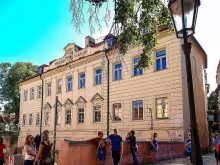
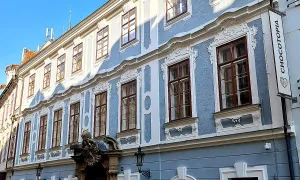
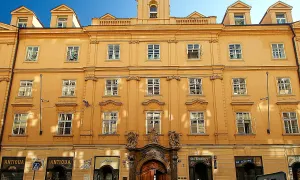
The Palác Metychů z Čečova is a historic Baroque palace in Prague's Malá Strana district, situated on Velkopřevorské náměstí. This significant cultural monument has been a protected landmark since 1964, with a rich history dating back to the 16th century. The palace was built on the site of four separate houses, which were united in the 16th century and have undergone various renovations and expansions over the years.
The palace's origins date back to the 16th century, when Kryštof Metych z Čečova renovated the building in 1586, giving it a Renaissance core that still exists today. The adjacent house was acquired by Isabel Braitšvartová in 1617, and the palace changed hands several times, with notable owners including Jan Alsterla z Astfeldu and Hrzánové z Harasova. In 1760, Antonín Stein renovated the eastern wing, adding a Baroque touch.
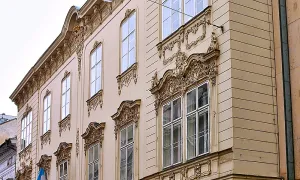
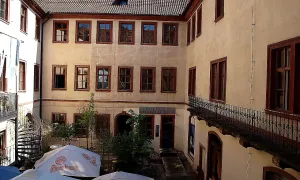
The palace's architecture reflects the styles and tastes of the time, with a unique Baroque facade featuring a rich use of moldings. The building's design is characterized by an irregular two-story structure with three wings enclosing a small courtyard. The entrance from Velkopřevorské náměstí is marked by a bossed portal from around 1600. The courtyard features sgrafita, pavlače, and a gable.
The palace has a long and varied history, with significant events including the temporary residence of the "Society for the Education, Employment, and Care of the Blind in Bohemia" in 1832. The composer Josef Bohuslav Foerster was born in the palace in 1859, and a commemorative plaque can be found on the facade. The palace was damaged in the 2002 floods and underwent restoration work. The western wing was rebuilt in a historicizing style in 1916, after the original building was demolished.
Today, the palace serves as a cultural and historical artifact, housing significant objects and documents. Located in the heart of Prague's Malá Strana district, near the Charles Bridge and the Vltava River, the palace is a must-see destination for anyone interested in Prague's cultural heritage.
Historical milestones
- 1586
- Kryštof Metych z Čečova renovated the palace
- 1617
- Isabel Braitšvartová acquired the adjacent house
- 1702
- Hrzánové z Harasova acquired the palace
- 1760
- Antonín Stein renovated the eastern wing of the palace
- 1832
- The Society for the Education, Employment, and Care of the Blind in Bohemia used the palace as a temporary residence
- 1859
- Josef Bohuslav Foerster was born in the palace
- 191
Architectural development
The palace was built on the site of four separate houses, which were united in the 16th century. The current building dates back to the 17th century, with various renovations and expansions taking place over the years. The palace was renovated in the 18th century and again in the 20th century.
Historical events
The palace was used as a temporary residence for the "Society for the Education, Employment, and Care of the Blind in Bohemia" in 1832. The composer Josef Bohuslav Foerster was born in the palace in 1859. The palace was damaged in the 2002 floods and underwent restoration work.
Owners
Kryštof Metych z Čečova, Isabel Braitšvartová, Jan Alsterla z Astfeldu, Hrzánové z Harasova, Antonín Stein
Points of interest
– The palace has been a temporary residence of the "Society for the Education, Employment, and Care of the Blind in Bohemia" in 1832.
– A commemorative plaque on the facade marks the birthplace of the composer Josef Bohuslav Foerster in 1859.
– The palace was damaged in the 2002 floods and underwent restoration work.
– The western wing was rebuilt in a historicizing style in 1916, after the original building was demolished.
Guide
Show guide text
Welcome! You are standing in front of the Metychů z Čečova Palace, an exquisite Baroque monument in the heart of Malá Strana. This palace is located at the heart of Prague's historic core and is one of the most valuable cultural landmarks in our metropolis.
Let us move through time to discover how this building developed. The Metychů z Čečova Palace has a rich history that dates back to the 16th century. Originally, four separate houses stood on this site, which were later combined into one complex. In the 17th century, the palace came into the hands of many different owners who gradually renovated and expanded it. It has survived in its present form since then.
Notice how the palace emerges from the street. Take a look at its façade, characterized by its symmetry and harmony. The palace is built of stone and its façade is adorned with stucco ornaments and cornices. Inside, you will find rich interiors with high ceilings and elegant doors.
Now pay attention to the interesting personalities associated with this palace. In 1832, it served as a temporary home for the Society for the Education, Employment, and Care of the Blind in Bohemia. And in 1859, the famous Czech composer Josef Bohuslav Foerster was born here. On the façade of the palace, you can see a commemorative plaque marking his birth.
The Metychů z Čečova Palace also has its tragic side. In 2002, it suffered serious damage from floods and had to be renovated. Despite this difficult time, the palace survived in good condition and remains one of the most beautiful Baroque landmarks in Prague.
You are invited to continue exploring this beautiful historical building and discover its secrets and charms. Enjoy!
Businesses nearby
Nearby
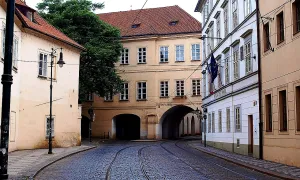
The palace is located in the Malá Strana district of Prague, near the Charles Bridge and the Vltava River.
Accommodation nearby
Trips and activities nearby
Guided tours, tickets and activities nearby from GetYourGuide
Search tours and activities →Themed route
Trasa: Palác Metychů z Čečova a okolí
1. Palác Metychů z Čečova (hlavní cíl) Tento renesanční palác z 16. století stojí za návštěvu díky své jedinečné architektuře a bohaté historii. Palác je známý svou krásnou fasádou a rozsáhlým nádvořím.
2. Karlův most (přibližně 0,5 km od paláce) Tento symbol Prahy je nejznámější most v Praze a stojí za návštěvu kvůli své historické a architektonické hodnotě. Most se nachází přímo naproti paláci.
3. Vltava (přibližně 0,5 km od paláce) Vltava je řeka, která protéká srdcem Prahy a nabízí krásné výhledy na město. Návštěva řeky je skvělou možností pro odpočinek a relaxaci.
4. Náměstí sv. Mikuláše (přibližně 0,2 km od paláce) Toto malé náměstí je známé svou krásnou architekturou a klidnou atmosférou. Je to ideální místo pro odpočinek a prohlídku okolí.
Seasonal recommendations
Jaro
Spring is the ideal time to visit the Metychů z Čečova Palace because nature around it awakens to life. During this period, the palace is surrounded by blooming trees and flowers, creating a pleasant atmosphere. The lighting is soft and natural, allowing for observation of architectural details and artworks. The best time to visit the palace is in April or May when the weather is sunny and warm but not too hot. We recommend arriving early in the morning or late afternoon to avoid crowds of tourists.
Summer
The main summer season is full of life and energy in Prague, and the Metychů z Čečova Palace is no exception. In summer, the palace is surrounded by many tourists, so it's a good idea to arrive early in the morning or late afternoon to avoid crowds. The lighting is strong and bright, allowing for observation of interior details and artworks. Summer weather is ideal for strolling through Prague streets and discovering historical landmarks. We recommend bringing an umbrella or sunglasses to protect against the sun.
Autumn
Autumn is a beautiful season to visit the Metychů z Čečova Palace because nature around it changes into colorful scenes. The lighting is soft and natural, allowing for observation of architectural details and artworks. During the autumn period, the palace is less crowded, making it an ideal time for a calm and relaxing visit. We recommend arriving early in the morning or late afternoon to avoid cold weather and rain. Don't forget to bring warm clothing and an umbrella.
Winter
In the Advent season, the Metychů z Čečova Palace is surrounded by a romantic atmosphere. The lighting is soft and illuminated with candles, creating a cozy and peaceful environment. In winter, the palace has limited opening hours, so it's good to arrive early in the morning or late afternoon. We recommend bringing warm clothing and boots to protect against the cold and frost. In winter, the palace is less crowded, making it an ideal time for a calm and relaxing visit.
Visualizations and artistic views

Vizualizace jsou generovány umělou inteligencí a slouží jako inspirace.

Tips from visitors
No tips yet. Be the first!
Log in and add your tip.
Location on the map

Příběhy a pověsti
Legendy, pověsti a příběhy spjaté s touto památkou
Reviews and comments