





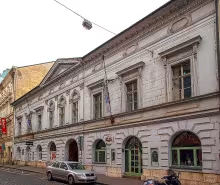
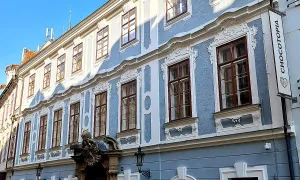
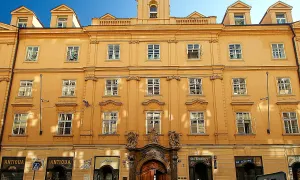
Millesimovský Palace, also known as Lämelův Palace or Prager Tagblatt, is a single-story neoclassical structure on Panská Street in Prague's historic Nové Město district. Recognized as a cultural monument of the Czech Republic, it reflects Prague's rich history and development through its transformations over centuries. Its significance lies not only in its architectural style but also in its storied past, including ownership by notable figures and serving as a hub for influential journalists.
The origins date back to 1377, initially featuring a garden belonging to citizen Konrád Hauser. By the 15th century, this land was divided into five houses, with one owned by Jindřich z Dubé, the highest court marshal under King Jiří of Poděbrad. The parcel's history includes ownership changes and architectural modifications, such as a Renaissance renovation in the late 16th century. It endured significant damage during military conflicts, notably the Swedish bombardment of Prague in 1648 and later during the Prussian siege in 1757.
The current neoclassical structure emerged when Johanna Barbora Eusebie Carretto-Cavrianio z Millesima acquired the property in 1690. Her descendants, Jan Ignác hrabě Carretto-Cavriani di Millesimo and Jan Bernard Carretto-Cavriani di Millesimo, further shaped its legacy before Adolf z Kounic unified it into a single building. The palace's significant transformation occurred in 1860 when Sofia von Lämel commissioned architect Vojtěch Ignác Ullmann to redesign the structure, giving rise to its present form. Architect Matěj Blecha also contributed by adding an administrative building between 1905 and 1906.
Throughout its history, Millesimovský Palace has been associated with prominent figures and events. In the early 20th century, it housed the editorial office of Prager Tagblatt, where notable journalists such as Egon Erwin Kisch and Max Brod worked from 1914 to 1939. Despite its illustrious past, a student project by Ústav dějin umění AV ČR has predicted that the palace, along with nearby structures, faces potential decay.
Today, Millesimovský Palace stands as a testament to Prague's architectural evolution and cultural history. While it may face preservation challenges, its historical significance and connection to influential figures make it a compelling site for visitors. Exploring this monument offers a glimpse into the city's past and an appreciation of its enduring legacy.
Historical milestones
- 1648
- The palace was damaged during the Swedish bombardment of Prague.
- 1757
- It suffered damage again during the Prussian siege of Prague.
Architectural development
Initially part of a parcel with multiple houses from the 15th century, Millesimovský palác underwent significant changes. After damages in the 17th and 18th centuries, it was unified into a single neoclassical building by Vojtěch Ignác Ullmann for Sofia von Lämel in 1860. Later additions included an administrative building designed by Matěj Blecha between 1905-1906.
Historical events
The property was damaged during the Swedish bombardment of Prague in 1648.
In 1757, it suffered further damage during the Prussian siege of Prague.
Owners
Johanna Barbora Eusebie Carretto-Cavrianio z Millesima (1690)
Jan Ignác hrabě Carretto-Cavriani di Millesimo (1699)
Jan Bernard Carretto-Cavriani di Millesimo
Adolf z Kounic
Sofie von Lämel (1860)
Points of interest
- Despite its neoclassical appearance today, the Millesimovský Palace endured significant damage during historical military conflicts, including the Swedish bombardment of Prague in 1648 and the Prussian siege in 1757.
- The palace's connection to journalism is highlighted by its role as the editorial office for Prager Tagblatt from 1914 to 1939, where notable journalists like Egon Erwin Kisch and Max Brod worked, influencing Czech media during a turbulent period.
Guide
Show guide text
Welcome to the Millesimovský Palác in Panská Street, a hidden gem nestled within Prague's historic heart. As you stand here, take a moment to appreciate its elegant neoclassical façade that whispers tales of centuries past.
The story of this palác begins with its roots stretching back to the 14th century, marking it as part of an ancient parcel of land. Over time, it has witnessed significant transformations, each layer adding to its rich history. The current structure emerged in 1860, thanks to a major redesign by architect Vojtěch Ignác Ullmann for Sofia von Lämel. Its architectural beauty is a testament to the neoclassical style that defines its present form.
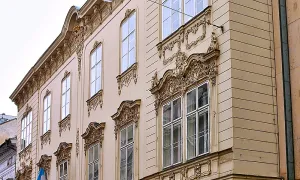
As you gaze upon the palác, notice the refined symmetry and proportion of its façade. These elements are hallmarks of the neoclassical architecture that Ullmann masterfully crafted. The building's single-story stature belies the depth of history it embodies, inviting you to ponder the stories held within its walls.
This location is not just a marvel of architecture; it's also steeped in intriguing historical narratives. Among those connected to this palác are notable figures such as Johanna Barbora Eusebie Carretto-Cavrianio z Millesima and Jan Ignác hrabě Carretto-Cavriani di Millesimo, whose legacies contribute to the palác's storied past.
The history of the Millesimovský Palác is marked by resilience. It endured significant damage during pivotal historical events—the Swedish bombardment of Prague in 1648 and again during the Prussian siege in 1757. These scars are silent witnesses to its survival through turbulent times, adding layers of depth to your visit.
An intriguing aspect of this palác is its connection to journalism. Once serving as a hub for editorial activities, it played an influential role in shaping narratives—a fascinating intersection of architecture and history that adds another dimension to your exploration.
As you continue your journey through Prague's captivating streets, let the Millesimovský Palác inspire you with its blend of architectural beauty and historical depth. We invite you to delve deeper into its stories as you explore more of this enchanting city. Thank you for joining us on this audio guide, and may your adventures in Prague be filled with discovery and wonder.
Tips for visitors
The best time to visit Millesimovský palác is during the late spring or early fall when the weather is pleasant, making it ideal for exploring both the palace and its surroundings on foot. These seasons offer mild temperatures and fewer crowds compared to summer, allowing you to enjoy the neoclassical architecture at a leisurely pace. Additionally, visiting in these months provides an opportunity to experience any outdoor events or exhibitions that might be taking place nearby.
Transportation options for reaching Millesimovský palác include both public transport and private vehicles. The palace is accessible by tram lines running along Panská Street, making it convenient for those using Prague's extensive tram network. For visitors driving to the area, there are parking facilities available in the vicinity of Panská Street, though it’s advisable to check ahead for availability due to potential restrictions or high demand during peak tourist seasons.
When planning your visit, consider bringing a camera with a zoom lens if you're interested in capturing detailed shots of the palace's architecture. The best photography spots are typically found at street level on Panská Street, where natural light highlights the neoclassical details of the building. Early morning or late afternoon visits can provide softer lighting conditions for more dramatic photographs.
For families with children visiting Millesimovský palác, nearby attractions such as Kounický palác and Neubergovský palác offer additional historical insights and architectural beauty within a short walking distance. These sites are part of the rich cultural tapestry of Prague's Old Town and can make for an educational outing. Exploring these areas together provides a comprehensive experience of the city’s history, suitable for all ages.
In addition to Millesimovský palác itself, nearby attractions within 30 minutes include Palác Riesů ze Stallburgu, Palác Sylva-Taroucca, Nový Kolowratský palác, and Palác Myslbek. These landmarks offer a glimpse into Prague’s diverse architectural styles and historical periods, enriching your understanding of the city's cultural heritage. Exploring these sites can provide a well-rounded experience of Prague’s historic center.
Businesses nearby
Nearby
Nearby attractions include Kounický palác, Neubergovský palác, Palác Riesů ze Stallburgu, Palác Sylva-Taroucca, Nový Kolowratský palác, and Palác Myslbek, all located in the vicinity of Panská Street.
Accommodation nearby
Trips and activities nearby
Guided tours, tickets and activities nearby from GetYourGuide
Search tours and activities →Themed route
Thematic Walking Tour: The Palaces of Panská Street
1. Millesimovský Palace *Type:* Historic Mansion *Why Visit:* Begin your journey at the Millesimovský Palace, a stunning example of early 20th-century architecture located on Panská Street. Its elegant design and historical significance make it an essential stop for anyone interested in Prague's architectural evolution.
2. Kounický Palace *Type:* Baroque Mansion *Why Visit:* A short walk from Millesimovský Palace, the Kounický Palace showcases exquisite baroque architecture with its ornate facades and intricate details. This palace offers a glimpse into the opulent lifestyle of Prague's nobility during the 18th century.
3. Neubergovský Palace *Type:* Historic Building *Why Visit:* Located nearby, Neubergovský Palace is known for its beautiful baroque and classical elements. Its historical significance as a residence for prominent figures in Prague's history adds depth to your exploration of Panská Street.
4. Palác Riesů ze Stallburgu *Type:* Historic Mansion *Why Visit:* Continue your tour with Palác Riesů ze Stallburgu, renowned for its unique architectural style that blends baroque and neoclassical elements. This palace provides insight into the cultural and artistic influences of its time.
5. Palác Sylva-Taroucca *Type:* Baroque Palace *Why Visit:* Conclude your tour at Palác Sylva-Taroucca, a masterpiece of baroque architecture with stunning interiors and gardens. Its historical importance as a cultural hub in Prague makes it a fitting end to your exploration of the palaces along Panská Street.
This thematic walking tour offers a comprehensive look at the architectural diversity and historical richness of Panská Street's palatial landmarks.
Seasonal recommendations
Spring: Visiting Millesimovský Palace during spring offers a delightful experience as the city of Prague awakens with blooming flowers and vibrant greenery, creating an enchanting atmosphere around the historic site. The soft light of early spring mornings casts a gentle glow on the palace’s architecture, highlighting its intricate details. This is an ideal time to explore as the weather begins to warm up, though it's wise to carry a light jacket or sweater for cooler evenings. To avoid crowds and make the most of your visit, consider arriving earlier in the day when fewer tourists are around.
Summer: Summer at Millesimovský Palace is characterized by long days filled with sunshine that beautifully illuminates the palace’s stonework, offering stunning photo opportunities. The lush surroundings come alive with activity during this season, making it a lively time to visit. However, be prepared for larger crowds as summer is Prague's peak tourist season. To enhance your experience and avoid the midday heat, plan your visit in the early morning or late afternoon. Comfortable walking shoes and light clothing are recommended, along with staying hydrated.
Autumn: Autumn brings a magical transformation to Millesimovský Palace with its rich palette of reds, oranges, and yellows as the leaves change color. The crisp air and softer sunlight create a cozy atmosphere perfect for leisurely strolls through the historic surroundings. This season is less crowded than summer, offering a more relaxed visit. Layered clothing is advisable to adapt to fluctuating temperatures throughout the day. Early morning visits allow you to enjoy the serene beauty of the changing foliage without the hustle of daytime tourists.
Winter: Winter at Millesimovský Palace offers a unique charm with its snow-dusted architecture and festive atmosphere, especially during the holiday season when Prague is adorned with lights and decorations. The shorter days mean that visiting in natural daylight requires an early start, as many attractions may have limited hours. Dress warmly in layers to stay comfortable while exploring, and consider bringing gloves or a hat for added warmth. Despite potentially fewer tourists compared to summer, be mindful of the weather conditions which can affect accessibility.
Visualizations and artistic views

Vizualizace jsou generovány umělou inteligencí a slouží jako inspirace.

Tips from visitors
No tips yet. Be the first!
Log in and add your tip.
Location on the map

Příběhy a pověsti
Legendy, pověsti a příběhy spjaté s touto památkou
Reviews and comments