





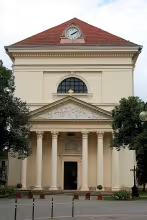
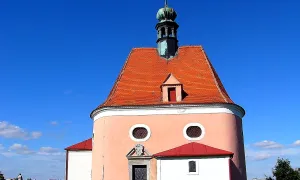
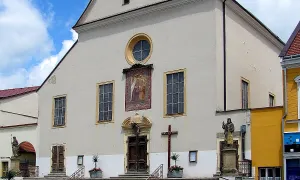
The Church of the Resurrection of Our Lord in Slavkov u Brna is an outstanding example of late 18th-century ecclesiastical architecture. It combines classicism with empire style elements. Situated at the eastern edge of the castle area, it dominates the northern end of Palackého Square. This church exemplifies Josephinian Enlightenment reforms aimed at modernizing society through rationality and innovative architectural design.
Constructed between 1786 and 1789, the Church replaced a partially destroyed Gothic Church of St. James, demolished in 1757. The project was commissioned by Slavkov's castle lord, Prince Václav Antonín Dominik Kounic-Rietberg, with Johann F. Hetzendorf as the imperial court architect responsible for its design. This period marked a significant shift towards enlightened sacred architecture across Austria, reflecting broader European Enlightenment ideals.
Architecturally, it is a classicist single-nave hall featuring a shallow apse and modest interior decoration. The main facade boasts a six-column portico with an inscription: WENCESL – ANT – PR. A. KAVNITZ – RIETBERG. FECIT. MDCCLXXXIX. An attached bell tower enhances its grandeur. Inside, the church features lunette windows and various altars embellished with reliefs by artists such as Franz Zächerle and Milivoj Husák. Originally, the main altar and two side altars were crafted from red Solnhofen limestone. In 1986, a new main altar made of white marble was consecrated.
Throughout its history, the church has undergone several transformations. In the 1980s, it saw the installation of new organs, marmoreal flooring, and liturgical interior adjustments. The church also houses relics of Italian martyr Saint Maria Goretti, adding to its spiritual significance. It has maintained cultural importance, being listed as a national cultural monument since 1958.
Today, the Church of the Resurrection remains accessible for visitors, offering insights into architectural innovation and historical continuity. Its unique blend of styles and historical layers make it a compelling destination for those interested in ecclesiastical architecture and Enlightenment-era reforms. Visitors are invited to explore this remarkable monument, which continues to symbolize cultural heritage and artistic achievement in the region.
Historical milestones
- 1757
- Demolice části gotického kostela sv. Jakuba.
- 1786
- Začátek výstavby Kostela Vzkříšení Páně.
- 1789
- Dokončení a otevření Kostela Vzkříšení Páně.
- 1986
- Konzekrace nového hlavního oltáře z bílého mramoru.
- 1958
- Zapsání kostela jako národní kulturní památka.
Architectural development
The church is a classicist single-nave hall with a shallow apse and modest interior decoration. It features a bell tower with a belfry attached to the apse. The main facade includes a six-column portico, and the interior boasts lunette windows and various altars adorned with reliefs by artists such as Franz Zächerle and Milivoj Husák.
Historical events
The church was built between 1786 and 1789 as a replacement for a partially destroyed Gothic Church of St. James, which was demolished in 1757.
In 1986, a new main altar made of white marble was consecrated.
Points of interest
- The Church of the Resurrection was built on the site of a partially destroyed Gothic Church of St. James, which was demolished in 1757, marking a transition from medieval to Enlightenment-era architecture.
- Prince Václav Antonín Dominik Kounic-Rietberg, who commissioned the church's construction, played a significant role not only as a local noble but also in promoting Josephinian reforms that sought to modernize and rationalize society through enlightened principles.
Guide
Show guide text
Welcome to the Church of the Resurrection of Our Lord in Slavkov u Brna, a remarkable testament to the architectural transitions from the medieval era into the Enlightenment period. As you stand here at the eastern edge of the castle area, dominating the northern end of Palackého Square, take a moment to absorb the serene yet commanding presence of this late 18th-century masterpiece. Its elegant lines and harmonious proportions exemplify elements of classicism and empire, inviting you into its historical narrative.
The story of this church begins in 1757 with the demolition of parts of the Gothic Church of St. James. This act marked a significant shift from medieval architecture to a new era inspired by Josephinian Enlightenment reforms. The construction of the Church of the Resurrection commenced in 1786, under the visionary guidance of Prince Václav Antonín Dominik Kounic-Rietberg. By 1789, this architectural endeavor was completed and opened to the public, symbolizing a new chapter not only for the community but also for ecclesiastical architecture.
As you explore further, notice how Johann F. Hetzendorf's architectural genius is evident in every detail of the church’s structure. The průčelí (façade) invites contemplation with its symmetry and grace, while the interior space reflects a thoughtful blend of spiritual purpose and aesthetic beauty. Pay attention to the new main altar made from white marble, consecrated in 1986, which adds a layer of elegance and solemnity to the sacred space.
Prince Václav Antonín Dominik Kounic-Rietberg's role as both commissioner and patron is pivotal in understanding this church’s historical significance. His vision for a modern place of worship was realized through Hetzendorf's architectural prowess, creating a landmark that would endure through centuries.
One intriguing aspect of the Church of the Resurrection is its foundation story—the transformation from a partially destroyed Gothic structure to an Enlightenment-inspired edifice. This transition not only reflects changes in architectural styles but also embodies the broader cultural shifts of the time.
As you continue your exploration, allow yourself to be drawn into the layers of history and artistry that this church encapsulates. Each stone tells a story, each detail invites curiosity. We encourage you to delve deeper into its past, uncovering more about the people, events, and ideas that have shaped it over time.
Thank you for visiting the Church of the Resurrection in Slavkov u Brna. May your journey through this sacred space inspire reflection and discovery as you continue to explore the rich tapestry of history surrounding us.
Tips for visitors
The best time to visit the Church of the Resurrection of Our Lord in Slavkov u Brna is during late spring or early autumn. During these seasons, the weather is typically mild and pleasant, making it ideal for exploring both the church's interior and its surroundings without the discomfort of summer heat or winter cold. Additionally, visiting outside peak tourist season ensures a more tranquil experience, allowing you to appreciate the architectural details in peace.
Parking and transport options around Slavkov u Brna are convenient. There is parking available near the site for those who choose to drive. For visitors preferring public transportation, both bus and train services can be accessed from nearby towns. It's advisable to check current schedules online or at local tourist information centers to plan your journey effectively.
When visiting the Church of the Resurrection, it’s recommended to bring comfortable walking shoes as you may want to explore the surrounding area or walk through the church grounds. A camera is also a must for capturing the stunning architecture and serene atmosphere. Don’t forget to carry water, especially if you plan on spending several hours exploring.
Photography enthusiasts will find that early morning light offers the best conditions for capturing the Church of the Resurrection. The soft, diffused light accentuates the classicism and empire elements of its architecture beautifully. Try positioning yourself at the entrance or along the side to capture the church's façade against a clear sky. Inside, look for angles that highlight the interplay between natural light and the intricate details of the interior.
For families with children visiting the Church of the Resurrection, consider planning your visit around nearby attractions within a 30-minute drive. The area offers several family-friendly sites such as local parks where children can play or explore nature trails. These spots provide a nice break from sightseeing and allow for some outdoor fun.
Businesses nearby
Do you run a restaurant, accommodation, shop, museum, rental, wellness or other visitor service near this monument? Show yourself directly to the people heading to it — this is how they will see you in the app and on the web:
Accommodation nearby
Trips and activities nearby
Guided tours, tickets and activities nearby from GetYourGuide
Search tours and activities →Themed route
Tematická výletní trasa: Kostel Vzkříšení Páně a okolí
1. Kostel Vzkříšení Páně (Slavkov u Brna) *Typ:* Historický kostel *Proč stojí za návštěvu:* Tento barokní kostel je architektonickou perli v Slavkovu, známý svou bohatou historií a krásným interiérem. Navštivte jeho významné sakrální umělecká díla a prozkoumejte jeho vysokou varhanní galerii, která nabízí jedinečný pohled na okolní krajinu.
2. Kaple svatého Vavřince (Slavkov u Brna) *Typ:* Kaple *Proč stojí za návštěvu:* Tato malebná kaple, nacházející se blízko kostela Vzkříšení Páně, je známá svou klidnou atmosférou a historickým významem. Je ideálním místem pro odpočinek a meditaci, nabízející pohled na idylické venkovské prostředí.
3. Nádvoří kostela Vzkříšení Páně *Typ:* Nádvoří *Proč stojí za návštěvu:* Procházka po nádvoří vám umožní ocenit venkovskou klidnost a architektonické detaily kostela. Je to místo, kde můžete si užít přírodního prostředí a zároveň se dozvědět více o historii oblasti.
4. Výstava v kostele Vzkříšení Páně *Typ:* Expozice *Proč stojí za návštěvu:* Tato expozice nabízí hlubší vhled do historie a uměleckého dědictví kostela. Prozkoumejte různorodé výstavy, které osvětlují kulturní a náboženskou minulost Slavkovu.
Tato trasa nabízí komplexní pohled na historické a kultivální bohatství Slavkovu u Brna, zaměřený především na kostel Vzkříšení Páně a jeho okolí.
Seasonal recommendations
Spring: The arrival of spring at the Church of the Resurrection of Christ (Slavkov u Brna) brings a refreshing transformation to the surrounding landscape, with blossoming flowers and vibrant greenery enhancing the natural beauty around this historic site. The gentle warmth of the sun illuminates the church's architecture, casting long shadows that add depth and character to its façade. During this season, it is advisable to wear comfortable layers due to fluctuating temperatures; mornings can be chilly while afternoons warm up significantly. Springtime sees moderate visitor numbers, making it an ideal time for those seeking a quieter experience without the crowds of peak tourist seasons.
Summer: Summer at the Church of the Resurrection of Christ offers long days filled with golden sunlight that accentuates the intricate details of its architecture and illuminates the lush gardens surrounding the church. The warm weather invites visitors to explore outdoor spaces, making it perfect for leisurely strolls or picnics in nearby parks. However, this is also the peak tourist season, so early arrival is recommended to avoid larger crowds. Light, breathable clothing is essential during these months to stay comfortable under the sun, and carrying a hat or sunglasses can provide additional protection against UV rays.
Autumn: Autumn transforms the area around the Church of the Resurrection of Christ with a stunning display of fall foliage, as leaves change into brilliant shades of red, orange, and yellow. The cooler temperatures create an inviting atmosphere for visitors to enjoy the church's serene beauty amidst nature’s vibrant palette. This season offers fewer crowds compared to summer, allowing for a more relaxed visit. It is advisable to wear layers that can be easily adjusted with the changing weather conditions throughout the day, ensuring comfort during your exploration of this historic site.
Winter: The winter months envelop the Church of the Resurrection of Christ in a serene and picturesque snowy landscape, offering a magical atmosphere as snow blankets the church and its surroundings. Shorter days mean earlier sunsets, so planning visits with ample daylight is important to fully appreciate the church's architecture under soft winter light. Winter can be quite cold, so dressing warmly in layers, including hats, scarves, and gloves, is essential for comfort during your visit. Additionally, some outdoor areas may have limited access due to weather conditions, so checking ahead on opening times or any seasonal closures is recommended.
Visualizations and artistic views

Vizualizace jsou generovány umělou inteligencí a slouží jako inspirace.

Tips from visitors
No tips yet. Be the first!
Log in and add your tip.
Location on the map


Příběhy a pověsti
Legendy, pověsti a příběhy spjaté s touto památkou
Reviews and comments