





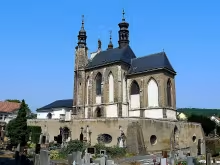
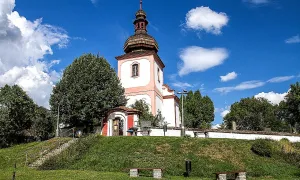
The Church of All Saints in Sedlec, near Kutná Hora in the Central Bohemian Region, is famous for its unique ossuary beneath it. This ossuary holds between 40,000 and 70,000 human skeletons artistically arranged into macabre decorations. Originally constructed around 1400 as a Gothic church within an abbey cemetery, this site has become one of the Czech Republic's most visited attractions over centuries.
Sedlec Abbey dates back to when Henry, the abbot of the Cistercian monastery, returned from the Holy Land with earth from Golgotha in 1278. This act made the abbey cemetery a sought-after burial site across Central Europe. The cemetery expanded significantly during the Black Death and after the Hussite Wars due to mass burials. By around 1400, a Gothic church was built at the center of this cemetery, with an ossuary below for exhumed bones.
Architecturally, the Church of All Saints began as a late Gothic structure but underwent significant changes between 1703 and 1710 under Jan Blažej Santini. He introduced Baroque elements to its Gothic design during restoration efforts necessitated by structural concerns. The ossuary gained its distinctive appearance in 1870 when František Rint, commissioned by the Schwarzenberg family, arranged the bones into artistic displays, including a chandelier of bones and skull garlands.
Ownership shifted after the dissolution of monasteries by Joseph II in 1784, with the Schwarzenberg family acquiring it. The ossuary has since been maintained as a cultural heritage site under state protection. Historically significant events include its damage by fire set by Hussites in 1421 and subsequent restoration efforts.
Today, the Church of All Saints remains an architectural masterpiece blending Gothic and Baroque styles. It draws visitors with its poignant reminder of mortality through its ossuary's artistic bone arrangements. The site is accessible to tourists, offering a unique glimpse into historical burial practices and artistic expression. Its cultural significance and striking visual impact make it a must-visit destination for those exploring the rich history of the Czech Republic.
The Church of All Saints in Sedlec stands as a testament to the interplay between art, architecture, and mortality, inviting visitors to reflect on life's transience while appreciating its historical and artistic value.
Historical milestones
- 1278
- Henry, abbot of Sedlec Abbey, returns from the Holy Land with earth from Golgotha.
- 1400
- Construction of the Gothic Church of All Saints begins in Sedlec.
- 1421
- The church is damaged by fire set by Hussites.
- 1703
- Restoration and Baroque redesign of the church by Jan Blažej Santini begins.
- 1784
- Dissolution of monasteries by Joseph II; Schwarzenberg family acquires the site.
- 1870
- František Rint arr
Architectural development
The Church of All Saints began as a late Gothic structure in the early 14th century. After being damaged by fire in 1421, it was restored between 1703 and 1710 under Jan Blažej Santinim, who added Baroque Gothic elements. The ossuary beneath the church was artistically arranged with human bones by František Rint in the late 18th century.
Historical events
1421: The church was damaged by a fire set by Hussites.
1703-1710: Restoration led by Jan Blažej Santinim, introducing Baroque Gothic elements.
Owners
The site was originally part of the Cistercian monastery in Sedlec. After the dissolution of monasteries by Joseph II in 1784, the Schwarzenberg family acquired the property. The ossuary has been maintained as a cultural heritage site and is now under state protection.
Points of interest
– The Church of All Saints is located above an ossuary that contains the remains of individuals from various social classes and historical periods, including nobility, commoners, and even royalty, illustrating a unique cross-section of medieval society. – Legend has it that during the Hussite Wars in 1421, the church was set ablaze by Hussites, who reportedly used the bones as ammunition to hurl at their enemies, adding a layer of historical drama to its story.
Guide
Show guide text
Welcome to the Church of All Saints in Sedlec, a remarkable site that stands as a testament to centuries of history and artistry. As you stand here, take a moment to absorb the serene beauty of this architectural gem nestled near Kutná Hora. The church's silhouette, with its Gothic spires reaching towards the sky, is an inviting sight, hinting at the rich stories held within its walls.
The origins of this sacred place trace back to 1278 when Henry, the abbot of Sedlec Abbey, returned from the Holy Land with a handful of earth from Golgotha. This holy soil was used for burial in the monastery's cemetery, which soon became the final resting place for many, including royalty and commoners alike. By around 1400, the Gothic Church of All Saints began to rise above this hallowed ground, its construction marking a new chapter in Sedlec’s spiritual landscape.
However, history is often shaped by conflict as well as creation. In 1421, during the tumultuous Hussite Wars, the church suffered damage at the hands of fire set by the Hussites. Despite this destruction, the community's resilience shone through, leading to a remarkable transformation in the early 18th century. Architect Jan Blažej Santini took on the task of restoring and redesigning the church, infusing its Gothic structure with Baroque elegance. As you wander around, notice how these two styles coexist harmoniously, creating an atmosphere that is both grand and intimate.
The Church of All Saints holds more than just architectural beauty; it harbors a unique underground ossuary beneath its foundations. This chapel is filled with the remains of individuals from various social classes and historical periods, arranged into artistic displays by František Rint in 1870. The bones tell a story that transcends time, illustrating a cross-section of medieval society where nobility and commoners alike rest side by side.
Legend whispers tales of intrigue from the Hussite Wars, adding layers to this site's mystique. Though much has changed since those turbulent times, the church continues to stand as a beacon of history and artistry.
As you conclude your visit here at the Church of All Saints in Sedlec, I invite you to reflect on the stories etched into its stones and bones. May this place inspire you to explore further, uncovering more secrets hidden within the tapestry of time. Thank you for joining me on this journey through history. Safe travels as you continue your exploration.
Businesses nearby
Nearby
Located near Kutná Hora in the Central Bohemian Region, the church is surrounded by rolling hills and historical sites, including the Sedlec Ossuary itself. The area offers a rich cultural landscape with other medieval monuments.
Accommodation nearby
Trips and activities nearby
Guided tours, tickets and activities nearby from GetYourGuide
Search tours and activities →Themed route
Thematic Tour Route: Sedlec and Its Historical Treasures
1. Kostel Všech svatých (Sedlec) - Type: Church - Why Visit: This iconic church, known for its stunning Gothic architecture, houses the famous Sedlec Ossuary beneath it. The ossuary is renowned for its artistic arrangement of human bones and skulls, making it a unique blend of art and history.
2. Sedlec Ossuary - Type: Historical Site - Why Visit: Located directly under the Church of All Saints, this ossuary offers an extraordinary display of skeletal remains arranged in intricate patterns. It's a testament to medieval craftsmanship and provides insight into historical burial practices.
3. Cemetery of Sedlec - Type: Cemetery - Why Visit: The cemetery surrounding the church is historically significant as it dates back to the 12th century. Walking through this ancient burial ground offers a glimpse into the past, with its serene atmosphere and connection to the ossuary below.
4. Church Nádvoří (Courtyard) - Type: Historical Site - Why Visit: The courtyard of the Church of All Saints is an ideal spot for reflection and appreciation of the church's architectural beauty. It provides a peaceful setting to absorb the historical ambiance before or after exploring the ossuary.
This route offers a comprehensive exploration of Sedlec’s rich cultural heritage, focusing on its most significant landmarks while providing a deep dive into medieval history and artistry.
Seasonal recommendations
Jaro: In the spring season, the Church of All Saints in Sedlec is especially colorful and full of life thanks to the blooming meadows surrounding it, which provide beautiful backdrops for photography. Sunlight illuminates the interior of the church, highlighting its architectural details and historical significance. This time of year is ideal for visiting due to mild temperatures and fewer crowds compared to winter months. Visitors should wear comfortable shoes as the grassy areas around the monument can be damp after spring rain. The best time to visit is in the morning or evening when the temperature is moderate, and there are fewer people.
Léto: In summer, the Church of All Saints in Sedlec is a popular destination for tourists thanks to long daylight hours and warm sunny weather that highlights its historical beauty. The atmosphere is full of vitality, with visitors of all ages enjoying sunny days. Due to the peak of the main summer season, it's recommended to visit early in the morning or later in the evening to avoid crowds and enjoy a more peaceful experience. Visitors should dress in light, rainproof clothing as the weather can be changeable, and they shouldn't forget sun protection cream. The good mood of summer days will enhance your experience of this historic monument.
Podzim: Autumn brings an atmosphere of quietness and calm to the Church of All Saints in Sedlec, with tree leaves colorfully changing and sunlight enveloping the monument in a gentle golden glow. This is an ideal time for visiting if you wish to enjoy peaceful conditions without large crowds. Temperatures are usually mild, so visitors should dress in layered clothing to avoid getting cold in the evening. Additionally, it's advisable to bring gloves or a warm umbrella as autumn weather can quickly change, and visitors should be prepared for bouts of wet weather.
Zima: The winter season brings a unique atmosphere to the Church of All Saints in Sedlec, where the interior is illuminated by warm lights and the outdoor environment may be covered with snow. This time of year attracts visitors seeking a peaceful experience without the large crowds typical of other periods. Visitors should dress warmly and wear quality boots with good traction for safe walking on potentially snowy surfaces. Additionally, it's important to note that opening hours may be shorter due to winter conditions, so planning your visit in advance is crucial, and visiting the monument early in the morning is advisable.
Visualizations and artistic views

Vizualizace jsou generovány umělou inteligencí a slouží jako inspirace.


Tips from visitors
No tips yet. Be the first!
Log in and add your tip.


Reviews and comments