





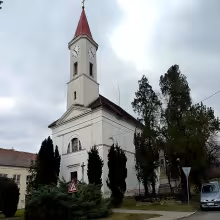
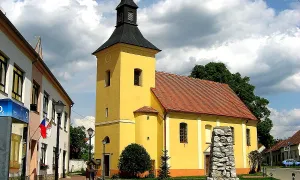
The Church of Saint Wenceslas in Troskotovice is a Roman Catholic church located within the town of Troskotovice, part of the Brno-Country District in the Czech Republic. This cultural monument showcases both medieval and 19th-century architectural styles. Constructed between 1840 and 1841 in the late Empire style, it originally dates back to the medieval period. It serves as the parish church for the local community and is protected by the Czech Republic due to its historical significance.
The site's origins trace back to the medieval era when a church already existed in Troskotovice. In 1260, Ekhard z Miroslavi donated patronage rights over the local church to the Osíanský monastery and its abbess. This act highlights the church's longstanding religious importance within the community. The current structure was built during a period marked by significant political and social changes across Europe following the Napoleonic Wars. In Bohemia, this era saw a cultural revival that included architectural endeavors reflective of the Romantic movement.
Architecturally, the Church of Saint Wenceslas is distinguished by its late Empire style, prevalent in the early 19th century. This style features grandeur and symmetry, often incorporating classical elements such as columns and pediments. The church's design reflects the architectural trends of its time, replacing an earlier medieval structure with a more modern interpretation that respects its historical roots.
Throughout its history, the church has been under various administrative influences, beginning with the Osíanský monastery in 1260. This early connection underscores the church's role within broader ecclesiastical networks and its importance to local religious life. Over time, it transitioned into a parish church for Troskotovice, continuing as a central place of worship and community gathering.
Key events associated with the Church of Saint Wenceslas include the 1260 donation by Ekhard z Miroslavi, establishing early ecclesiastical connections. This event is significant as it marks one of the earliest documented interactions involving the church, highlighting its historical importance within the region's religious landscape.
Today, the Church of Saint Wenceslas remains a vital part of Troskotovice's cultural and spiritual life. As a protected monument, it offers visitors an opportunity to explore both its architectural beauty and rich history. The church is accessible to those interested in experiencing a piece of Bohemia's religious heritage, making it a worthwhile destination for anyone visiting the area.
In reflecting on its value, the Church of Saint Wenceslas stands as a bridge between past and present, embodying centuries of cultural and spiritual evolution. Its preservation allows visitors to appreciate the architectural elegance of the late Empire style while connecting with historical narratives that have shaped Troskotovice. This monument invites exploration and contemplation, offering a unique glimpse into the region's storied past.
Historical milestones
- 1260
- Ekhard z Miroslavi donated patronage rights to the Osíanský monastery.
- 1840
- Construction of the current Church of Saint Wenceslas began.
- 1841
- Construction of the Church of Saint Wenceslas completed.
Architectural development
The current Church of Saint Wenceslas was constructed between 1840 and 1841, replacing an earlier medieval structure. It is designed in the late Empire style, reflecting architectural trends of that period.
Historical events
- 1260
- Ekhard z Miroslavi donated patronage rights over the local church to the Osíanský monastery and its abbess.
Points of interest
- The Church of Saint Wenceslas was originally part of a medieval church structure before being rebuilt in the late Empire style between 1840 and 1841. This transition from medieval to 19th-century architecture reflects broader European trends following the Napoleonic Wars, blending historical reverence with contemporary design.
Guide
Show guide text
Welcome to the Church of Saint Wenceslas in Troskotovice, a remarkable testament to both history and architectural evolution nestled within this charming town in the Jihomoravský region. As you stand here today, take a moment to absorb the serene beauty that surrounds you—a harmonious blend of nature and human craftsmanship.
The origins of this sacred site trace back to medieval times when it was part of an older church structure. It's fascinating to consider how this place has stood witness to centuries of change. In 1260, Ekhard z Miroslavi made a significant contribution by donating patronage rights to the Osíanský monastery, marking the beginning of its storied history.
Fast forward to the early 19th century, between 1840 and 1841, when the current structure we see today was constructed. This period saw the church rebuilt in the late Empire style—a reflection of broader European architectural trends following the Napoleonic Wars. As you look around, notice how this style blends historical reverence with a sense of grandeur.
Architecturally, while specific designers remain unknown, the Church of Saint Wenceslas stands as a cultural monument protected by the Czech Republic. Its design invites you to explore its form and function—a parish church that continues to serve its community. As you wander around, take in the details that speak volumes about its past—perhaps the symmetry or the way light dances through its windows.
This site is intertwined with intriguing historical narratives, particularly those of Ekhard z Miroslavi. His early involvement laid a foundation for the church's enduring legacy, influencing its role within this community and beyond.
One captivating aspect of this church is how it embodies the transition from medieval to 19th-century architecture. This change not only reflects local history but also connects Troskotovice to broader European cultural shifts.
As you conclude your visit here, I invite you to linger a little longer, perhaps exploring the surrounding area or reflecting on the layers of history that have unfolded in this place. Thank you for joining me today, and may your journey continue with curiosity and wonder.
Tips for visitors
The best time to visit the Church of Saint Wenceslas in Troskotovice is during late spring or early autumn, when the weather is pleasant for walking around the area and exploring its surroundings. These seasons offer mild temperatures and beautiful natural scenery, enhancing your experience as you explore this cultural monument.
Parking and transportation to the church are convenient. The site can be accessed by car, with parking available nearby. For those preferring public transport, local buses serve the area; however, it's advisable to check current routes and schedules in advance using a travel planner or app for the most accurate information.
When visiting the Church of Saint Wenceslas, consider bringing comfortable walking shoes as you may want to explore the surrounding areas. Additionally, carrying a camera is recommended to capture the architectural beauty of the church. If planning an extended visit, bring water and snacks, especially if exploring nearby attractions.
Photography enthusiasts will find several spots around the Church of Saint Wenceslas ideal for capturing its architecture in natural light. Early morning or late afternoon provide soft lighting conditions that enhance the church's features. Be mindful of any photography restrictions inside the church itself.
For those interested in exploring nearby attractions within a 30-minute drive, consider visiting other cultural sites or natural landscapes in the Jihomoravský kraj region. While specific recommendations are not provided here, local tourist information centers can offer guidance on places of interest close to Troskotovice.
Families with children will find the visit enjoyable if you plan accordingly. Engage your kids by discussing the historical significance of the church and its architecture. Consider bringing a small picnic for a relaxing break in the area, allowing them to explore safely while enjoying the outdoors.
Businesses nearby
Do you run a restaurant, accommodation, shop, museum, rental, wellness or other visitor service near this monument? Show yourself directly to the people heading to it — this is how they will see you in the app and on the web:
Accommodation nearby
Themed route
Troskotovice Thematic Walking Tour
1. Kostel svatého Václava (Troskotovice) - Church Begin your journey at the heart of Troskotovice with the charming Church of Saint Wenceslas, a stunning example of local religious architecture. This church is not only a place of worship but also a historical monument that reflects the cultural heritage of the region. Its serene atmosphere and intricate design make it a must-visit for anyone interested in history or architecture.
2. Obecní úřad Troskotovice - Town Hall A short walk from the church, visit the Troskotovice Town Hall. This building serves as the administrative center of the village and offers insights into local governance and community life. The town hall often hosts cultural events and exhibitions that showcase regional traditions and history, providing a deeper understanding of Troskotovice's vibrant community spirit.
3. Kostel svatého Václava - Church Grounds Explore the surrounding grounds of the Church of Saint Wenceslas. The churchyard is not only picturesque but also home to several historical gravestones and monuments that tell stories from Troskotovice's past. This area offers a peaceful setting for reflection, allowing visitors to appreciate the tranquility and natural beauty that surrounds this historic site.
4. Místní tržiště - Local Market Conclude your tour at the Local Market in Troskotovice. Here, you can experience the local culture through its vibrant market life. The market is a hub for fresh produce and traditional goods, offering an opportunity to interact with locals and sample regional delicacies. It's a perfect place to end your visit on a lively note, capturing the essence of daily life in this charming village.
This thematic walking tour provides a comprehensive experience of Troskotovice, highlighting its historical, cultural, and community aspects while staying within the immediate vicinity of the Church of Saint Wenceslas.
Seasonal recommendations
Jaro: Návštěva kostela svatého Václava v Troskotovicích během jara nabízí jedinečný pohled na obnovující se přírodu, kdy kvetoucí keře a stromy osvětlují starobylé architekturu svým živým zelením. Sluneční paprsky pronikají do kostela skrze jeho okenice, vytvářející vzrušující vzory na stěnách a podlahách. Toto je ideální čas pro návštěvu, protože davu je zpravidla méně než v letním období. Navrhované oblečení by mělo být komfortní a flexibilní na teploty, které se mohou rychle měnit; den začíná chladně, ale slunce ho postupně zahřívá. Nejlepší čas pro návštěvu je obvykle odpoledne, když je teplota příjemně mírná a příroda v plné krvi.
Léto: Léto v Troskotovicích nabízí dlouhé dny slunečního svitu, který osvětluje kostel svatého Václava ve skvělém světle a zdůrazňuje jeho historickou architekturu. Příroda je v plné síle, s bohatstvím kvetoucích keřů a stromů, které dodávají do okolního prostředí nádech klidu. Nicméně, léto přináší i vyšší davovost, zejména ve výletním čase odpoledne. Navrhované oblečení by mělo být lehké a světlé, s důrazem na ochranu proti slunci, jako jsou klobouky a brýle se skleněnými okny. Nejlepší čas pro návštěvu je rané ráno nebo pozdě odpoledne, aby se vyhnuli vrcholovým teplotám a davům.
Podzim: Během podzimu nabízí kostel svatého Václava v Troskotovicích zvláštní atmosféru s měnícím se barevným spektáklem listnatých stromů, které obalují historickou stavbu do teplých odstínů. Sluneční světlo je jemné a zářivé, což dává kostelu romantický vzhled. Toto období má méně návštěvníků než léto, což poskytuje klidnější prostředí pro prozkoumání památky. Oblečení by mělo být teplé a vhodné na klimatické změny; den začíná chladně a ve dne se teplota zvyšuje, ale v noci opět klesá. Nejlepší čas pro návštěvu je obvykle odpoledne, kdy je teplota příjemná a atmosféra klidná.
Zima: V zimních měsících nabízí kostel svatého Václava v Troskotovicích jedinečnou atmosféru s možností pozorování sněhových pokrývek, které zdobí jeho okolí. Sluneční paprsky pronikající skrze okenice přidávají dovnitř kostela magickou záři a teplý nádech. Toto období má nejnižší davovost, což umožňuje klidnější prozkoumání památky. Oblečení by mělo být teplé a vhodné na zimní počasí; navíc je důležité připravit se na kratší otevírací dobu, která je běžná v chladných měsících. Nejlepší čas pro návštěvu je obvykle odpoledne, kdy slunce zůstává nad horizontem déle a poskytuje více světla pro fotografování a prozkoumávání kostela.
Visualizations and artistic views

Vizualizace jsou generovány umělou inteligencí a slouží jako inspirace.
Tips from visitors
No tips yet. Be the first!
Log in and add your tip.

Reviews and comments