





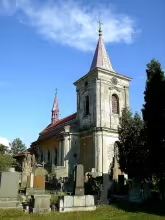
The Church of Saint Wenceslas in Hrubý Jeseník is a Roman Catholic parish church showcasing both Gothic and Baroque architectural styles. Situated in the town of Hrubý Jeseník within the Středočeský kraj region, this cultural monument has been protected since 1965 due to its historical significance and unique design elements. Originally built in the 14th century in the Gothic style, it was reconstructed between 1766 and 1769 into a late Baroque form after a fire destroyed the original structure in 1763.
The church's origins date back to the 14th century when Bohemia was part of the Holy Roman Empire. During this period, Gothic architecture flourished across Europe, influencing the initial construction of the Church of Saint Wenceslas. By the late 18th century, under Habsburg rule, Baroque art and architecture were prominent throughout Europe, leading to the church's reconstruction in its current form.
Architecturally, it is a single-nave structure with an oblong layout, featuring a polygonal presbytery and a bell tower at the western façade. The rebuilding process incorporated mixed masonry using quarry stone and bricks, retaining some original Gothic elements such as buttresses. The exterior is adorned with pilasters and casement windows, while the bell tower showcases semi-circular windows with wavy cornices and corner pilasters.
The interior boasts a Rococo style dating around 1770. It includes a main altar framed by an image of Saint Wenceslas, signed "V. Kramolín 1769," featuring a view of Nový Dvůr Castle in the lower right corner. Contemporary sculptures of Saints Vojtěch and Prokop flank this central piece. The church's ceiling is decorated with frescoes depicting scenes from the legend of Saint Wenceslas, likely crafted by V. Kramolín. Additionally, a tombstone for J. F. Morzin dating to 1765 can be found within.
Nearby, a late Baroque painting of Saint John Nepomucene is located near the rectory, and along the path from Oskořínek to the pheasant farm stands a statue of Saint Anthony of Padua predating mid-18th century. These elements contribute to the cultural richness surrounding the church.
Today, the Church of Saint Wenceslas remains an important historical site open for visitors who wish to explore its architectural beauty and historical significance. Its status as a protected cultural monument underscores its value not only to the local community but also to those interested in European history and architecture. Visitors are invited to experience this remarkable blend of Gothic and Baroque styles, reflecting centuries of artistic evolution and religious devotion.
Historical milestones
- 14. století
- Původní stavba kostela ve gotickém stylu.
- 1763
- Požár zničil původní strukturu kostela.
- 1766-1769
- Rekonstrukce do pozdně barokního stylu.
- 1965
- Chráněný kulturní památník.
Architectural development
The Church of Saint Waceslas began as a Gothic structure in the 14th century. After being destroyed by fire in 1763, it was rebuilt from 1766 to 1769 into its current late Baroque style, likely designed by F. Kermer or F. Jedlička. The church features mixed masonry with quarry stone and bricks, retaining some original Gothic elements such as buttresses. Its architecture includes pilasters and casement windows, with a bell tower featuring semi-circular windows.
Historical events
The original Gothic church was destroyed by fire in 1763.
Reconstruction of the church into its current Baroque style occurred between 1766 and 1769.
Points of interest
- The Church of Saint Wenceslas was rebuilt after a fire in 1763, which led to its transformation from Gothic to Baroque architecture, illustrating how historical events can drastically alter architectural heritage.
- An intriguing detail is the signature "V. Kramolín 1769" on the main altar's image of Saint Wenceslas, suggesting that this artist played a significant role in both the church's interior decoration and its preservation of cultural narratives through art.
Guide
Show guide text
Welcome to the Church of Saint Wenceslas in Hrubý Jeseník, a remarkable testament to both faith and resilience nestled within this historic landscape. As you stand before this majestic structure, take a moment to soak in the grandeur that surrounds you. The church's presence is commanding yet serene, with its late Baroque architecture offering an intricate dance of light and shadow across its façade.
Let us delve into the origins of this sacred site. In the 14th century, the original Gothic-style church was constructed here, serving as a spiritual beacon for the community. However, in 1763, tragedy struck when a devastating fire reduced it to ashes. This event marked a turning point in its history; from these ruins rose a new vision between 1766 and 1769. Under the guidance of architects F. Kermer and F. Jedlička, the church was reborn in the late Baroque style, showcasing a transformation that speaks volumes about the era's architectural evolution.
As you stand here now, take note of the intricate details that define its current form. The façade is adorned with elaborate ornamentation typical of the Baroque period, inviting your gaze to explore every curve and flourish. Inside, though not visible from this vantage point, lies a sanctuary where light filters through stained glass, casting vibrant patterns across the interior.
While specific historical figures associated directly with the church's construction remain unnamed, the very essence of its rebirth is a narrative in itself—a story of community resilience and artistic ambition. The transformation from Gothic to Baroque is not just an architectural shift but also a reflection of changing times and tastes.
One intriguing detail that captures the imagination is the signature "V. Kramolín 1769" on the main altar's image, hinting at the hands that shaped its sacred space. This small yet significant mark connects us to the past, offering a glimpse into the lives of those who contributed to this architectural marvel.
As we conclude our brief journey through time and artistry, I invite you to explore further, perhaps wandering towards the associated cemetery or rectory, each with their own stories to tell. The Church of Saint Wenceslas stands not just as a building but as a living chronicle of history, inviting all who visit to ponder its past and appreciate its beauty.
Thank you for joining me on this exploration. May your curiosity continue to guide you as you discover more wonders in Hrubý Jeseník. Safe travels, and until next time, may the spirit of discovery light your path.
Tips for visitors
The best time to visit the Church of Saint Wenceslas in Hrubý Jeseník is during late spring or early autumn, when the weather is mild and pleasant for outdoor exploration. These seasons offer beautiful natural lighting for photography and comfortable conditions for walking around the area. Additionally, visiting outside of peak tourist season can provide a more serene experience, allowing you to appreciate the church's architecture and its surroundings without large crowds.
Parking and transportation options are available nearby. The church is accessible by both car and public transport, providing flexibility depending on your preference or needs. For those driving, there are parking areas in proximity to the site. If opting for public transport, it’s advisable to check current routes and schedules through a local transit search tool prior to your visit. This ensures you can plan your journey efficiently and enjoy your time at the church without transportation concerns.
When visiting, consider bringing comfortable walking shoes, especially if you plan to explore the surrounding paths or nearby attractions such as the late Baroque painting of Saint John Nepomucene near the rectory or the statue of Saint Anthony of Padua. A camera is recommended for capturing the picturesque views and architectural details of the church. Additionally, carrying a light jacket can be helpful due to variable weather conditions in the region.
For photography enthusiasts, the best spots include the exterior facades of the Church of Saint Wenceslas, where natural lighting during sunrise or sunset enhances the textures and colors of the building. The path from Oskořínek to the pheasant farm offers scenic views that make for great background shots. Early morning light is ideal for capturing the serene atmosphere of the church and its surroundings.
Nearby attractions within a 30-minute drive include the late Baroque painting of Saint John Nepomucene near the rectory, which provides insight into local religious art history. The statue of Saint Anthony of Padua on the path from Oskořínek to the pheasant farm is another point of interest, offering a glimpse into the region's cultural heritage. These sites complement your visit by providing additional context and beauty.
For families with children, the Church of Saint Wenceslas offers an educational experience about local history and architecture. The surrounding paths are suitable for family walks, allowing kids to explore at their own pace. Engaging them in a treasure hunt or storytelling session about the saints depicted nearby can make the visit more interactive and enjoyable.
Businesses nearby
Do you run a restaurant, accommodation, shop, museum, rental, wellness or other visitor service near this monument? Show yourself directly to the people heading to it — this is how they will see you in the app and on the web:
Nearby
Near the rectory, there is a late Baroque painting of Saint John Nepomucene. On the path from Oskořínek to the pheasant farm, a statue of Saint Anthony of Padua stands, dating before mid-18th century.
Accommodation nearby
Themed route
Thematic Walking Tour: Hrubý Jeseník
1. Kostel svatého Václava (Church of Saint Wenceslas) - *Type:* Church - *Why Visit:* This stunning Baroque church, located in the heart of Hrubý Jeseník, is a testament to the region's rich architectural history and spiritual heritage. The church serves as an excellent starting point for exploring the area’s cultural significance.
2. Late Baroque Painting of Saint John Nepomucene - *Type:* Artwork - *Why Visit:* Situated near the rectory, this late Baroque painting captures the essence of religious art from the period. It offers a glimpse into the artistic expressions and devotional practices prevalent in 18th-century Bohemia.
3. Statue of Saint Anthony of Padua - *Type:* Sculpture - *Why Visit:* Located on the path from Oskořínek to the pheasant farm, this statue predates mid-18th century and is a fine example of religious sculpture in the region. It provides insight into the enduring veneration of Saint Anthony and his significance in local folklore.
This tour offers an enriching experience through Hrubý Jeseník's historical and cultural landmarks, focusing on its ecclesiastical art and architecture.
Seasonal recommendations
Spring: Visiting the Church of Saint Wenceslas during spring offers a serene experience as nature awakens around Hrubý Jeseník. The landscape is adorned with vibrant wildflowers and fresh greenery, creating a picturesque backdrop for your visit. As daylight extends into the evening, natural lighting enhances the church's architectural details beautifully. Spring can be unpredictable weather-wise, so wearing layers is advisable to accommodate sudden temperature changes. Early mornings or late afternoons are ideal times to explore when fewer visitors are around, allowing you to enjoy the tranquil atmosphere.
Summer: Summer at the Church of Saint Wenceslas provides an opportunity to experience the lush beauty of Hrubý Jeseník in full bloom. The longer days and warm weather make it perfect for extended visits and outdoor activities nearby. This is the peak tourist season, so expect larger crowds, especially on weekends and holidays. To avoid long lines and enjoy a more relaxed visit, consider arriving early in the morning or later in the afternoon. Comfortable walking shoes and light clothing are recommended to navigate the terrain comfortably.
Autumn: The autumn months transform Hrubý Jeseník into a stunning tapestry of reds, oranges, and yellows, offering a magical setting for visiting the Church of Saint Wenceslas. The cooler temperatures make it an ideal time for hiking or leisurely walks through the surrounding forests. As daylight shortens, bringing a flashlight can be helpful if you plan to stay until dusk. While visitor numbers decrease compared to summer, weekends might still see some crowds, so weekdays are preferable for a quieter experience.
Winter: Winter at the Church of Saint Wenceslas is a unique experience with snow-covered landscapes that create a mystical atmosphere around Hrubý Jeseník. The church is often illuminated against the snowy backdrop, offering a stunning visual contrast. Snow and ice can make paths slippery, so wearing warm clothing, sturdy boots, and possibly snow gear like gloves and hats is essential. Keep in mind that opening hours may be shorter during this season due to weather conditions, so checking ahead is advisable. Visiting on weekdays or during less busy times of the day can enhance your experience by avoiding larger crowds.
Visualizations and artistic views

Vizualizace jsou generovány umělou inteligencí a slouží jako inspirace.


Tips from visitors
No tips yet. Be the first!
Log in and add your tip.



Reviews and comments