





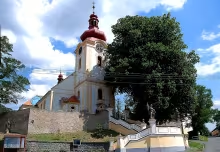
The Church of Saint Wenceslas in Chlum is a Roman Catholic Baroque church located within the village of Chlum, part of Nalžovice municipality in the Středočeský kraj region. This prominent historical monument stands on a hilltop and features a striking two-story tower with a bulbous roof. Originally constructed as a Gothic structure, it underwent significant Baroque renovations starting in 1707, with further modifications in 1766 and 1790. Recognized as a cultural monument of the Czech Republic since 1965, this church is notable for its architectural evolution and historical significance.
The Church of Saint Wenceslas has roots tracing back to at least the mid-14th century, although precise details about its initial construction are not well-documented. The first written mention of Chlum dates to 1352, indicating a long-standing presence in the region. Over time, the church transitioned from its original Gothic style to Baroque through renovations and modifications that began in the early 18th century. These changes reflect broader cultural trends during the Baroque period when Bohemia experienced significant artistic and architectural development under Habsburg rule.
Architecturally, the Church of Saint Wenceslas is characterized by its Baroque elements, introduced starting in 1707. The church's original Gothic features include a polygonal presbytery and a pointed triumphal arch. In 1766, Antonín Schmidt was attributed with rebuilding the tower, giving it a more pronounced Baroque appearance. Further modifications in 1790 finalized its current form, including a two-story structure topped by a bulbous roof. The church's interior boasts a baroque main altar featuring a sculpture of the Holy Trinity and an image of Saint Wenceslas painted by Ludvík Jaroslav Bernard in 1861. Additionally, the pulpit on the right side of the victorious arch showcases a figure of a sower created by sculptor Hammer from Stará Dobrotivá in 1784.
Throughout its history, the Church of Saint Wenceslas has been associated with notable figures and events. Opposite the church stands a single-story parsonage where Beneš Method Kulda served as parish priest from 1859 to 1870. Kulda was an influential Czech priest, writer, and folklorist, contributing significantly to local culture during his tenure. During World War I, most of the church's bells were confiscated by occupying forces, except for "Barborka," a bell dating back to 1772. A fundraising campaign in 1929 enabled the acquisition of two new bells named "Václav" and "Jan." However, during World War II, these bells, along with another named "František," were again confiscated by German authorities.
Today, the Church of Saint Wenceslas remains an active site for worship, hosting regular services every Sunday and on significant Christian holidays. The churchyard features a mausoleum built in 1765 and is enclosed by a robust stone wall with gates. Access to this historical site is facilitated by a two-winged Baroque staircase adorned with sculptures of Saint Wenceslas and Saint Vojtěch, leading up from the village's main road or square. The church continues to be an integral part of the community, offering visitors a glimpse into its rich history and architectural beauty.
The Church of Saint Wenceslas in Chlum stands as a testament to the cultural and historical evolution of the region. Its blend of Gothic origins and Baroque renovations offers unique insight into the artistic trends of past centuries. Visitors are invited to explore this remarkable site, where history and spirituality converge amidst stunning architecture.
Historical milestones
- 1707
- The church was baroquely renovated.
- 1766
- The tower was rebuilt, attributed to Antonín Schmidt.
- 1790
- Further modifications were made to the church and its tower.
Architectural development
Originally a Gothic structure, the Church of Saint Wenceslas underwent Baroque renovations starting in 1707. The tower was significantly modified in 1766, attributed to Antonín Schmidt, and further changes were made in 1790, giving it its current form. The church features a polygonal presbytery and a pointed triumphal arch from the original construction.
Historical events
- 1772
- The church bell 'Barborka' was not confiscated during World War I.
- 1929
- Two new bells, 'Václav' and 'Jan', were acquired after a fundraising campaign.
- 1942
- The bells 'Václav', 'Jan', and 'František' were confiscated by German authorities during World War II.
Points of interest
- The Church of Saint Wenceslas is believed to have been originally constructed in the mid-14th century, but precise details about its initial construction remain undocumented, adding an air of mystery to its early history.
- During World War I, most of the church's bells were confiscated by occupying forces, except for "Barborka," a bell from 1772. This bell survived both world wars, symbolizing resilience amid conflict.
Guide
Show guide text
Welcome to the Church of Saint Wenceslas in Chlum, a remarkable testament to history and architecture nestled within this charming village in Středočeský kraj. As you stand here, take a moment to absorb your surroundings—the church's prominent position on a hilltop offers sweeping views that encapsulate its serene yet commanding presence.
The Church of Saint Wenceslas has roots stretching back to the mid-14th century, though much about its early days remains shrouded in mystery. This Gothic foundation underwent significant transformations over the centuries, evolving into the stunning Baroque edifice you see before you today. In 1707, it embraced a grand Baroque renovation that set the stage for further enhancements. The tower, now a striking feature with its two-story structure and bulbous roof, was rebuilt in 1766 by Antonín Schmidt—a testament to architectural ingenuity of the time. Further modifications followed in 1790, ensuring the church remained both functional and beautiful.
As you gaze upon the church, take note of its intricate details—the elegant lines of Baroque architecture that speak volumes about the era's artistic flair. The two-story tower draws your eye upward, inviting you to imagine the craftsmanship involved in its construction. While specific architects remain unknown, their legacy is etched into every stone and curve.
This historical site holds connections with notable figures such as Beneš Method Kulda, whose contributions have left an indelible mark on this region's cultural tapestry. Each step around the church offers a glimpse into a storied past filled with dedication and transformation.
There are intriguing tales woven into the fabric of the Church of Saint Wenceslas. During World War I, most of its bells were confiscated by occupying forces—a poignant reminder of the tumultuous times that have shaped this place. Such stories add layers to your experience, inviting you to ponder the resilience of this sacred site through the ages.
As you conclude your visit here, we invite you to continue exploring Chlum and Nalžovice, where history and nature intertwine seamlessly. Thank you for joining us on this journey through time and architecture. May your exploration be filled with wonder and discovery.
Tips for visitors
The best time to visit the Church of Saint Wenceslas in Chlum is during late spring or early autumn when the weather is mild, and the surrounding landscape is particularly beautiful. During these seasons, you can enjoy pleasant temperatures that are ideal for walking around the village and exploring the church without the discomfort of summer heat or winter cold. Additionally, visiting outside peak tourist season means fewer crowds, allowing for a more peaceful experience.
Parking and transportation to Chlum are convenient. There is parking available in the vicinity of the church, making it accessible by car. If you prefer public transport, local buses can take you close to the village. It's advisable to check current bus schedules online or at your nearest travel center before your visit to ensure a smooth journey.
When visiting the Church of Saint Wenceslas, consider bringing comfortable walking shoes as there are some steps leading up to the church on its hilltop location. Also, bring a camera if you wish to capture the stunning views and architectural details. A light jacket might be useful too, especially in spring or autumn when temperatures can vary throughout the day.
For photography enthusiasts, the best spots around the Church of Saint Wenceslas are at sunrise or sunset when the lighting is soft and enhances the church's Baroque architecture. The hilltop location provides a panoramic view of the surrounding landscape, making it an excellent spot for capturing both the church and its natural backdrop.
Nearby attractions within 30 minutes include the village of Nalžovice, which offers quaint streets and local shops to explore. For those interested in nature, the nearby forests provide opportunities for hiking or a leisurely walk. These locations are perfect for extending your visit and experiencing more of what Středočeský kraj has to offer.
Businesses nearby
Do you run a restaurant, accommodation, shop, museum, rental, wellness or other visitor service near this monument? Show yourself directly to the people heading to it — this is how they will see you in the app and on the web:
Accommodation nearby
Themed route
Tematická Výletní Trasa: Kostel svatého Václava v Chlumu
1. Kostel svatého Václava (Chlum) - *Typ:* Historická památka, kostel - *Proč stojí za návštěvu:* Tento barokní kostel je nejen duchovním centrem obce Chlum, ale také architektonickou perli s bohatou historią. Jeho interiér nabízí krásný pohled na umělecká díla a historické prvky, které přitahují návštěvníky z celého regionu.
2. Nádvoří kostela svatého Václava - *Typ:* Historický areál - *Proč stojí za návštěvu:* Nádvoří kolem kostela nabízí klidnou atmosféru pro relaxaci a refleksi. Je to ideální místo k procházce, kde si můžete užít panoramatický pohled na okolní krajinu a pochopit historický kontext kostela v rámci obce.
3. Místní památky kolem kostela - *Typ:* Historické budovy - *Proč stojí za návštěvu:* Okolí kostela je domovem několika historických budov, které svou architekturou a historií přispívají k celkovému dojmu od Chlumu. Tyto památky jsou důkazem bohaté minulosti obce a poskytují vhled do života jejích obyvatel po staletí.
4. Místní tradiční kavárna - *Typ:* Kulturní místo - *Proč stojí za návštěvu:* Po prozkoumání historických míst vás čeká příležitost odpočinout a užít si tradičních českých jídel a nápojů. Tato kavárna nabízí autentické prostředí, kde můžete poznat místní gastronomii a sdílet své dojmy z výletu.
Tato trasa vás provede skrze historii a kulturu obce Chlum, nabízejíc cenné přehledy o jejím dědictví a každodenním životě.
Seasonal recommendations
Spring: The arrival of spring at the Church of Saint Wenceslas (Chlum) brings a vibrant renewal, with blossoming flowers and lush greenery surrounding the historic site. The soft sunlight enhances the church's architectural details, casting gentle shadows that add to its mystical charm. As nature awakens, visitors are treated to an array of colors and fragrances from blooming flora. During this time, it is advisable to dress in layers to accommodate the mild but variable weather. Early mornings or late afternoons offer a more tranquil experience before the site becomes busier with tourists enjoying the pleasant spring climate.
Summer: Summer at the Church of Saint Wenceslas (Chlum) is characterized by long daylight hours and warm temperatures, making it an ideal time for exploring the church's historical significance under clear skies. The lush greenery around the church provides a picturesque backdrop, while the warm atmosphere invites visitors to linger and appreciate the serene environment. Due to increased tourist activity during this peak season, arriving early in the day can help avoid crowds. Comfortable walking shoes and light clothing are recommended to enjoy the summer weather comfortably.
Autumn: Autumn transforms the Church of Saint Waveslas (Chlum) into a captivating scene with its rich tapestry of reds, oranges, and yellows as the leaves change color. The cooler temperatures provide a crisp atmosphere that enhances the historic charm of the church, making it an ideal time for photography enthusiasts to capture stunning views. As the days grow shorter, planning visits during daylight hours is advisable. Layered clothing will help visitors stay comfortable in the fluctuating autumn weather.
Winter: Winter at the Church of Saint Wenceslas (Chlum) offers a serene and mystical experience as snow blankets the surrounding landscape, creating a picturesque setting for this historic site. The shorter days mean that visits should be planned during daylight hours to fully appreciate the church's beauty under winter lighting conditions. The cooler temperatures necessitate warm clothing, including coats, hats, and gloves, to ensure comfort while exploring. Despite potentially reduced opening hours, the quiet atmosphere of winter can provide a peaceful opportunity to reflect on the site’s historical significance.
Visualizations and artistic views

Vizualizace jsou generovány umělou inteligencí a slouží jako inspirace.


Tips from visitors
No tips yet. Be the first!
Log in and add your tip.
Location on the map



Příběhy a pověsti
Legendy, pověsti a příběhy spjaté s touto památkou
Reviews and comments