




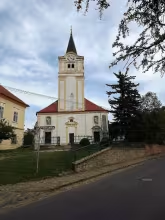
The Church of St. Martin in Šatov is a Roman Catholic church in the village of Šatov, located in the Znojmo District of the Czech Republic. This parish church is a protected cultural monument and a notable example of a late Gothic church from the 15th century. It is worth visiting for its historical significance and architectural value, offering a glimpse into the region's rich cultural heritage.
Šatov first appears in written records in 1190 as Schatowa, when it was part of the Louka Monastery's foundation. A church likely existed in the village at that time, as the Louka Monastery gained patronage over it in 1200. The first written record of Šatov dates back to 1201. The oldest surviving structure in the village is the Gothic core of the Chapel of the Holy Sepulchre behind the church, featuring a Romanesque fragment in its basement.
The Church of St. Martin is a late Gothic church from the 15th century, rebuilt in 1656 and again in the 19th century. The tower was rebuilt in 1851. The church's architecture is characterized by its Gothic style, although the exact details of its original design and construction are not well-documented.
The Louka Monastery, founded in 1190, was a significant center of learning and spirituality in the region during the 13th century. The Kingdom of Bohemia was a powerful state in Central Europe, and the Catholic Church played a significant role in its politics and culture. The monastery's influence can be seen in the construction of the Church of St. Martin, likely built during this period.
The Church of St. Martin has undergone several changes throughout its history. In 1656, it was rebuilt, and later, in the 19th century, it underwent further renovations. The tower was rebuilt in 1851. Unfortunately, there is limited information available about the church's ownership and administration throughout its history.
Located in a rural area, surrounded by fields and forests, the Church of St. Martin remains a significant cultural monument and a place of worship for the local community. Visitors can appreciate its historical significance and architectural value, making it a worthwhile destination for those interested in exploring the region's rich cultural heritage.
The Church of St. Martin in Šatov is a testament to the region's rich history and cultural significance. Its well-preserved architecture and historical context make it an important site for those interested in exploring the region's past. Visitors are invited to visit this remarkable monument and experience its beauty and significance firsthand.
Historical milestones
- 1190
- Šatov first appears in written records as Schatowa
- 1200
- Louka Monastery gained patronage over Šatov church
- 1201
- First written record of Šatov
- 1300
- Church of St. Martin was built
- 1656
- Church of St. Martin was rebuilt
- 1851
- Tower was rebuilt
Architectural development
The Church of St. Martin is a late Gothic church from the 15th century, rebuilt in 1656 and again in the 19th century. The tower was rebuilt in 1851.
Historical events
- 1190
- The village of Šatov appears in written records as Schatowa, part of the foundation of the Louka Monastery.
- 1200
- The Louka Monastery gains patronage over the church in Šatov.
- 1201
- The first written record of Šatov is made.
- 1300
- The Church of St. Martin is built.
Points of interest
– The Louka Monastery, which was founded in 1190, was a significant center of learning and spirituality in the region during the 13th century.
– The Kingdom of Bohemia was a powerful state in Central Europe, and the Catholic Church played a significant role in its politics and culture.
– The oldest surviving structure in the village of Šatov is the Gothic core of the Chapel of the Holy Sepulchre behind the church, featuring a Romanesque fragment in its basement.
Guide
Show guide text
Welcome in front of the Church of St. Martin in Šatov. You are standing before a unique historical monument with a rich history dating back to the 13th century. The church is located in the picturesque village of Šatov, known for its beautiful historic buildings and tranquil atmosphere.
Let's move through time and return to the beginnings of Šatov. The first written mention of the village dates from 1190 when it was called Schatowa. At that time, it was part of the Louka Monastery, which was a significant center for education and spirituality in the region. It is likely that there was already a church here at that time, which was later rebuilt and expanded.
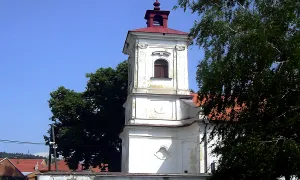
Now take a look at the Church of St. Martin. Observe its façade with simple architecture and smooth exterior. Notice the single tower, built in 1851. Pay attention to details such as windows and doors, which give the church its unique appearance.
Šatov and its Church of St. Martin have a rich history dating back to the 13th century. At that time, Šatov was part of the Kingdom of Bohemia, which was a strong state in Central Europe. The Catholic Church played an important role in the politics and culture of this kingdom.
Let's return to the Louka Monastery, which was a significant center for education and spirituality in the 13th century. It was a place where important cultural and religious events took place. The monastery was also known for its beautiful gardens and parks filled with lovely flowers and trees.
Šatov and its Church of St. Martin are full of secrets and history. It is a place where you can immerse yourself in the past and explore beautiful historic buildings and a tranquil atmosphere. Allow yourself to take a look at the Church of St. Martin and its surroundings. Our journey into the past will surely delight and entertain you.
Businesses nearby
Do you run a restaurant, accommodation, shop, museum, rental, wellness or other visitor service near this monument? Show yourself directly to the people heading to it — this is how they will see you in the app and on the web:
Nearby
The church is located in a rural area, surrounded by fields and forests.
Accommodation nearby
Themed route
Šatov Routes
1. Church of Saint Martin (main destination) - A unique Romanesque church with a Romanesque portal and Gothic presbytery. The church is an important monument of Romanesque architecture in the South Moravian Region.
2. View from Šatov (view) - From the top of the hill above the village, there is a beautiful view of the surrounding landscape and the Church of Saint Martin.
3. Šatovské Pole (natural monument) - The surrounding fields are a typical example of agricultural landscapes in the South Moravian lowland.
Seasonal recommendations
Jaro
In the spring season, St. Martin's Church is surrounded by green nature, with surrounding trees and blooming flowers adding a vibrant and spiritually enriching atmosphere to the space. The ambiance is calm and quiet, ideal for relaxation and prayer. We recommend visiting the church during the spring season when it remains open until late afternoon to avoid the crowds that come in the main summer season.
Summer
In the peak of summer, St. Martin's Church is enveloped by greenery and flowers, creating a pleasant atmosphere for visitors. We suggest arriving earlier to avoid the crowds that typically appear later in the season. The extended opening hours allow visits until late afternoon.
Fall
In the autumn season, St. Martin's Church is surrounded by the colors of fall nature, with trees encircled by leaves creating a stunning view. The atmosphere is calm and quiet, ideal for relaxation and prayer. We recommend visiting the church during the autumn season when it remains open until late afternoon.
Winter
In winter, St. Martin's Church is surrounded by snow and serene winter nature, creating a peaceful and quiet ambiance. We suggest visiting in winter when it has shorter opening hours, so it’s better to arrive earlier to avoid later visitors. Additionally, wearing warm clothing is advisable to stay comfortable in the cold.
Visualizations and artistic views

Vizualizace jsou generovány umělou inteligencí a slouží jako inspirace.


Tips from visitors
No tips yet. Be the first!
Log in and add your tip.


Reviews and comments