





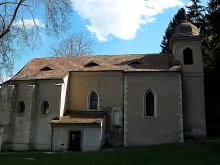
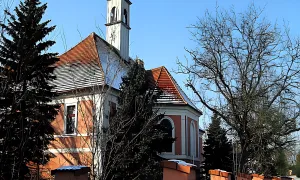
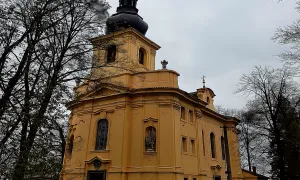
The Church of Saint Kilian in Davle is a historically significant religious structure originally built as a Romanesque church. Located in the village of Davle within Středočeský kraj, it stands out due to its dedication to Saint Kilian, an Irish missionary who became the bishop of Würzburg and was martyred there. This unique patronage makes it notable within Czech heritage. Over centuries, the church has undergone various reconstructions due to damage from invasions and fires, transitioning through Gothic and Baroque styles.
The origins of the Church of Saint Kilian trace back to the mid-12th century during a period when Bohemia was experiencing consolidation and Christianization. The initial Romanesque architecture reflects this era's style, characterized by robust and solid construction. It is one of only two churches in the Czech Republic dedicated to Saint Kilian, highlighting its unique cultural significance.
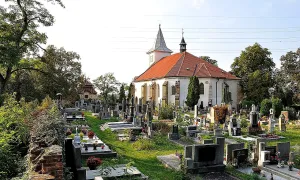
Architecturally, the Church of Saint Kilian underwent significant transformations over time. Initially constructed as a Romanesque church, it was later modified into Gothic style towards the end of the 13th century. This period saw the addition of a triangular presbytery closure in the early 14th century, enhancing its structural complexity. Subsequent Baroque modifications further altered its appearance, resulting in its current form with a single-nave structure and a bell tower added in 1768.
Throughout its history, the church has faced several dramatic events that have shaped its physical state. It was first mentioned in a papal tithe register in 1352, indicating its established presence by then. The late 13th century saw significant Gothic reconstruction efforts, reflecting broader European architectural trends of the time. In 1692, the church suffered extensive damage due to fire and was subsequently rebuilt in 1775. Archaeological research has provided insights into these construction phases, revealing remnants of the original Romanesque structure.
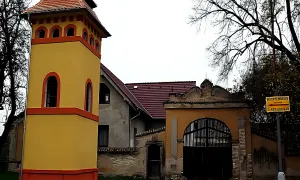
Today, the Church of Saint Kilian stands as a testament to its rich historical journey. The site includes not only the church but also a chapel of the Holy Sepulchre, a bell tower, and an enclosing wall of a former cemetery. The surrounding area features a parish building that now serves as a restaurant, adding to the site's community value. Visitors can appreciate the Baroque altar with its depiction of Saint Kilian and other religious figures, along with a Renaissance baptismal font dating back to 1556.
The Church of Saint Kilian is worth visiting for those interested in exploring the layers of architectural history and cultural heritage embedded within its walls. Its unique dedication and historical transformations offer a glimpse into the past, making it an intriguing destination for both history enthusiasts and casual visitors alike.
Historical milestones
- kolem 1150
- Založení původní románské kostely.
- 1352
- První zmínka v papežském desátním rejstříku.
- koncem 13. století
- Gothické přestavby kostela.
- počátek 14. století
- Přidání trojúhelníkového uzavření presbytáře.
- 1692
- Zničení ohněm a následné obnovy.
- 1775
- Obnova po požáru v roce 1692.
Architectural development
Originally Romanesque, the Church of Saint Kilian underwent significant Gothic renovations in the late 13th century. The early 14th century saw further Gothic additions, including a triangular presbytery closure. Baroque modifications later gave it its current form, with a single-nave structure and a bell tower added in 1768.
Historical events
First mentioned in a papal tithe register in 1352.
Significant Gothic reconstruction occurred in the late 13th century.
The church was extensively damaged by fire in 1692 and rebuilt in 1775.
Points of interest
- The Church of Saint Kilian is one of only two churches in the Czech Republic dedicated to Saint Kilian, making its patronage exceptionally unique within the nation's religious landscape.
- Despite various architectural transformations over the centuries, remnants of the original Romanesque structure have been uncovered through archaeological research, offering rare insights into early medieval construction techniques.
Guide
Show guide text
Welcome to the Church of Saint Kilian in Davle, a remarkable testament to architectural evolution and historical significance nestled in this picturesque area of Středočeský kraj. As you stand before this venerable structure, take a moment to absorb its serene presence against the backdrop of the surrounding landscape. The church's facade, though weathered by time, speaks volumes of its storied past.
The origins of this sacred site trace back to around 1150 when a Romanesque church was first established here. Its initial construction marked the beginning of a spiritual journey that would see the building evolve through various architectural styles and historical epochs. By 1352, it had already made its mark, being mentioned in the papal tithe register—a testament to its significance within the ecclesiastical community.
As you look around, notice how the church has undergone significant transformations. The late 13th century brought Gothic renovations that would redefine its silhouette, adding layers of complexity and beauty to its form. At the dawn of the 14th century, a triangular closure was added to the presbytery, further enhancing its architectural narrative.
The year 1692 was pivotal for the Church of Saint Kilian; it suffered destruction by fire but rose from the ashes through restoration efforts that followed. This resilience is palpable as you explore its spaces and observe how each element tells a story of survival and renewal.
Saint Kilian himself, an Irish missionary who became the bishop of Würzburg and met his martyrdom there, lends this church its unique patronage. His legacy is interwoven with the fabric of this place, making it one of only two churches in the Czech Republic dedicated to him—a fact that underscores its distinctiveness within the nation's religious landscape.
As you delve deeper into the church’s history, consider how each architectural phase reflects broader historical and cultural shifts. The blend of Romanesque foundations with Gothic and Baroque embellishments encapsulates centuries of artistic and spiritual evolution.
A fascinating aspect of this church is its dedication to Saint Kilian, a rarity in Czech heritage that invites reflection on the spread of Christianity across Europe and the stories of those who carried it forward.
As we conclude our exploration, I invite you to linger a while longer, absorbing the atmosphere and perhaps pondering the countless footsteps that have traversed this sacred ground. The Church of Saint Kilian is not just an architectural marvel but a bridge to the past, offering insights into the spiritual and cultural tapestry of the region.
Thank you for joining me on this journey through time and faith. May your visit inspire further exploration and discovery in Davle and beyond. Farewell, until we meet again at another historical treasure.
Businesses nearby
Do you run a restaurant, accommodation, shop, museum, rental, wellness or other visitor service near this monument? Show yourself directly to the people heading to it — this is how they will see you in the app and on the web:
Accommodation nearby
Trips and activities nearby
Guided tours, tickets and activities nearby from GetYourGuide
Search tours and activities →Themed route
Tematická výletní trasa: Kostel svatého Kiliána a okolí Davle
1. Kostel svatého Kiliána (Kostel) *Proč stojí za návštěvu:* Tento barokní kostel, postavený v 18. století, je architektonickou perli obce Davle. Jeho bohatě zdobená interiérová dekorace a historie ho činí nezbytným prozkoumat.
2. Kaple svatého Kiliána (Kaple) *Proč stojí za návštěvu:* Nachází se v blízkosti kostela svatého Kiliána a nabízí klidnou atmosféru pro meditaci. Je to místo, kde můžete užít si poklidné okamžiky a ocenit historický kontext oblasti.
3. Nádvoří kostela svatého Kiliána (Park/ Nádvoří) *Proč stojí za návštěvu:* Toto místo je ideální pro relaxaci a pohled na okolní krajinu. Je to také vhodné místo, kde si můžete vychutnat přírodní prostředí kolem kostela.
4. Davle: historický centrum (Městská část) *Proč stojí za návštěvu:* Procházka po ulicích Davle vás zavede do jeho historického srdce, kde můžete objevit starobylé domy a architektonické prvky, které odrážejí bohatou minulost obce.
5. Davle: pamětní deska na náměstí (Pamětní deska) *Proč stojí za návštěvu:* Pamětní deska je významným historickým prvkem, který vypráví o důležitých událostech a osobnostech spojených s obcí Davle. Je to krátké, ale poutavé místo pro poznání místní historie.
Tato trasa nabízí komplexní pohled na kulturní a historický bohatství obce Davle, zaměřený především kolem kostela svatého Kiliána.
Seasonal recommendations
Spring: Visiting the Church of Saint Kilian during spring offers a unique experience as nature comes to life around Davle. The blooming flowers and fresh greenery create a vibrant atmosphere, enhancing the church's historical charm with natural beauty. As daylight extends into the evening, visitors can enjoy softer lighting that highlights the intricate architecture of the church. For those planning a visit, it’s advisable to dress in layers to accommodate fluctuating temperatures typical of spring days. Although crowds are generally lighter than in summer, arriving early is recommended to fully appreciate the serene surroundings before more visitors arrive.
Summer: The Church of Saint Kilian in Davle becomes particularly enchanting during the summer months when warm weather invites both locals and tourists to explore its grounds. With longer daylight hours, the church can be enjoyed well into the evening, offering a perfect setting for leisurely strolls or picnics amidst lush surroundings. This is also the peak tourist season, so expect larger crowds; planning your visit earlier in the day will help you avoid long waits and ensure a more personal experience. Comfortable walking shoes and light clothing are recommended to stay cool and comfortable while exploring.
Autumn: Autumn brings a magical transformation to the Church of Saint Kilian with its surrounding landscape awash in warm hues of red, orange, and gold. The cooler temperatures make for pleasant visits, allowing visitors to comfortably explore without the summer heat. The natural lighting during this season casts beautiful shadows and highlights on the church's architecture, creating an atmospheric backdrop perfect for photography enthusiasts. As the days grow shorter, it’s wise to plan your visit earlier in the day to fully enjoy the site before dusk sets in.
Winter: During winter, the Church of Saint Kilian offers a serene and contemplative atmosphere, with its historic façade often dusted lightly with snow, adding to its picturesque charm. The colder months mean fewer visitors, allowing for a more intimate experience as you explore this historical gem. However, it's important to dress warmly in layers and wear comfortable footwear suitable for potentially icy conditions. Be mindful of shorter opening hours typical in winter; arriving early will ensure you have ample time to appreciate the church’s beauty in its quietest season.
Visualizations and artistic views

Vizualizace jsou generovány umělou inteligencí a slouží jako inspirace.


Tips from visitors
No tips yet. Be the first!
Log in and add your tip.


Reviews and comments