




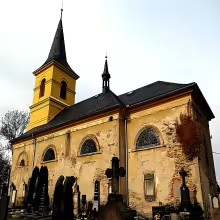
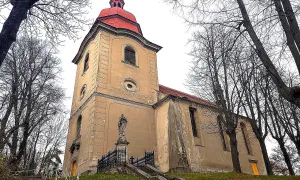
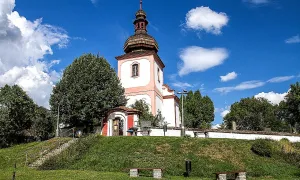
The Church of Saint Wenceslas and the Body of Christ in Křečhoř is a Roman Catholic filial church situated at the northern edge of the village near the road to Kamhajek. Originally constructed in the early 14th century as a parish church, it has undergone significant transformations over time. The current structure, built between 1846 and 1848 in an Empire style following its destruction in 1846, stands as a testament to both historical resilience and architectural evolution. This monument is notable for its rich history, including periods of religious transformation during the Hussite Wars, and for its blend of original Gothic elements with later Empire-style renovations.
The church's origins trace back to the early 14th century when it was established as a parish church. By at least 1350, it had become an important local religious site. The first known parish priest died in 1363, marking one of the earliest documented events associated with the church. During the Hussite Wars, the church became a utraquist church, reflecting broader religious upheavals occurring in Bohemia during this period. Between 1626 and 1682, it served as a parish church before transitioning to filial church status on January 1, 2005.
Architecturally, the original structure was a small, unattractive Gothic building with a wooden belfry and no tower. However, following its destruction in 1846, the church was rebuilt between 1846 and 1848 in an Empire style. The current edifice features a single nave with a rectangular chancel and a spire over the western facade. Notably, during renovations in 1930, original Gothic details were uncovered, including walls of the chancel with chamfered corners and narrow embedded Gothic windows. The original entrance portal from the western facade was relocated to a chapel of St. Anne in Chocenice.
Throughout its history, the church has experienced various administrative changes. Initially serving as a parish church, it became a filial church again in 2005. These shifts reflect broader ecclesiastical and societal transformations over the centuries. The church's historical context is further enriched by its connection to significant religious movements such as the Hussite Wars, which influenced its status and function during that era.
Today, the Church of Saint Wenceslas and the Body of Christ in Křečhoř stands as a cultural monument protected by the Czech Republic. Its blend of Gothic and Empire architectural elements offers a unique glimpse into the region's historical and religious evolution. Visitors can appreciate the church's intricate details, including the original Gothic features uncovered during renovations, and its significance within the local community.
The church is not only a place of worship but also a site of historical interest, offering insights into the religious and cultural shifts that have shaped the area over centuries. Its preservation as a cultural monument ensures that future generations can continue to explore and appreciate this remarkable piece of history. Visitors are invited to experience its architectural beauty and delve into the rich tapestry of stories it holds.
Historical milestones
- 1318
- A stone-carved cross with this year was located on the chancel wall.
- 1363
- The first known parish priest died.
Architectural development
Initially a small, unattractive Gothic structure with wooden belfry and no tower, the church was rebuilt in an Empire style between 1846 and 1848. The current building features a single nave with a rectangular chancel and a spire over the western facade. Original Gothic elements include walls of the chancel with chamfered corners and narrow embedded Gothic windows.
Historical events
The church became a utraquist church during the Hussite Wars.
Between 1626 and 1682, it served as a parish church before becoming a filial church again on January 1, 2005.
Points of interest
- Despite its current Empire-style architecture, the Church of Saint Wenceslas and the Body of Christ in Křečhoř originally featured Gothic elements. During renovations in 1930, these original details were uncovered, including chamfered corners on chancel walls and narrow embedded Gothic windows.
- The church's status changed multiple times over the centuries, reflecting broader religious and societal shifts. Initially a parish church since at least 1350, it became a utraquist church during the Hussite Wars before reverting to filial church status in 2005.
Guide
Show guide text
Welcome to the Church of Saint Wenceslas and the Body of Christ in Křečhoř! As you stand here at this historic site, take a moment to absorb the serene atmosphere surrounding you. Nestled on the northern edge of the village near the road to Kamhajek, this Roman Catholic filial church invites you into its storied past.
The origins of this sacred place trace back to the early 14th century when it was originally built as a parish church. Over time, it has witnessed significant transformations. In 1846, a devastating event led to the destruction of the original structure. However, by 1848, the current edifice stood proudly in its new Empire style—a testament to resilience and renewal.
As you look around, notice the architectural elegance that defines this church today. The Empire style is evident in its symmetrical lines and grandeur. Yet, beneath this exterior lies a fascinating history of Gothic elements waiting to be discovered. During renovations in 1930, these hidden details were uncovered, adding depth to your understanding of this place.
Now, let's delve into some intriguing historical tidbits. In 1318, there was once a stone-carved cross on the chancel wall bearing that year—a silent witness to centuries past. By 1363, the first known parish priest had passed away, marking another chapter in its rich history.
One of the most captivating aspects of this church is the blend of architectural styles it embodies. Although today's structure showcases Empire style, the original Gothic elements were revealed during renovations. Look closely at the chamfered corners on the chancel walls and the narrow embedded Gothic windows—these features offer a glimpse into its layered past.
As you continue your exploration, let these stories inspire you to ponder the lives that have intersected with this sacred space over the centuries. The Church of Saint Wenceslas and the Body of Christ in Křečhoř is more than just a building; it's a tapestry woven from time, faith, and transformation.
We invite you to take your time, wander around, and soak in every detail. Whether you're drawn by history, architecture, or spirituality, there's something here for everyone. Thank you for joining us on this journey through time. Enjoy the rest of your visit!
Businesses nearby
Do you run a restaurant, accommodation, shop, museum, rental, wellness or other visitor service near this monument? Show yourself directly to the people heading to it — this is how they will see you in the app and on the web:
Accommodation nearby
Trips and activities nearby
Guided tours, tickets and activities nearby from GetYourGuide
Search tours and activities →Themed route
Tematická výletní trasa: Křečhoř a okolí
1. Kostel svatého Václava a Božího Těla (Křečhoř) Typ: Náboženská památka Proč stojí za návštěvu: Kostel svatého Václava a Božího Těla je architektonickou perli, která přitahuje návštěvníky svým historickým významem a krásnými gotickými prvky. Je to ideální místo pro ty, kdo mají zájem o duchovní architekturu a historii regionu.
2. Křečhořské nádvoří Typ: Historické areál Proč stojí za návštěvu: Nádvoří u kostela nabízí klidný prostor pro relaxaci a pohled na okolní krajinu. Je to také vhodné místo, kde si můžete vychutnat přírodní krásy obce Křečhoř.
3. Místní fara Typ: Náboženský a historický objekt Proč stojí za návštěvu: Fara, která se nachází v blízkosti kostela, je dalším důležitým místem pro pochopení kulturního a společenského života obce. Její historie a architektura přidávají na hloubce celkové zkušenosti s návštěvou Křečhora.
4. Kostelní věž Typ: Architektonický prvek Proč stojí za návštěvu: Vystoupit na kostelní věž nabízí jedinečnou perspektivu na obec a okolní krajinu. Je to ideální místo pro fotografii a zároveň poskytuje možnost užít si klidné chvíle daleko od městského hluku.
Tato trasa nabízí návštěvníkům příležitost seznámit se s historií a kulturou Křečhora, zatímco si užívají krásy jeho klidného prostředí.
Seasonal recommendations
Spring: Visiting the Church of St. Wenceslas and the Body of Christ during spring offers a unique experience as nature awakens around Křečhoř. The landscape is adorned with blooming flowers, creating vibrant hues that contrast beautifully against the historic architecture of the church. The soft, diffused light of early spring mornings or late afternoons can enhance the picturesque setting, making it an ideal time for photography enthusiasts. Visitors should be prepared for occasional rain showers and consider wearing layers to adapt to changing temperatures throughout the day. Early morning visits are recommended to avoid larger crowds as more people explore outdoor attractions during this pleasant season.
Summer: Summer brings vibrant life to the Church of St. Wenceslas and the Body of Christ, with lush greenery surrounding Křečhoř enhancing its historical charm. The long daylight hours provide ample time for exploration and appreciation of the church's architecture under the warm sun. This is a popular season for tourists, so expect larger crowds, especially during weekends and holidays. Arriving early in the day can help avoid peak times, allowing for a more relaxed visit. Comfortable walking shoes and light clothing are advisable, along with sunscreen to protect against strong summer rays.
Autumn: Autumn transforms Křečhoř into a picturesque setting of warm colors as leaves change hues around the Church of St. Wenceslas and the Body of Christ. The cooler temperatures make for comfortable exploration, while the soft autumn light adds a magical quality to the historic site. This is an excellent time for those who appreciate photography or simply enjoy walking through nature's seasonal changes. As fewer tourists visit during this period compared to summer, it offers a quieter experience. Visitors should dress in layers and be prepared for sudden weather shifts, as autumn can bring both crisp air and unexpected rain.
Winter: Winter at the Church of St. Wenceslas and the Body of Christ presents a serene atmosphere with snow often blanketing Křečhoř's landscape, giving the area an enchanting, almost fairy-tale appearance. The shorter days mean fewer visitors, allowing for a peaceful experience amidst the quiet beauty of the season. However, be mindful that the church may have limited opening hours during this time. Visitors should dress warmly in layers and wear comfortable footwear suitable for potentially icy paths. Early visits are recommended to make the most of daylight and enjoy the tranquil ambiance before closing times.
Visualizations and artistic views

Vizualizace jsou generovány umělou inteligencí a slouží jako inspirace.


Atmosphere of the place
Atmospheric visualization of the setting and era
Tips from visitors
No tips yet. Be the first!
Log in and add your tip.



Reviews and comments