






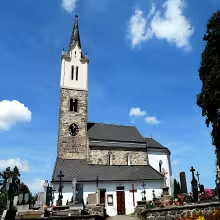
Kostel Nanebevzetí Panny Marie in Obděnice stands as a testament to the rich architectural history of the Czech Republic. This Romanesque church is prominently situated on a small hill at the village's western edge, offering picturesque views that attract visitors from near and far. Recognized as a cultural heritage site, it holds significant historical value for its architectural features and storied past.
The origins of Kostel Nanebevzetí Panny Marie date back to the 12th century when Bohemia was part of the Holy Roman Empire. During this period, the region experienced a cultural and architectural renaissance that led to the construction of many Romanesque structures across Europe. The church's initial design reflects these broader European trends, characterized by its robust and solid form typical of Romanesque architecture.
Architecturally, the church is notable for its preserved Romanesque nave, tower, and choir. Over time, it underwent significant transformations; in the 14th to 15th centuries, a Gothic presbytery replaced the original round apse, marking a shift in architectural style common during this era. The church's appearance today largely results from renovations carried out between 1891 and 1893.
Throughout its history, Kostel Nanebevzetí Panny Marie has seen various owners and administrators who have contributed to its legacy. One notable figure is Jakub Krčín z Jelčan, a prominent landowner who commissioned extensive repairs in 1603. His influence remains evident today, with his coat of arms adorning the presbytery's vault as a reminder of his contributions.
The church also holds intriguing historical curiosities that add to its allure. A wooden cross inscribed with "MISIE 2004" stands before the entrance, while inside, a marble tombstone placed by Jakub Krčín z Jelčan adds an element of mystery. The epitaph on this tombstone is incomplete, and local legends suggest that Krčín's actual burial site remains unknown due to tales of his body being taken away by the devil.
Today, Kostel Nanebevzetí Panny Marie continues to be a focal point for visitors interested in exploring Czech history and architecture. Although it no longer serves as a parish church since its local parish was dissolved in 2009, it remains an active filial church of the římskokatolická farnost Petrovice u Sedlčan. The church is surrounded by a cemetery accessible through a vaulted gate, adding to its serene and contemplative atmosphere.
Visiting Kostel Nanebevzetí Panny Marie offers a unique opportunity to delve into the layers of history embedded within its walls. Its architectural evolution from Romanesque to Gothic elements provides insight into changing artistic trends over centuries. The church's cultural significance, coupled with intriguing historical anecdotes, makes it a worthwhile destination for anyone interested in the rich tapestry of Czech heritage.
Historical milestones
- 1603
- Jakub Krčín z Jelčan ordered extensive repairs of the church.
Architectural development
The church originated in the 12th century as a Romanesque structure. It underwent significant changes between the 14th and 15th centuries when its original apse was replaced with a Gothic presbytery. In 1603, Jakub Krčín z Jelčan ordered major repairs, leaving his mark with an emblem on the presbytery's vault. The church received its current form during renovations from 1891 to 1893.
Historical events
In the early 14th to 15th centuries, the church was transformed with a Gothic presbytery replacing the original Romanesque apse.
In 1603, Jakub Krčín z Jelčan commissioned extensive repairs of the church.
Points of interest
- Legend has it that Jakub Krčín z Jelčan's body was spirited away by the devil after his death in 1604, adding a layer of mystery to his incomplete tombstone within the church. - A wooden cross inscribed with "MISIE 2004" stands before the entrance, hinting at a modern pilgrimage or mission that ties contemporary events to this historic site. - The transition from Romanesque to Gothic architecture in the presbytery during the 14th and 15th centuries reflects broader European trends, showcasing how local structures adapted over time.
Guide
Show guide text
Welcome to the historical gem of Obděnice—the Church of the Assumption of the Virgin Mary. As you stand here on this gentle hill at the village's western edge, take a moment to soak in the serene atmosphere surrounding this Romanesque emporium church. Its prominent position offers a panoramic view that captures both its timeless beauty and the lush landscape below.
Let's delve into its origins. The Church of the Assumption has roots stretching back through centuries, with significant architectural changes over time. In 1603, Jakub Krčín z Jelčan played a pivotal role in its history by ordering extensive repairs. His involvement left an indelible mark on this sacred site.
Now, let's focus on what you see before you. The church proudly displays its preserved Romanesque nave and tower, inviting you to explore their intricate details. Notice the Gothic presbytery that replaced the original round apse during renovations in the 14th and 15th centuries. This blend of styles is a testament to the church's evolving architectural journey.
As you move closer, take note of Jakub Krčín z Jelčan’s incomplete tombstone within the church. Legend whispers intriguing tales about him—after his death in 1604, it's said that his body was spirited away by the devil. This adds a layer of mystery and intrigue to your visit.
Before entering, observe the wooden cross inscribed with "MISIE 2004" standing at the entrance. It hints at a modern pilgrimage or mission, connecting past traditions with contemporary faith journeys.
As you contemplate this sacred space, consider the stories and history that echo through its walls. We invite you to explore further, perhaps wandering around the church grounds or reflecting on the legends that bring life to these stones.
Thank you for joining us in this exploration of a place where history and legend intertwine. May your visit inspire curiosity and wonder as you continue your journey through Obděnice.
Businesses nearby
Do you run a restaurant, accommodation, shop, museum, rental, wellness or other visitor service near this monument? Show yourself directly to the people heading to it — this is how they will see you in the app and on the web:
Accommodation nearby
Themed route
Thematic Walking Tour: Obděnice and the Church of the Assumption of the Virgin Mary
1. Church of the Assumption of the Virgin Mary (Obděnice) - *Type:* Historical Landmark, Religious Site - *Why Visit:* Begin your journey at this stunning Baroque church, a centerpiece of Obděnice's cultural and spiritual life. Its architectural beauty and serene atmosphere offer a glimpse into the town’s rich history and religious heritage.
2. Obděnice Village Square - *Type:* Historical Site - *Why Visit:* Just a short walk from the church, explore the village square where local traditions come alive. The area is surrounded by charming historical buildings that reflect the architectural style of the region. It's an ideal spot to appreciate the quaint charm and community spirit of Obděnice.
3. Local Historical Museum (if available) - *Type:* Cultural Site - *Why Visit:* If there’s a local museum nearby, it provides valuable insights into the history and culture of Obděnice. Exhibits often feature artifacts and stories that highlight the village's development over centuries, offering visitors a deeper understanding of its past.
4. Obděnice Nature Walk - *Type:* Natural Site - *Why Visit:* Conclude your tour with a leisurely walk through the surrounding natural landscapes. The area offers peaceful trails where you can enjoy local flora and fauna. It's perfect for those who appreciate nature and seek tranquility after exploring historical sites.
This thematic walking tour provides an immersive experience into Obděnice’s cultural, historical, and natural offerings, all within a compact and accessible route.
Seasonal recommendations
Spring: The arrival of spring at the Church of the Assumption of the Virgin Mary in Obděnice brings a refreshing atmosphere as nature awakens around this historic site. As the surrounding fields and forests burst into life with vibrant colors, visitors can enjoy the gentle warmth of the sun illuminating the church's architectural details. This period is ideal for those who appreciate serene landscapes without the summer crowds. It's recommended to wear layers that can be adjusted to the fluctuating temperatures typical of spring. Early morning visits are often quieter and allow you to fully appreciate the tranquil environment before larger groups arrive.
Summer: Summer at the Church of the Assumption of the Virgin Mary is characterized by long, sunny days and lush greenery, making it a popular time for tourists exploring Středočeský kraj. The warm weather enhances the beauty of the church's surroundings, inviting visitors to linger in its peaceful gardens or nearby nature trails. However, this season can also attract larger crowds, especially during peak tourist times. To avoid long lines and ensure a more relaxed visit, it’s wise to arrive early in the morning. Comfortable walking shoes and light clothing are recommended to navigate the area comfortably under the summer sun.
Autumn: Autumn transforms Obděnice into a picturesque landscape of rich colors as leaves turn gold and red around the Church of the Assumption of the Virgin Mary. This season is perfect for those who enjoy photography or simply savoring nature's beauty, with fewer visitors compared to summer, allowing for a more intimate experience. The cooler weather makes it ideal for exploring the church grounds at a leisurely pace. Wearing layers is advisable as temperatures can vary significantly throughout the day. Late afternoon visits often offer the most dramatic lighting and atmospheric views.
Winter: Winter cloaks the Church of the Assumption of the Virgin Mary in Obděnice with a serene, almost magical atmosphere as snow may blanket the surrounding landscape. The stark beauty of the church against a snowy backdrop offers unique photo opportunities and a peaceful setting for reflection. However, winter also brings shorter days and potentially colder temperatures, which can affect opening hours and accessibility. Visitors should dress warmly in layers and check the church's schedule ahead of time to ensure it’s open during their visit. Early morning visits are recommended to avoid any weather-related closures and enjoy the quietude before the day warms up slightly.
Visualizations and artistic views

Vizualizace jsou generovány umělou inteligencí a slouží jako inspirace.


Tips from visitors
No tips yet. Be the first!
Log in and add your tip.



Reviews and comments