






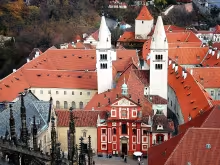
The Convent of St. George in Prague's Old Town is a historic site with roots dating back to 973, making it one of the oldest monastic establishments in the Czech Republic. Situated within the Prague Castle complex, this former Benedictine nunnery holds significant historical importance due to its proximity to centers of ecclesiastical and state power in Bohemia and occasionally the Holy Roman Empire. The convent's legacy is enriched by its role as a religious center with considerable influence over both church and secular matters.
St. George’s Convent was established in 973 as a community for Benedictine nuns, founded by Princess Mlada after her diplomatic mission to Rome. It became notable as Bohemia's first women's Benedictine monastery during a period of significant ecclesiastical developments, including the establishment of a bishopric in Prague and increased interactions with Rome aimed at asserting religious independence from Regensburg.
Architecturally, the site is anchored by the Basilica dedicated to St. George. The original basilica was initiated by Duke Vratislav I in 921 and completed by his successor, Duke Václav, in 925. After the convent's establishment around 976, significant modifications were made to accommodate its new purpose. These changes included closing off the nave with apses, adding tribunes for nuns, and creating underground spaces for relics. The basilica also served as a burial place for members of the Přemyslid dynasty before their remains were moved to St. Vitus Cathedral.
Throughout its history, the convent was administered by notable figures such as Princess Mlada, who became its first abbess under the name Marie. The nunnery wielded considerable influence through its own chapter of priests and played a pivotal role in Bohemia's religious life. By the Middle Ages, it had become one of the richest monasteries within the Crown of Bohemia.
The convent's fortunes saw dramatic changes over time. In 1782, the abbess gained the unique privilege of crowning the Queen consort of Bohemia, a tradition later inherited by the Princess-Abbess of the Theresian Institution of Noble Ladies. Despite its closure in 1782, the building and basilica have endured as significant historical landmarks.
Today, the site no longer functions as an active convent but remains a place of cultural and historical interest. The abbey building once housed the Czech National Gallery's collection of 19th-century Bohemian art, though it currently stands empty awaiting renovation. Visitors can explore this historic site within the Prague Castle complex, gaining insight into its rich past and architectural evolution.
The Convent of St. George is a testament to the enduring legacy of religious and cultural history in Prague. Its historical significance, coupled with its architectural beauty, makes it a worthwhile destination for those interested in exploring Bohemian heritage. Visitors are invited to delve into this remarkable site, where centuries of history continue to resonate within its walls.
Historical milestones
- 921
- Initiation of the construction of the original basilica by Duke Vratislav I.
- 925
- Completion and consecration of the basilica by Duke Václav, including the burial of his grandmother Ludmila.
Architectural development
The original basilica of St. George, initiated by Duke Vratislav I and completed by Duke Václav, underwent significant modifications following the establishment of the convent around 976. These changes included closing off the nave with apses, adding tribunes for nuns, and creating underground spaces for relics. The site served as a burial place for the Přemyslid dynasty before their remains were moved to St. Vitus Cathedral.
Historical events
In 921, Duke Vratislav I initiated the construction of the original St. George's Basilica, which was completed by his successor, Duke Václav, in 925.
The convent was founded around 976 by Princess Mlada after her diplomatic mission to Rome, marking it as the first women's Benedictine monastery in Bohemia.
Points of interest
- The Convent of St. George was established by Princess Mlada after her diplomatic mission to Rome in 973, making it Bohemia's first women's Benedictine monastery and highlighting the role of female leadership in early ecclesiastical history.
- Despite being closed in 1782, the abbess of St. George’s Convent held a unique privilege: she was responsible for crowning the Queen consort of Bohemia, a tradition later passed to the Princess-Abbess of the Theresian Institution of Noble Ladies, showcasing an unusual intersection of religious and royal duties.
Guide
Show guide text
Welcome to the historic site of Klášter svatého Jiří, or The Convent of St. George, nestled within the enchanting Prague Castle complex in Prague's Old Town. As you stand here, imagine yourself stepping back into a time when this place was at the heart of spiritual and cultural life in Bohemia.
The story of this remarkable site begins with its founding around 976 by Princess Mlada. After her diplomatic mission to Rome in 973, she established what would become Bohemia's first women's Benedictine monastery. This highlights an often-overlooked chapter in history where female leadership played a pivotal role in the ecclesiastical landscape.
Before this convent stood as we know it today, there was an earlier basilica initiated by Duke Vratislav I around 921 and completed by his brother, Duke Václav, in 925. This original structure was consecrated with the burial of their grandmother, Ludmila, marking a significant moment in the region's spiritual history.
As you take in your surroundings, notice the blend of architectural styles that have evolved over centuries. The convent church dedicated to St. George has undergone several transformations, reflecting the changing times and influences it has witnessed. Although specific architects remain unknown, each stone speaks volumes about its storied past.
Key figures associated with this site include Vratislav I, Václav, Ludmila, Mlada, and Boleslav II. These individuals not only shaped the history of the convent but also left a lasting impact on Bohemia's cultural heritage.
One fascinating aspect of St. George's Convent is its closure in 1782, yet even then, it held onto its legacy through the abbess who continued to inspire many. This enduring spirit invites you to ponder the stories and lives intertwined with this sacred place.
As we conclude our journey here at Klášter svatého Jiří, I invite you to explore further and immerse yourself in the rich tapestry of history that surrounds us. Thank you for joining me on this exploration, and may your curiosity lead you to discover even more wonders within Prague's historic heart.
---
This concludes our audio guide, but remember, the stories here are just waiting for you to uncover them as you wander through this timeless site. Safe travels, and enjoy every moment of your visit!
Tips for visitors
The best time to visit the Convent of St. George is during late spring or early autumn when the weather is pleasant, allowing for a comfortable exploration of both indoor and outdoor spaces. These seasons offer mild temperatures and fewer crowds compared to summer months, making it ideal for appreciating the serene atmosphere of the monastery. Additionally, visiting in the morning can provide softer lighting that enhances the architectural details and historical ambiance.
Transportation options are convenient as the Convent is accessible by both car and public transport. If driving, there are parking facilities nearby, but due to its location within Prague's Old Town, it might be more practical to use public transportation. The area around Prague Castle is well-served by buses and trams; however, for the most current routes and schedules, checking a local transit app or website is recommended.
When visiting, consider bringing comfortable walking shoes as you'll likely explore both the monastery grounds and surrounding areas of Prague Castle. A camera is advisable to capture the stunning architecture and historical details, especially in natural light which is best during mid-morning or late afternoon. Don't forget a water bottle and perhaps a light jacket, as indoor temperatures can vary.
For photography enthusiasts, some of the best spots include the cloisters and the main church within the Convent, where the interplay of light through stained glass windows creates captivating effects. The courtyard offers excellent views for capturing the contrast between the monastery's historic architecture and Prague’s skyline. Early morning or late afternoon is ideal for softer lighting conditions.
In terms of nearby attractions within a 30-minute walk, visitors can explore St. Vitus Cathedral, known for its stunning Gothic architecture and rich history. The cathedral offers breathtaking views from its towers over Prague Castle and the city. Additionally, the Golden Lane, famous for its colorful houses and historical significance, is a delightful area to stroll through after visiting the Convent.
Businesses nearby
Nearby
Located in Prague's Old Town, the Convent of St. George is part of the historic Prague Castle complex, surrounded by other significant monuments such as St. Vitus Cathedral.
Accommodation nearby
Trips and activities nearby
Guided tours, tickets and activities nearby from GetYourGuide
Search tours and activities →Themed route
Thematic Walking Tour: The Convent of St. George and Its Surroundings
1. Convent of St. George (Clášter svatého Jiří) *Type:* Historical Monastery *Why Visit:* Located within the Prague Castle complex, this convent is renowned for its stunning architecture and serene atmosphere. The Gothic church within offers a glimpse into medieval monastic life with its beautifully preserved frescoes and intricate stonework.
2. St. Vitus Cathedral (Katedrála svatého Víta) *Type:* Cathedral *Why Visit:* Just a short walk from the Convent of St. George, St. Vitus Cathedral is an iconic symbol of Prague with its stunning Gothic architecture and rich history. Visitors can explore its impressive interiors, including the Chapel of St. Wenceslas, and enjoy panoramic views of Prague from the cathedral's towers.
3. Royal Garden (Královský zahrada) *Type:* Historic Garden *Why Visit:* Adjacent to both the Convent of St. George and St. Vitus Cathedral, this garden offers a peaceful retreat with its well-manicured lawns and historic statues. It provides an ideal spot for relaxation and reflection while enjoying views of the castle complex.
4. Loreta Chapel (Kaple Loreta) *Type:* Baroque Chapel *Why Visit:* Situated near the Convent of St. George, this chapel is a masterpiece of Baroque architecture with its ornate interior and stunning frescoes. It houses a revered statue of the Virgin Mary and offers visitors an intimate space for contemplation.
This tour provides a comprehensive exploration of some of Prague's most significant historical sites within the Old Town area, offering insights into both religious and architectural heritage.
Seasonal recommendations
Spring: Visiting the Strahov Monastery during spring offers a unique experience as nature awakens around this historic site. The blooming gardens and verdant landscapes provide a picturesque backdrop, enhancing the monastery's serene atmosphere. As daylight extends into the evening, visitors can enjoy the soft natural lighting that beautifully illuminates the architecture. It’s advisable to wear comfortable walking shoes for exploring the grounds and layers of clothing as temperatures can vary. Early mornings are ideal for avoiding crowds while enjoying the tranquil ambiance.
Summer: The summer season at Strahov Monastery is characterized by vibrant greenery and lush gardens in full bloom, creating a lively atmosphere perfect for leisurely strolls or picnics. With longer daylight hours, visitors have ample time to explore both the monastery's interior and its extensive grounds. However, this period also attracts larger crowds, so it’s recommended to arrive early to avoid the busiest times. Light clothing is suitable for the warm weather, but sun protection such as hats and sunscreen is essential.
Autumn: Autumn brings a stunning display of colors to Strahov Monastery, with its gardens and surrounding areas turning into a canvas of reds, oranges, and yellows. The cooler temperatures make it comfortable for extended visits, whether you’re exploring the monastery’s rich history or simply enjoying the scenic views. This season is less crowded compared to summer, offering a more peaceful experience. Wearing layers can help accommodate fluctuating weather, and carrying an umbrella may be wise due to potential rain showers.
Winter: Winter at Strahov Monastery offers a magical atmosphere as snow blankets the historic site, transforming it into a picturesque winter wonderland. The shorter days mean that lighting is softer during visits, adding to the tranquil and contemplative mood of the monastery. It’s important to dress warmly in layers, including thermal wear and waterproof outer garments, to stay comfortable during your visit. Due to potential closures or limited access on particularly cold days, checking opening times in advance is recommended.
Visualizations and artistic views

Vizualizace jsou generovány umělou inteligencí a slouží jako inspirace.


Tips from visitors
No tips yet. Be the first!
Log in and add your tip.


Reviews and comments