





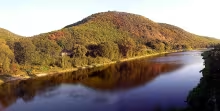
Závist is an important archaeological site located in Lhota, within the Dolní Břežany district of the Central Bohemian Region, Czech Republic. Known as the largest Celtic oppidum in the country, it holds significant historical value from the late La Tène period. The site features extensive fortifications built around the mid-2nd century BC and remained until the mid-1st century BC. Recognized as a national cultural monument since 1989, Závist provides insights into Celtic life and their interactions with other European cultures.
The origins of Závist date back to the Middle Bronze Age when initial fortifications were established. However, its most notable development occurred during the late La Tène period, around the mid-2nd century BC. At this time, Závist became a prominent settlement in Bohemia, maintaining connections with Western Europe, Greece, and Etruria. This era saw significant advancements in Celtic art, warfare, and social structures. The oppidum reached its peak when it housed approximately one thousand inhabitants.
Architecturally, the site is distinguished by its large defensive wall constructed during the late La Tène period. These fortifications reflect Závist's strategic importance as a settlement. Despite experiencing a major fire around 400 BC, which marked an end to this era, the site was rebuilt before being eventually abandoned shortly thereafter.
Závist's historical context is enriched by its diverse agricultural practices and specialized crafts such as blacksmithing and pottery, indicating a thriving community. The name Závist derives from a grove named after the stream Zalužanka, located under the Hradiště hill. This connection to natural features underscores the site's integration with its surrounding landscape.
Today, Závist remains an accessible archaeological site near Prague, offering visitors a glimpse into ancient Celtic life. The area’s scenic hills and valleys provide a picturesque backdrop for exploring this historical monument. Its designation as a national cultural monument highlights its significance in understanding European history during the late La Tène period.
Visiting Závist is an opportunity to connect with the past, appreciating the ingenuity and resilience of the Celtic people who once thrived here. The site's well-preserved fortifications and archaeological findings offer a tangible link to a time when cultural exchanges across Europe were shaping societies in profound ways. As such, Závist stands as a testament to the rich tapestry of human history, inviting exploration and reflection on its enduring legacy.
Historical milestones
- 1989
- Závist was designated as a national cultural monument.
Architectural development
Závist's development began with early fortifications during the Middle Bronze Age, followed by significant expansion and construction of a large defensive wall in the late La Tène period. The site experienced a major fire around 400 BC but was later rebuilt before being abandoned shortly thereafter.
Historical events
In the late La Tène period, Závist became one of the most important settlements in Bohemia, maintaining contacts with Western Europe, Greece, and Etruria. This era ended around 400 BC due to a fire.
The oppidum reached its peak in the mid-2nd century BC when it was inhabited by approximately one thousand people.
Points of interest
– Despite its significance as a large Celtic oppidum, Závist was not continuously inhabited throughout history; it saw periods of abandonment and rebuilding, reflecting the dynamic nature of ancient settlements.
– The major fire around 400 BC that affected Závist is an example of how natural disasters could abruptly alter the course of a settlement's development, forcing inhabitants to rebuild or relocate entirely.
Guide
Show guide text
Welcome to Závist, also known as Lhota-Točná, a remarkable testament to the rich tapestry of history that blankets this region. As you stand here on these gentle hills overlooking the Břežanské údolí, with Prague's distant silhouette gracing the horizon, take a moment to absorb the serene beauty and profound silence that envelops this site.
Závist is recognized as the largest Celtic oppidum in the Czech Republic. Imagine stepping back into the late La Tène period, when vibrant communities thrived here amidst these rolling landscapes. The significance of Závist lies not only in its size but also in its strategic location and architectural prowess. In 1989, this site was designated as a national cultural monument, ensuring its preservation for generations to come.
As you look around, the remnants of extensive fortifications catch your eye. These formidable structures, built around the mid-2nd century BC, stand as silent witnesses to the ingenuity and determination of those who once called Závist home. Though much has faded with time, the outlines of these defenses invite you to ponder the daily lives and challenges faced by its ancient inhabitants.
The history of Závist is a narrative of resilience and transformation. Despite being a significant settlement during its peak, it experienced periods of abandonment and rebuilding—a testament to the dynamic nature of human settlements. The major fire around 400 BC that swept through Závist serves as a poignant reminder of how natural disasters have shaped our past.
As you continue your exploration, let your curiosity guide you. While specific architects or historical figures associated with this site remain unknown, the very essence of Závist speaks volumes about the collective spirit and cultural heritage of its people.
I invite you to delve deeper into this fascinating landscape, where every stone and path holds a story waiting to be discovered. As we conclude our journey here today, I hope you carry forward not just memories but also an appreciation for the enduring legacy that Závist represents.
Thank you for joining me on this exploration. May your visit inspire further discovery and reflection as you continue to explore the wonders of history around us.
Tips for visitors
The best time to visit Závist is during late spring or early autumn when the weather is mild, making it ideal for exploring the ruins without extreme heat or cold. These seasons also offer beautiful natural scenery with lush greenery and vibrant colors in the surrounding hills and valleys of Břežanské údolí. Additionally, visiting outside of peak summer months can mean fewer crowds, allowing for a more peaceful experience.
Parking is available near the site, but it's advisable to check ahead for any restrictions or availability issues. Public transport options are also accessible, with buses and trains connecting nearby areas to Lhota. For those traveling by car, ensure you have a map or GPS as directions can be less straightforward. Always verify current public transportation routes and schedules using an online search tool.
When visiting Závist, it's recommended to bring comfortable walking shoes, sunscreen, hats, and plenty of water, especially during warmer months. A light jacket might also be useful for cooler mornings or evenings. Since the site is outdoors with minimal shade, protection from the sun is crucial. Additionally, a camera or smartphone will help capture the stunning views and historical significance of the ruins.
For photography enthusiasts, early morning or late afternoon provides the best natural lighting to highlight the contours of the Celtic oppidum against the landscape. The hilltop location offers panoramic views of Břežanské údolí and the Vltava River, making it an excellent spot for capturing scenic shots. Be mindful of other visitors when setting up your equipment.
Nearby attractions within a 30-minute drive include the historic town of Kladno, known for its industrial heritage, and the picturesque village of Březnice with its beautiful castle and gardens. These locations offer additional cultural experiences and are perfect for extending your visit in the region. For families with children, consider visiting these nearby sites as they provide a variety of activities suitable for all ages.
Businesses nearby
Do you run a restaurant, accommodation, shop, museum, rental, wellness or other visitor service near this monument? Show yourself directly to the people heading to it — this is how they will see you in the app and on the web:
Nearby
Závist is situated near Prague, with natural features including the Vltava River and Břežanské údolí. The area offers a scenic landscape of hills and valleys.
Accommodation nearby
Trips and activities nearby
Guided tours, tickets and activities nearby from GetYourGuide
Search tours and activities →Themed route
Thematic Tour Itinerary: Závist Archaeological Site and Surroundings
1. Závist Archaeological Site - *Type:* Archaeological Site - *Why Visit:* Explore the remnants of a significant Slavic stronghold from the 9th to 11th centuries, offering insights into early medieval history. The site provides an understanding of ancient fortification techniques and daily life in this historic region.
2. Vltava River - *Type:* Natural Feature - *Why Visit:* Enjoy scenic views along the Vltava River, which flows near Závist. This river is central to the Czech landscape and offers a tranquil setting for nature walks or picnics amidst picturesque hills and valleys.
3. Břežanské údolí - *Type:* Scenic Landscape - *Why Visit:* Discover the beautiful Břežanské údolí, known for its lush greenery and serene environment. This area is perfect for hiking or cycling enthusiasts looking to experience the natural beauty of rolling hills and verdant valleys.
4. Local Hills - *Type:* Natural Landscape - *Why Visit:* Hike through the local hills surrounding Závist, offering panoramic views of the region's countryside. These elevations provide a unique perspective on the area’s topography and are ideal for outdoor activities.
This itinerary offers a blend of historical exploration at Závist and natural beauty along the Vltava River and Břežanské údolí, ensuring an enriching experience in this culturally and environmentally significant region.
Seasonal recommendations
Jaro: During the spring season, Závist (archaeological site) in Lhota is celebrated with the revival of nature, as green vegetation and blooming shrubs become a vibrant backdrop for the historical ruins. Sunlight streams into underground structures, creating dramatic shadows and lighting effects. This period is ideal for natural observation, as many bird species return to the area. Visitors should dress in comfortable yet warm clothing and wear shoes suitable for walking on grass. Although attendance continues to grow, it is generally more pleasant than during peak summer.
Léto: Summer brings Závist its fullest attraction with long days and warm evenings that offer excellent conditions for exploring the archaeological site. The sunrise highlights details of the ruins and creates dramatic shadow effects, adding to the atmosphere of the place. However, it is important to visit early in the morning or late in the evening to avoid long lines and high attendance during the sunny midday hours. Warm clothing with scarves is recommended for sun protection, along with plenty of drinking water.
Podzim: Autumn offers Závist a unique atmosphere as tree leaves turn into golden and red hues, providing a beautiful contrast with the historical structures. Sunny days are usually warm, but cooler evenings require layered clothing. This is a moderate season for visiting with fewer crowds than in summer and a pleasant, calm atmosphere that allows for relaxed exploration of the monument. Visitors should be prepared for quick weather changes and have warm clothing on hand.
Zima: During the winter months, Závist takes on an air of mystery as snow covers the ruins and lighting is limited to daylight hours. The climate can be cold, with shorter opening hours for the site, so visitors should plan accordingly. Warm clothing is essential, including hats and gloves, especially due to the cold and potential snow. Despite possible weather challenges, winter offers a quiet experience without summer crowds, allowing visitors to enjoy the tranquil beauty of the place.
Visualizations and artistic views

Vizualizace jsou generovány umělou inteligencí a slouží jako inspirace.


Tips from visitors
No tips yet. Be the first!
Log in and add your tip.
Location on the map

Příběhy a pověsti
Legendy, pověsti a příběhy spjaté s touto památkou
Reviews and comments