




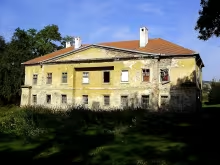
Zámek Komorov is an Empire-style castle near Chvalkovice in the Vyškov District of the Jihomoravský kraj region. Built between 1811 and 1812 by Jan Pavel Pagáč z Paburgu, it stands on the site of a vanished village called Komorov. This historical monument is notable for its architectural style and expansive park, which once featured rare trees and a pond. Over time, Zámek Komorov has served various administrative purposes but fell into disrepair before being preserved as a cultural monument.
The origins of Zámek Komorov date back to the early 19th century, a period marked by significant political changes across Europe following the Napoleonic Wars. During this era, Bohemia experienced a blend of traditional and modern influences, reflected in the Empire-style architecture of the castle. The site has a rich history, having been part of a medieval village first mentioned in 1349. Ownership changed hands several times until it became the property of Jan Pavel Pagáč z Paburgu, who commissioned its construction.
Architecturally, Zámek Komorov is characterized by its Empire style, emphasizing symmetry and grandeur typical of early 19th-century design. The castle's structure includes a vast park that once housed rare trees and a pond, although some original elements have not been preserved. Despite falling into disrepair in the late 20th century, restoration efforts were undertaken to preserve its architectural integrity and surrounding landscape.
Ownership of Zámek Komorov has seen several transitions over the years. Initially built by Jan Pavel Pagáč z Paburgu, it later belonged to František Klazar around 1890. The castle remained in private hands until before 1948 when it became part of the Kobrčova family's estate. Following nationalization in 1948, Zámek Komorov was incorporated into Státní statek Troubsko and later managed by various agricultural cooperatives. In the 1990s, the castle was acquired by MTR ze Slavkova, who undertook restoration efforts to preserve its structure.
Throughout its history, Zámek Komorov has witnessed several key events. Its construction began in 1811, marking a significant development on the site of the former village of Komorov. The castle's nationalization in 1948 marked another pivotal moment, as it became part of state-owned agricultural enterprises. Despite facing periods of neglect and disrepair, efforts to preserve Zámek Komorov have ensured its survival as a cultural monument.
Today, Zámek Komorov stands as a testament to the architectural and historical heritage of the region. While some original structures within its park have been lost, restoration efforts have preserved much of its character. The castle is accessible to visitors interested in exploring its history and enjoying the remnants of its once-expansive grounds. Zámek Komorov offers a unique glimpse into the past, making it a worthwhile destination for those keen on discovering the rich tapestry of Bohemian history. Its preservation as a cultural monument underscores its significance, inviting visitors to appreciate its enduring legacy.
Historical milestones
- 1349
- První zmínka o vesnici Komorov.
- 1811
- Začátek výstavby zámku Komorov.
- 1812
- Dokončení výstavby zámku Komorov.
- 1890
- Změna majitele na Františka Klazara.
- 1948
- Národnění zámku a začlenění do Státního statek Troubsko.
Architectural development
Zámek Komorov, built in the Empire style between 1811 and 1812, has undergone various phases of ownership and use. Initially serving as an administrative building for local agricultural cooperatives, it fell into disrepair by the late 20th century. Restoration efforts were undertaken to preserve its structure and park.
Historical events
- 1811
- Construction of Zámek Komorov began.
- 1948
- The castle was nationalized and became part of Státní statek Troubsko.
Points of interest
- Zámek Komorov was built on the site of a vanished village called Komorov, which had been first mentioned in historical records as early as 1349, highlighting its long-standing significance before becoming a castle.
- The Empire-style architecture of Zámek Komorov reflects a unique blend of traditional Bohemian and modern European influences from the early 19th century, showcasing how cultural shifts were mirrored in local design trends following the Napoleonic Wars.
Guide
Show guide text
Welcome to Chateau Komorov, one of the most splendid historical landmarks near Chvalkovice. You stand before an Empire-style building that stands on the site of the vanished village of Komorov, first mentioned in historical records as early as 1349. Welcome to this unique environment that will surely captivate you.
Let's move through time and delve into history. Chateau Komorov was built between 1811 and 1812 by Jan Pavel Pagáč z Paburgu. It is a wonderful example of architecture reflecting the fashion of its day. Notice the carefully crafted details on the façade and the beautiful appearance that the chateau exudes.
Now, turn your attention to the person who built the chateau. Jan Pavel Pagáč z Paburgu was an important figure of his time, and his work, Chateau Komorov, is his greatest achievement. Do you feel the atmosphere that prevails here? Is it something that will captivate you and draw you back?
Chateau Komorov also has its mysterious side. You know that a village named Komorov was established on this site as early as 1349? That is truly ancient history. And what's even more intriguing, the chateau was built where once stood a village. That is indeed a fascinating detail.
Let's return to the present. Chateau Komorov is today a cultural monument and is protected as a significant historical site. It is a place where you can explore and discover the secrets of the past. Welcome to this unique environment, where you can explore and learn about history.
Tips for visitors
The best time to visit Zámek Komorov is during the spring and summer months when the park is in full bloom.
The castle is accessible by car and public transportation. The nearest bus stop is located in the village of Chvalkovice, from where you can walk to the castle.
It's recommended to bring comfortable shoes and clothing suitable for walking in the park.
The best spots for photography are around the park and the facade of the castle. The best light is during the golden hour, early in the morning or late in the afternoon.
Nearby attractions include the plague column in Chvalkovice, which is a short walk from the castle. Families with children can also visit the nearby agricultural land, which offers a chance to see traditional farming practices.
Businesses nearby
Do you run a restaurant, accommodation, shop, museum, rental, wellness or other visitor service near this monument? Show yourself directly to the people heading to it — this is how they will see you in the app and on the web:
Nearby
Zámek Komorov is located near the village of Chvalkovice, with remnants of the former village of Komorov. The surrounding landscape includes agricultural land and historical sites such as the plague column in Chvalkovice.
Accommodation nearby
Trips and activities nearby
Guided tours, tickets and activities nearby from GetYourGuide
Search tours and activities →Themed route
Trasa: Zámek Komorov a okolí
1. Plague Column in Chvalkovice Typ: historická památka Proč stojí za návštěvu: Pochvalte si historickou architekturu a významnou kulturní památku, která připomíná tragédii, která postihla obec Chvalkovice. 2. Zámek Komorov Typ: zámek Proč stojí za návštěvu: Navštivte tento krásný zámek, který nabízí jedinečnou příležitost se seznámit se s historií a architekturou této památky. 3. Památník v Chvalkově Typ: historická památka Proč stojí za návštěvu: Pochvalte si historickou hodnotu a význam tohoto památníku, který připomíná významné události v historii obce Chvalkovice.
Seasonal recommendations
Jaro
In the spring season, Château Komorov is surrounded by green meadows and trees in full bloom. The atmosphere is calm and serene, ideal for a visit. We recommend visiting the château during early spring weather to avoid crowds of tourists. The best time to visit is from April to May when the weather is pleasant and temperatures are mild.
Summer
In the summer season, Château Komorov is surrounded by blooming flowers and green meadows. The atmosphere is relaxed and open. We recommend visiting the château in the early morning hours to avoid crowds of tourists. The best time to visit is from June to August when the weather is sunny and temperatures are high.
Autumn
In the autumn season, Château Komorov is surrounded by a unique colorful autumn landscape. The atmosphere is calm and romantic. We recommend visiting the château during late autumn weather to avoid crowds of tourists. The best time to visit is from September to October when the weather is pleasant and temperatures are mild.
Winter
In the winter season, Château Komorov is surrounded by snow and tranquility. The atmosphere is calm and serene. We recommend visiting the château during late winter weather to avoid crowds of tourists. The best time to visit is from December to February when the weather is cold and temperatures are low. Try visiting the château at night, when the lighting creates a romantic atmosphere.
Visualizations and artistic views

Vizualizace jsou generovány umělou inteligencí a slouží jako inspirace.
Tips from visitors
No tips yet. Be the first!
Log in and add your tip.
Location on the map


Příběhy a pověsti
Legendy, pověsti a příběhy spjaté s touto památkou
Reviews and comments