




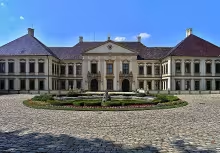
Zámek Koloděje is a historically significant Baroque castle located in the Koloděje district of Prague, Czech Republic. Originally built as a medieval fortress, it was transformed into its current form in the early 18th century. The site stands on elevated ground overlooking a valley, offering strategic views that once protected a route from Prague to Moravia. Recognized as a cultural monument of the Czech Republic, Zámek Koloděje is notable for its architectural evolution and historical significance.
The earliest documented mention of the fortress in Koloděje dates back to 1346, when it served as a protective structure on the route between Prague and Moravia. Over time, the site underwent significant transformations. By the late 16th century, the medieval fortress was converted into a Renaissance castle, retaining its prominent round tower while adapting to new architectural styles. The strategic location of Zámek Koloděje continued to play an important role in regional defense.
In the early 18th century, under Jan Adam Ondřej z Lichtenštejna's direction, the castle underwent a major Baroque transformation led by Italian architect Domenico Martinelli. Viennese stucco artist Santini Bussi enhanced the interior. This period marked a significant architectural shift as the structure evolved into a three-winged building on a horseshoe-shaped plan, reflecting broader European trends under Habsburg influence.
Ownership of Zámek Koloděje has changed hands numerous times throughout its history. Notable owners include Páni z Rokycan in 1346 and Karel, kníže z Lichtenštejna, who acquired the property in 1623. The castle's ownership was later affected by political changes; it was confiscated from the Lichtenštejn family in 1919 following the establishment of Czechoslovakia. During this period, T. G. Masaryk, a prominent figure in Czech history, occasionally stayed at the castle.
Throughout its existence, Zámek Koloděje has witnessed various key events and curiosities. In the early 20th century, it served as an occasional residence for Masaryk and even housed artworks from the National Gallery during World War II. The surrounding landscape, including the Vidrholec forest and Kolodějská obora, adds to its historical allure.
Today, Zámek Koloděje stands as a testament to its rich history and architectural evolution. Visitors can explore this cultural monument, appreciating both its strategic past and artistic transformations. Its significance is underscored by the various owners and events that have shaped its story over centuries. For those interested in Czech history and architecture, Zámek Koloděje offers an insightful glimpse into a dynamic period of transformation and resilience.
Historical milestones
- 1346
- Oldest mention of the Koloděje fortress.
- Late 16th century
- Transformation into a Renaissance castle with a significant round tower.
- Early 18th century
- Baroque transformation under Jan Adam Andreas von Liechtenstein and Domenico Martinelli.
- 1623
- Purchase by Karl, Prince of Liechtenstein.
- 1919
- Confiscation from the Lichtenstein family after the establishment of Czechoslovakia.
Architectural development
The original medieval fortress was transformed into a Renaissance castle in the late 16th century, retaining its prominent round tower. In the early 18th century, it underwent significant Baroque reconstruction under Jan Adam Ondřej z Lichtenštejna, designed by Domenico Martinelli with interior work by Santini Bussi. The castle's layout was altered to a three-winged structure on a horseshoe-shaped plan.
Historical events
1346: First documented mention of the fortress in Koloděje.
1706–1712: Major Baroque transformation led by Jan Adam Ondřej z Lichtenštejna.
Owners
1346–1623: Various owners including Páni z Rokycan, Mikuláš Rytíř, Jan Jindřich, markrabě moravský, Rotlevové, Vilém Kostka z Postupic, Václav Mandelík z Chrástu, Gabriel Klenovský ze Ptení, Anežka Závěřická z Milhostic, Rousínové z Vražkova, Jan z Lobkovic, Vilém starší Malovec, Jaroslav I. Smiřický ze Smiřic, Kateřina z Házmburka, Albrecht z Valdštejna (1623), Karel, kníže z Lichtenštejna (post-1623), Vladimír a Anna Holekovi (1927–1937), Antonín Kumpera (1937–1946)
Points of interest
- Despite its transformation into a Baroque castle, the Zámek Koloděje retains elements of its medieval origins, such as the prominent round tower from its earlier incarnation as a fortress.
- One curious aspect of Zámek Koloděje's history is that during World War II, it temporarily housed artworks from the National Gallery, serving as a safe haven for cultural treasures amidst conflict.
Guide
Show guide text
Welcome to the historic Zámek Koloděje, nestled in the charming district of Prague's Koloděje. As you stand here, take a moment to absorb the grandeur before you. The castle is perched on elevated ground, offering sweeping views over the valley below—a strategic position that has been its hallmark since medieval times.
The origins of Zámek Koloděje trace back to 1346 when it was first mentioned as a fortress. Over time, this stronghold underwent significant transformations, reflecting the evolving architectural styles and needs of its era. By the late 16th century, it had evolved into a Renaissance castle, marked by the addition of an impressive round tower that still stands today—a testament to its fortified past.
As we move into the early 18th century, the castle experienced another transformation under the guidance of Jan Adam Ondřej z Lichtenštejna and architect Domenico Martinelli. This period saw the castle's metamorphosis into a Baroque masterpiece. The architectural details from this era are evident in its elegant facades and harmonious proportions, inviting you to explore every angle.
Throughout its history, Zámek Koloděje has been home to many notable figures, including Jan Adam Ondřej z Lichtenštejna, who played a pivotal role in its Baroque transformation. Another significant figure is T. G. Masaryk, whose influence extended beyond the castle's walls into the broader historical landscape of the region.
One intriguing aspect of Zámek Koloděje's history is its role during World War II, when it temporarily housed artworks—a silent witness to turbulent times yet a protector of cultural treasures.
As you conclude your visit, take one last look at this remarkable site. The castle not only tells stories of architectural evolution but also echoes the lives and legacies of those who shaped its past. We invite you to continue exploring and discovering more about this fascinating monument. Thank you for joining us on this journey through history.
Businesses nearby
Do you run a restaurant, accommodation, shop, museum, rental, wellness or other visitor service near this monument? Show yourself directly to the people heading to it — this is how they will see you in the app and on the web:
Events nearby
Event source: Kudy z nudy and open data of the Czech Republic
Nearby
Zámek Koloděje is situated near the eastern edge of Prague, close to the historical Kolodějská obora and Vidrholec forest. The surrounding landscape includes natural features like valleys and forests, contributing to its strategic significance.
Accommodation nearby
Trips and activities nearby
Guided tours, tickets and activities nearby from GetYourGuide
Search tours and activities →Themed route
Tematická výletní trasa kolem Zámku Koloděje
1. Zámek Koloděje *Typ:* Historický zámek *Proč stojí za návštěvu:* Tento barokní zámek, nacházející se na samém východě Prahy, je známý svou impozantní architekturou a bohatou historií. Zde si můžete prohlédnout elegantní interiéry a užít si pohledy z okolních teras na přírodní krajiny.
2. Kolodějská obora *Typ:* Historický park *Proč stojí za návštěvu:* Tento historický park je jednou z nejstarších a největších lesních obor v České republice. Je to ideální místo pro relaxaci na přírodním pozadí, kde si můžete projít po cestách, užít si klidu a zároveň se podívat na divokou zvěř.
3. Vidrholec les *Typ:* Lesní oblast *Proč stojí za návštěvu:* Nacházející se blízko Kolodějské obory, Vidrholec les nabízí krásné přírodní krajiny a je ideálním místem pro milovníky cyklistiky nebo pikniků. Jeho horská terasa poskytuje výhled na okolní oblasti, což z něj činí perfektní místo k odpočinku.
4. Vidrholec *Typ:* Malé vesničko *Proč stojí za návštěvu:* Tato malebná oblast je známá svým klidným prostředím a přístupem k přírodním krásám. Je to skvělý způsob, jak se odpojit od městského života a prozkoumat tiché úkryty v blízkosti Prahy.
5. Kolodějská obora - Východní část *Typ:* Přírodní parková zóna *Proč stojí za návštěvu:* Navštivte východní část Kolodějské obory, kde můžete prozkoumat další části lesa a možná i najít místa vhodná pro krátké pochody nebo cyklistické výlety. Tato zóna nabízí jedinečné pohledy a příležitosti k pozorování divoké přírody.
Tato trasa vás provede skrze historii, přírodu a klidná místa kolem Zámku Koloděje, což je ideální způsob, jak prozkoumat tento jedinečný kout Prahy.
Seasonal recommendations
Spring: Visiting Koloděje Castle during spring offers a unique experience as the surrounding landscape bursts into life with vibrant colors and blossoming flora. The fresh greenery and blooming flowers create an enchanting atmosphere, perfect for photography enthusiasts or those seeking tranquility. Spring often brings unpredictable weather, so it's wise to dress in layers that can be adjusted according to temperature changes throughout the day. While the castle grounds are less crowded than during peak summer months, arriving early can help you enjoy a peaceful exploration before larger groups arrive.
Summer: Summer at Koloděje Castle is characterized by long daylight hours and warm weather, ideal for leisurely strolls through its historic gardens and enjoying outdoor activities. The lush greenery provides a picturesque backdrop, enhancing the castle's medieval charm. However, this season also sees an increase in visitors, particularly during weekends and holidays, so planning your visit on weekdays or arriving early can help avoid crowds. Comfortable walking shoes and light clothing are recommended to keep cool as you explore the expansive grounds.
Autumn: Autumn transforms Koloděje Castle into a stunning tapestry of reds, oranges, and yellows, offering a breathtaking view that's particularly striking during sunrise or sunset. The cooler temperatures make it an ideal time for visitors who prefer a quieter experience with fewer crowds compared to summer. However, the weather can be unpredictable, so bringing a light jacket is advisable in case of sudden temperature drops. Late afternoon visits are recommended to fully appreciate the golden hues as they illuminate the castle's architecture.
Winter: Winter at Koloděje Castle provides a serene and magical atmosphere, with snow often blanketing its grounds and adding a fairy-tale-like charm to its historic structures. The shorter daylight hours mean that visiting earlier in the day is advisable to make the most of your time. The castle may have reduced opening times during this season, so checking ahead for specific schedules is recommended. Dress warmly in layers, including waterproof outerwear if necessary, and consider bringing gloves and a hat to stay comfortable while exploring the enchanting winter landscape.
Visualizations and artistic views

Vizualizace jsou generovány umělou inteligencí a slouží jako inspirace.


Tips from visitors
No tips yet. Be the first!
Log in and add your tip.


Reviews and comments