





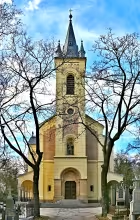
The Church of Saints Philip and James in Prague 5-Smíchov is a notable neo-Romanesque architectural gem from the late 19th century. Constructed between 1894 and 1896 by architect Adolf Duchoně, it replaced an earlier structure demolished in 1891 to make way for this modern counterpart. Situated within the cemetery area of Malvazinky, it serves as a filial chapel under the spiritual administration of the parish of St. Václav. Its historical and architectural significance is enhanced by its integration of materials and artworks from its predecessor.
The church was built during a period when Bohemia was part of the Austro-Hungarian Empire, reflecting broader European trends in reviving medieval forms through neo-Romanesque architecture. The original Smíchov church had been demolished to accommodate this new structure. Adolf Duchoně's design incorporated elements from the previous building, including baroque sculptures by Ferdinand Maxmilián Brokoff and Michael Leopold Willmann, as well as materials such as stone and bricks. The cornerstone of the new church was laid on September 13, 1894.
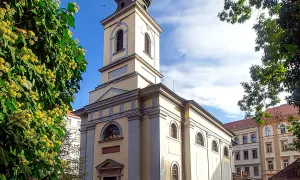
Architecturally, the Church of Saints Philip and James is characterized by its neo-Romanesque style, featuring a tower with a spire and a semi-circular apse. Its design includes a non-orientated single-nave structure based on an elongated cross plan. Notably, it integrates baroque sculptures from the original site into its architecture, enhancing its artistic value. These include works by Brokoff and Willmann, which were carefully preserved and relocated to their current positions within the new church.
Throughout its history, the church has been under the spiritual care of the parish of St. Václav. It was solemnly consecrated on May 28, 1896, by Monsignor Ferdinand Kalous, a vicar bishop of Prague. This event marked the completion of its construction and its readiness to serve the community.
Today, the Church of Saints Philip and James is primarily used for funeral services and requiem masses upon request, reflecting its role within the cemetery at Malvazinky. Despite being closed for regular worship, it remains an important cultural monument, listed in the registry of cultural heritage since 1958. The church's historical significance and architectural beauty make it a worthwhile visit for those interested in exploring Prague's rich history.
Visitors can appreciate its unique blend of neo-Romanesque architecture with baroque artistry, offering insight into the cultural and architectural developments of late 19th-century Bohemia. Its historical context and preserved artworks provide a tangible connection to the past, making it an intriguing site for history enthusiasts and travelers alike.
Historical milestones
- 1896
- The church was solemnly consecrated on May 28, 1896, by Monsignor Ferdinand Kalous, a vicar bishop of Prague.
Architectural development
Constructed between 1894 and 1896, the church replaced an earlier building from 1891. It features neo-Romanesque architecture with a tower and semi-circular apse. Materials from the demolished predecessor were reused in its construction.
Historical events
The original Smíchov church was demolished in 1891 to make way for the new structure.
The cornerstone of the new church was laid on September 13, 1894.
Points of interest
- The Church of Saints Philip and James uniquely incorporates baroque sculptures by renowned artists Ferdinand Maxmilián Brokoff and Michael Leopold Willmann, which were salvaged from the original church site and integrated into its neo-Romanesque design.
- Adolf Duchoně, the architect behind this church, was known for his ability to blend old materials with new architectural styles, a practice that involved using stones and bricks from the demolished predecessor structure in constructing the new edifice.
Guide
Show guide text
Welcome to the Church of Saints Philip and James, a hidden gem nestled in Prague 5-Smíchov. As you stand here, take a moment to absorb the serene atmosphere surrounding this architectural marvel. The church, with its distinctive neo-Romanesque style, beckons you to explore its rich history and intricate details.
The origins of this church date back to the late 19th century, specifically between 1894 and 1896. It was designed by architect Adolf Duchoně, who masterfully crafted it in a style that reflects both reverence and artistic flair. This structure replaced an earlier building from 1891, marking a new chapter in its storied existence. On May 28, 1896, the church was solemnly consecrated by Monsignor Ferdinand Kalous, adding to its historical significance.
As you take in the surroundings, notice the harmonious blend of architectural elements that define this sacred space. The neo-Romanesque style is evident in its robust lines and structured form. While the specifics of what meets your eyes are not detailed here, imagine yourself taking in the overall design—perhaps noting how the church integrates seamlessly into its cemetery setting at Malvazinky.
A fascinating aspect of this church lies in its artistic treasures. The baroque sculptures by renowned artists Ferdinand Maxmilián Brokoff and Michael Leopold Willmann add a layer of historical intrigue. These masterpieces, salvaged from an earlier site, have been thoughtfully incorporated into the church's design, bridging past artistry with contemporary architecture.
While Adolf Duchoně is prominently recognized for his architectural vision here, many other stories and personalities are woven into this place’s history, though they remain less documented in our records. This mystery invites you to ponder what untold tales might linger within these walls.
As we conclude your visit at the Church of Saints Philip and James, I invite you to continue exploring its surroundings. Each corner holds a whisper of the past, inviting further discovery. Thank you for joining me on this journey through history and artistry—a testament to Prague's enduring cultural legacy.
Tips for visitors
The best time to visit Kostel svatých Filipa a Jakuba is during the late spring or early fall, when the weather is mild and pleasant for exploring both the church and its surrounding cemetery area of Malvazinky. The natural light at these times enhances the architectural details of this neo-Gothic gem, making it ideal for photography enthusiasts. Additionally, visiting on weekdays can offer a more serene experience compared to weekends.
Accessing Kostel svatých Filipa a Jakuba is convenient by both public transport and car. For those using public transportation, Prague's extensive network offers routes that will bring you close to the church in Prague 5-Smíchov. If driving, there are parking options nearby; however, it's advisable to check local resources for specific details on availability and regulations. Remember to verify current transport connections via a search engine or local travel app.
When planning your visit, consider bringing comfortable walking shoes as you'll likely explore the cemetery area surrounding the church. A camera is recommended to capture the intricate architectural details of the church, especially during golden hours when sunlight beautifully illuminates its features. Additionally, carrying a light jacket can be helpful if visiting in the cooler months.
For photography enthusiasts, the best spots for capturing Kostel svatých Filipa a Jakuba are from the front entrance and the surrounding cemetery paths, where natural lighting accentuates the church's neo-Gothic architecture. Early morning or late afternoon provides the most flattering light conditions. Families with children will find the expansive cemetery area of Malvazinky interesting to explore, offering both historical insights and serene walking paths.
In the vicinity of Kostel svatých Filipa a Jakuba, within a 30-minute walk, visitors can explore other historical monuments and natural features typical of the region. The area around Prague 5-Smíchov offers a blend of cultural history and green spaces, making it perfect for a leisurely afternoon after visiting the church.
Businesses nearby
Nearby
The church is situated within the cemetery area of Malvazinky in Prague 5-Smíchov, surrounded by historical monuments and natural features typical of the region.
Accommodation nearby
Trips and activities nearby
Guided tours, tickets and activities nearby from GetYourGuide
Search tours and activities →Themed route
Tematická výletní trasa: Historické a přírodní krásy okolí kostela svatého Filipa a Jakuba
1. Kostel svatého Filipa a Jakuba - *Typ:* Náboženská památka - *Proč stojí za návštěvu:* Tento barokní kostel, nacházející se v hřbitovním areálu Malvazinky, je známý svou architekturou a historickými pouti. Je to klíčové místo pro pochopení náboženských tradic a historie oblasti Smíchov.
2. Hřbitov Malvazinky - *Typ:* Historický hřbitov - *Proč stojí za návštěvu:* Hřbitov je domovem mnoha památných hrobů a sochařských děl, které představují bohatou historii a kulturu regionu. Navíc poskytuje klidný prostor pro relaxaci uprostřed hustého městského prostředí.
3. Památník na hřbitově Malvazinky - *Typ:* Památník - *Proč stojí za návštěvu:* Tento památník je významnou součástí hřbitova a slouží jako místo vzpomínky na historické události a osobnosti, které formovaly dějiny Prahy. Je to ideální místní pro hlubší pochopení regionální historie.
4. Lesní prostory v okolí Malvazinky - *Typ:* Přírodní prostor - *Proč stojí za návštěvu:* Tyto lesní oblasti nabízejí příležitosti k relaxaci a pozorování místní flóry a fauny. Jsou ideálním místem pro krátké procházky nebo meditační chvíle uprostřed historických památek.
Tato trasa nabízí kombinaci náboženských, historických a přírodních zážitků v jednom obvodu Prahy 5-Smíchov.
Seasonal recommendations
Spring: Visiting the Church of Saints Philip and James during springtime offers a unique experience as nature begins to awaken around the historic site. The soft light of longer days casts gentle shadows across the church's architecture, enhancing its intricate details. Spring brings mild weather, making it an ideal time for leisurely exploration without the need for heavy clothing. However, this is also when local flora blooms, drawing both locals and tourists alike, which can result in moderate crowds. To fully enjoy your visit, consider arriving early to appreciate the church's serene atmosphere before larger groups gather.
Summer: Summer at the Church of Saints Philip and James is characterized by vibrant daylight that accentuates the beauty of its stained glass windows and ornate interiors. The warm weather invites visitors to explore not only the church but also the surrounding green spaces in Prague 5, offering a pleasant outdoor experience afterward. However, this season is peak tourist time, so expect larger crowds and longer wait times. To mitigate these challenges, it's advisable to visit early in the morning or later in the evening when temperatures are cooler and there are fewer visitors. Comfortable walking shoes and light clothing are recommended for navigating both the church grounds and any extended explorations.
Autumn: Autumn provides a magical backdrop for visiting the Church of Saints Philip and James, as the changing leaves create a picturesque setting that enhances the historic charm of the area. The cooler temperatures make it comfortable to explore without overheating, and the reduced tourist traffic compared to summer allows for a more intimate experience with the church's artistry and architecture. As daylight shortens, visitors can enjoy the warm hues of the sunset illuminating the church, adding to its mystical atmosphere. Dressing in layers is advisable to accommodate fluctuating temperatures throughout the day.
Winter: Winter transforms the Church of Saints Philip and James into a serene sanctuary amidst the snowy landscapes of Prague 5. The soft glow from within the church contrasts beautifully with the crisp, white surroundings, creating an enchanting atmosphere ideal for reflection and photography. While the colder months may deter some visitors, resulting in quieter, more contemplative visits, it's important to dress warmly and be prepared for shorter opening hours due to the season. To fully appreciate this tranquil setting, consider visiting on a clear winter day when the church is bathed in natural light, offering a unique perspective of its historic beauty against the snow-dusted backdrop.
Visualizations and artistic views

Vizualizace jsou generovány umělou inteligencí a slouží jako inspirace.


Tips from visitors
No tips yet. Be the first!
Log in and add your tip.
Reviews and comments