





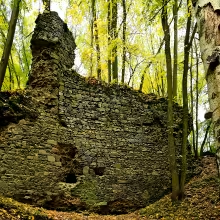
Stará Dubá is a ruined medieval castle situated on the left bank of the Sázava River, 2.5 kilometers north of Přestavlky u Čerčan in the Benešov District of the Central Bohemian Region. Founded in the second half of the 13th century, it was associated with the lords of Dubá throughout its existence. This castle is notable for its exceptional size and impressive architecture, comparable to smaller royal castles with a surrounding settlement.
The castle was built on a rocky outcrop above the Sázava River, featuring a smaller courtyard behind the castle and a palatial building on the second courtyard. Its design was complicated by its status as a 'closed' castle, with the rear part buried under rubble from a collapsed tower and a higher terrain level than in the Middle Ages. The castle's unique design and location make it an exceptional example of medieval architecture.
The lords of Dubá, including Václav of Dubá and Jan Zoula of Ostředek, were the owners of the castle. Václav of Dubá and Jan Zoula of Ostředek were involved in the activities that led to the castle's siege and capture by the royal forces in 1404. The castle declined and eventually disappeared during the battles between the ruler and the Strakonice Union in the late 1440s.
The castle's history reflects the struggles between the ruler and the nobility, as well as the impact of external influences on the region. Its unique design and location make it an exceptional example of medieval architecture. The castle's exceptional size and impressive architecture, comparable to smaller royal castles with a surrounding settlement, make it a significant historical site.
Today, the castle is a protected cultural monument, and its remains are a testament to the region's rich history. Visitors can explore the castle's ruins and learn about its significance in the region's medieval past. The castle's unique design and location make it an exceptional example of medieval architecture, and its history reflects the struggles between the ruler and the nobility.
Stará Dubá is a must-visit destination for anyone interested in medieval history and architecture. Its exceptional size and impressive architecture make it a significant historical site, and its unique design and location make it an exceptional example of medieval architecture. Visitors can explore the castle's ruins and learn about its significance in the region's medieval past, making it a valuable and enriching experience.
Historical milestones
- 1300
- Founded in the second half of the 13th century.
- 1404
- Siege and capture by the royal forces.
- 1449-1450
- Decline and disappearance during the battles between the ruler and the Strakonice Union.
Architectural development
The castle was built on a rocky outcrop above the Sázava River, with a smaller courtyard behind the castle and a palatial building on the second courtyard. The castle's design was complicated by its status as a 'closed' castle, with the rear part buried under rubble from a collapsed tower and a higher terrain level than in the Middle Ages.
Historical events
- 1300
- Founded in the second half of the 13th century.
- 1404
- Siege and capture by the royal forces.
- 1449-1450
- Decline and disappearance during the battles between the ruler and the Strakonice Union.
Owners
The lords of Dubá, Václav of Dubá, Jan Zoula of Ostředek, and others.
Points of interest
– The castle's unique design and location were influenced by its status as a 'closed' castle, which required a more complex layout to accommodate its defenses. This design element has contributed to the castle's exceptional status as an example of medieval architecture.
– Václav of Dubá and Jan Zoula of Ostředek, the lords of Dubá, were known for their involvement in activities that led to the castle's siege and capture by the royal forces in 1404. This event marked a significant turning point in the castle's history.
Guide
Show guide text
Welcome to Stará Dubá, one of the most interesting and least known ruins in the Czech Republic. You are standing before it now and have before you the remains of an ancient castle founded in the second half of the 13th century. Let's move on to its historical context.
It was established during a time when the Czech lands were undergoing colonization and the construction of castles. Václav z Dubé, one of the significant noblemen of that era, stood at the founding of this castle. It was his family that practically ruled the castle from its inception until its decline.
Now pay attention to the architecture. Stará Dubá is unique in its design and location. It was a so-called "closed" castle, requiring more complex arrangements for its defensive systems. This contributed to its exceptional status as an example of medieval architecture.
Notice how the castle lies on the left bank of the Sázava River. Its position was a crucial factor for its defensibility and strategic location. Although it is now just a ruin, its original function and significance are still apparent.
Let's return to some key figures associated with this history. Václav z Dubé and Jan Zoula z Ostředka were two of them. Their activities and roles in the castle's history are an integral part of its fascinating story.
You might be interested to know that the castle was involved in several significant events. In 1404, it was besieged and captured by royal forces. The following period was marked by wars between ruling families and the Strakonice Union. Between 1449-1450, the castle began to decline and eventually disappeared.
Take a look at the castle's façade and experience the atmosphere that prevails here. Stará Dubá is a place where history meets nature, and you can immerse yourself in the past. It offers an opportunity for exploration and discovery, deepening our knowledge of the Middle Ages and this unique ruin. Allow Stará Dubá to captivate you and invite further exploration.
Tips for visitors
{'best_time_to_visit': 'The best time to visit Stará Dubá is during spring and autumn, when the weather is mild and the surroundings are lush with greenery.', 'parking_transport': 'The castle is accessible by car or public transportation. You can park near the castle and walk to the entrance.', 'what_to_bring': 'Bring comfortable shoes, water, and snacks, as well as a camera to capture the stunning views.', 'photography': {'best_spots': 'The best spots for photography are near the castle walls, where you can capture the ruins and the surrounding landscape.', 'light': 'The best light for photography is during the golden hour, just before sunset.'}, 'what_to_see_nearby': 'Nearby attractions include the Sázava River and the village of Přestavlky u Čerčan.', 'tips_for_families': 'Families with children can enjoy a picnic near the castle or explore the surrounding woods.'}
Businesses nearby
Do you run a restaurant, accommodation, shop, museum, rental, wellness or other visitor service near this monument? Show yourself directly to the people heading to it — this is how they will see you in the app and on the web:
Events nearby
Event source: Kudy z nudy and open data of the Czech Republic
Nearby
The castle is located near the Sázava River and the village of Přestavlky u Čerčan.
Accommodation nearby
Themed route
Trasa: Stará Dubá a okolí
1. Stará Dubá (zřícenina) Typ: historická památka Proč stojí za návštěvu: Zřícenina hradu Stará Dubá je významnou historickou památkou a nabízí krásný výhled na okolní krajinu. Nachází se v bezprostřední blízkosti Sázavy řeky a vesnice Přestavlky u Čerčan.
2. Sázava (řeka) Typ: přírodní památka Proč stojí za návštěvu: Sázava je důležitým vodním tokem v oblasti a její okolí nabízí krásné scenérie a možnost pozorování místní fauny.
3. Přestavlky u Čerčan (vesnice) Typ: venkovské sídlo Proč stojí za návštěvu: Vesnice Přestavlky u Čerčan nabízí možnost prohlédnout se do života venkovského obyvatelstva a spatřit tradiční architekturu.
Seasonal recommendations
Jaro
Specific: In the spring, Stará Dubá is surrounded by blooming trees and plants, creating a pleasant atmosphere. The lighting is natural due to sunlight.
Practical tips: During the spring months (March to May), Stará Dubá is a popular tourist destination. We recommend visiting the site in the late morning or late afternoon to avoid larger crowds. Remember to dress warmly, as the weather can still be chilly.
Léto
Specific: In summer, Stará Dubá is surrounded by greenery and blooming plants, creating a pleasant atmosphere. The lighting is natural due to sunlight.
Practical tips: During the main summer season (June to August), Stará Dubá is very popular among tourists. We recommend visiting the site early in the morning to avoid larger crowds. Remember to dress warmly, as the weather is usually hot.
Podzim
Specific: In autumn, Stará Dubá is surrounded by colorful foliage, creating a pleasant atmosphere. The lighting is natural due to sunlight.
Practical tips: During the autumn months (September to November), Stará Dubá is less popular among tourists but you can still encounter crowds of visitors. We recommend visiting the site in the late morning or late afternoon to avoid larger crowds. Remember to dress warmly, as the weather can still be chilly.
Zima
Specific: In winter, Stará Dubá is surrounded by snow and mist, creating a mysterious atmosphere. The lighting is artificial due to lanterns and site illumination.
Practical tips: During the winter months (December to February), Stará Dubá is open only for limited hours. We recommend visiting the site in the late morning or late afternoon to avoid smaller crowds. Remember to dress warmly, as the weather is usually cold.
Visualizations and artistic views

Vizualizace jsou generovány umělou inteligencí a slouží jako inspirace.


Tips from visitors
No tips yet. Be the first!
Log in and add your tip.



Reviews and comments