





Slovanské hradiště Mikulčice, also known as Mikulčice-Valy, is a significant archaeological site in the South Moravian Region of the Czech Republic. It lies near the river Morava, which forms the boundary with Slovakia. This ancient Slavic fortification spans approximately ten hectares and extends to an estimated 30–50 hectares when including its agglomeration. During the Great Moravian Empire in the 9th century, it served as a major political and spiritual center. The site includes remnants of a noble palace, twelve churches, three bridges, and over 2,500 graves.
The origins of Mikulčice-Valy date back to the 9th century when it was an important power and religious hub under the Mojmírovc dynasty's rule. Its strategic location in the floodplain of the Morava River amidst lowland forests contributed to its prominence. Systematic archaeological research began in 1954, led by academics such as Josef Poulík and Zdeněk Klanica, providing valuable insights into Great Moravia's history.
Architecturally, Mikulčice features a main fortress with two large adjacent forecourts—one resembling a permanent military camp and the other more like a walled settlement. The site was protected by an almost identical rampart structure made of shell construction with a frontal stone plinth and water ditches formed by branches of the Morava River. Among its notable structures is a large triple-nave basilica with an atrium and narthex, recognized as the largest known Great Moravian church building.
Throughout its history, Mikulčice-Valy has been home to numerous rich graves containing swords, gold and silver jewelry, and ornate belt fittings. The site's significance is further highlighted by the discovery of various churches and a secular building likely used as a palace or meeting hall for elites. Excavations have revealed evidence of metalworking, including goldsmithing, and administrative activities suggested by iron styli found on-site.
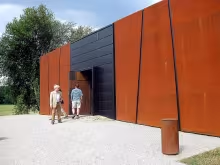
Today, Mikulčice-Valy stands as an archaeological park and museum, managed by the Masaryk Museum in Hodonín and the Czech Academy of Sciences in Brno. The site is being considered for designation as a UNESCO World Heritage Site, underscoring its historical importance. Visitors can explore reconstructed structures such as the 1950s Exhibition Pavilion, which incorporates the foundations of Church 2, and a visitor center rebuilt in 2015.
Mikulčice-Valy offers a unique glimpse into the life and culture of the Great Moravian Empire, making it a must-visit destination for those interested in history and archaeology. Its rich heritage and ongoing research continue to captivate scholars and tourists alike, inviting exploration and discovery at this remarkable site.
Historical milestones
- 1954
- Systematic archaeological research began, led by academics such as Josef Poulík and Zdeněk Klanica.
Architectural development
Mikulčice features a main fortress with two large adjacent forecourts, one resembling a permanent military camp and the other more like a walled settlement. The site was protected by an almost identical rampart structure made of shell construction with a frontal stone plinth and water ditches formed by branches of the Morava River.
Historical events
The site was an important power and religious center during the Great Moravian period in the 9th century.
Archaeological research began systematically in 1954, providing valuable insights into the history of Great Moravia.
Points of interest
– One of the most intriguing aspects of Mikulčice-Valy is its strategic location in a floodplain, which not only provided natural defenses but also facilitated trade and communication along the Morava River. This positioning was crucial for its role as a political and spiritual hub during the Great Moravian Empire.
Guide
Show guide text
Welcome to the historic site of Slovanské hradiště Mikulčice, also known as Mikulčice-Valy. As you stand here, imagine yourself stepping back in time to a significant era of Central European history. Before you lies an expansive area that once thrived with life and activity during the Great Moravian period. The site stretches across approximately ten hectares, but its influence reached even further, extending into an estimated 30–50 hectares when considering its surrounding agglomeration.
Let's delve into the origins of this remarkable place. The systematic archaeological research here began in 1954, led by distinguished academics such as Josef Poulík and Zdeněk Klanica. Their work has uncovered a wealth of knowledge about this once-thriving political and spiritual center. Established during the Great Moravian Empire, Mikulčice-Valy served as a vital hub under the rule of the Mojmírovci dynasty.
As you take in your surroundings, notice the remnants that hint at its former grandeur. While specific architectural details may not be visible today due to time's passage, the site's layout speaks volumes about its strategic importance. The fortification was strategically located in a floodplain along the Morava River, which provided natural defenses and facilitated trade and communication. This positioning was crucial for its role as both a political and spiritual hub during its prime.
The history of Mikulčice-Valy is intertwined with key figures such as the Mojmírovci, who played an essential role in shaping this region's destiny. Their influence is felt here, where decisions that shaped the course of history were made within these walls.
One intriguing aspect of Mikulčice-Valy is its strategic location and how it leveraged natural resources for defense and prosperity. The floodplain not only offered protection but also enabled trade routes along the Morava River, connecting this site to a broader network of cultural and economic exchange.
As we conclude our journey through time at Mikulčice-Valy, I invite you to explore further and immerse yourself in the stories that echo through these ancient grounds. There's much more to discover as you wander and reflect on the rich tapestry of history woven here. Thank you for joining me today, and may your exploration be both enlightening and inspiring.
---
Feel free to continue exploring this fascinating site at your own pace, and enjoy uncovering its many layers of history.
Tips for visitors
The best time to visit Slovanské hradiště Mikulčice is during late spring or early autumn, when the weather is pleasant for exploring outdoor sites without the summer crowds. The mild temperatures and blooming nature provide a beautiful backdrop for your visit. Additionally, these seasons offer longer daylight hours, allowing more time to explore the fortifications and surrounding area.
Parking and transportation options are convenient at Mikulčice. There is parking available near the site, making it accessible by car. For those preferring public transport, you can reach the location via local bus services; however, it's advisable to check current routes and schedules in advance. The fortification's proximity to the Morava River floodplain makes it an easy walk from nearby transportation hubs.
When visiting Mikulčice, consider bringing comfortable walking shoes as there are several paths and areas to explore within the site. A hat and sunscreen are recommended if you plan to spend a lot of time outdoors during sunny days. Additionally, carrying water and snacks can enhance your visit, especially for families with children or those planning an extended exploration.
Photography enthusiasts will find Mikulčice's fortifications particularly captivating in the early morning light when shadows add depth to the ancient structures. The site offers several vantage points that capture its historical essence against the backdrop of lowland forests and open fields. Remember, while photography is generally allowed, it’s always best to check for any specific restrictions or guidelines.
For those interested in exploring nearby attractions within a 30-minute drive, consider visiting additional settlement areas with burial mounds located around Mikulčice. These sites offer further insights into the region's rich history and provide an opportunity to see more of the local landscape and archaeological significance.
Businesses nearby
Do you run a restaurant, accommodation, shop, museum, rental, wellness or other visitor service near this monument? Show yourself directly to the people heading to it — this is how they will see you in the app and on the web:
Nearby
Located in the floodplain of the Morava River amidst lowland forests, Mikulčice is surrounded by additional settlement areas with burial mounds.
Accommodation nearby
Themed route
Thematic Walking Tour: The Slavic Fortification of Mikulčice
1. Mikulčice Settlement Area - *Type:* Archaeological Site - *Why Visit:* Begin your journey at the expansive settlement area surrounding the fortification, where you can explore remnants of ancient dwellings and gain insight into the daily life of its former inhabitants. This site offers a tangible connection to the past, allowing visitors to walk through history among the ruins.
2. Burial Mounds - *Type:* Archaeological Landmark - *Why Visit:* Continue your exploration by visiting the nearby burial mounds, which provide a solemn yet fascinating glimpse into the funerary practices of the Slavic people who lived here. These mounds are significant as they offer valuable archaeological insights and stand as silent witnesses to the region's rich cultural heritage.
3. Mikulčice Fortification - *Type:* Historical Fort - *Why Visit:* Conclude your tour at the heart of Mikulčice, the fortification itself. This impressive structure was once a formidable stronghold that played a crucial role in regional defense and trade during its time. Walking through its remnants allows you to appreciate the strategic importance and architectural ingenuity of this ancient site.
This thematic route offers an immersive experience into the history and culture of Mikulčice, providing visitors with a comprehensive understanding of its significance as a Slavic stronghold.
Seasonal recommendations
Spring: Visiting Mikulčice during the spring offers a unique experience as nature begins to awaken, with wildflowers dotting the landscape and trees budding into vibrant greens. The softer light of early morning or late afternoon casts gentle shadows across the historic site, enhancing its ancient charm. This season typically sees fewer visitors than summer, allowing for a more intimate exploration. For this reason, it's advisable to wear comfortable layers as temperatures can vary throughout the day. Arriving early in the morning not only avoids any potential crowds but also provides the best opportunity to appreciate the site in peaceful solitude.
Summer: The summer months bring Mikulčice to life with longer daylight hours and warm weather, making it an ideal time for outdoor exploration. However, this is also when the site experiences its peak visitor numbers, so planning ahead is crucial. Arriving early in the morning can help you avoid larger crowds and take advantage of cooler temperatures before midday heat sets in. Lightweight, breathable clothing is recommended to stay comfortable during your visit. Additionally, don't forget sun protection such as hats and sunscreen to enjoy a safe and pleasant experience.
Autumn: Autumn at Mikulčice offers a picturesque setting with its rich tapestry of reds, oranges, and yellows transforming the surrounding landscape into a breathtaking scene. The cooler temperatures make for comfortable walking tours around the site without the summer crowds, providing an excellent opportunity to appreciate the historical details in relative solitude. It's advisable to wear layered clothing as mornings can be chilly while afternoons remain mild. This season also offers unique atmospheric lighting conditions that enhance the ancient structures' mystique.
Winter: Winter transforms Mikulčice into a serene and quiet destination, with snow-covered grounds adding a magical touch to its historic ambiance. The site is less crowded during this time, allowing for a peaceful visit. However, shorter daylight hours mean planning your visit carefully; arriving early in the day ensures you make the most of the available light. Warm clothing is essential, including hats, gloves, and insulated layers, as temperatures can be quite cold. Additionally, some areas might have limited access due to weather conditions, so checking ahead for any site-specific updates is recommended.
Visualizations and artistic views

Vizualizace jsou generovány umělou inteligencí a slouží jako inspirace.


Tips from visitors
No tips yet. Be the first!
Log in and add your tip.
Location on the map



Příběhy a pověsti
Legendy, pověsti a příběhy spjaté s touto památkou
Reviews and comments