





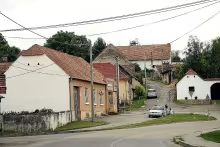
Plaveč, a former farmstead in the Rakovník District of the Central Bohemian Region, dates back to the 15th century. This statek, or farmstead, has a rich history reflecting the changing ownership and agricultural practices of the region over the centuries. Its significance lies in its well-preserved architecture and its role in the region's agricultural development.
The farmstead's history is well-documented, with the first records of its existence appearing in the 15th century. At that time, the region was part of the Kingdom of Bohemia, a powerful state in Central Europe. The farmstead changed hands several times, including ownership by Viktorín of Kukštejn in the 16th century. In the 17th century, it was attached to the Petrohrad estate. The early 20th century saw the farmstead modernized, with a new barn built in the western part of the building.
The architecture of the farmstead reflects its modernization in the early 20th century. The new barn, built during this time, is a notable feature of the farmstead's design. The building style and materials used in the barn's construction are not specified, but it is clear that the farmstead has undergone significant changes over the years.
The farmstead has changed ownership several times. Viktorín of Kukštejn owned it in the 16th century, followed by nationalization and its inclusion in the state farm Čistá, then the state farm Jesenice. In the second half of the 20th century, the farmstead was used for both plant and animal production.
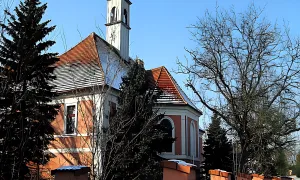
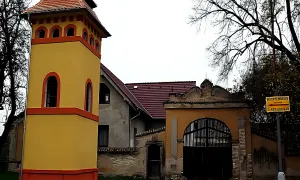
The farmstead is surrounded by a forest and located near the village of Drahouš. A ruined letohrádek, or small summer house, and a chapel are nearby. While specific events at the farmstead are not well-documented, it is clear that it played an important role in the region's agricultural development.
Today, the farmstead is a preserved historical monument, offering a glimpse into the region's past. Visitors can explore the farmstead and its surroundings, including the ruined letohrádek and chapel. The farmstead's history and architecture make it a valuable part of the region's cultural heritage, worth visiting for those interested in history and agriculture.
Historical milestones
- 15. století
- First records of Plaveč farmstead
- 16. století
- Ownership by Viktorín of Kukštejn
- 17. století
- Attached to Petrohrad estate
- 20. století
- Modernization and new barn construction
- 20. století
- Nationalization and inclusion in state farm Čistá
- 20. století
- Inclusion in state farm Jesenice
Architectural development
The farmstead has undergone modernization in the early 20th century, with the construction of a new barn in the western part of the building.
Historical events
- 15th century
- First records of the farmstead appear
- 1620
- The farmstead was attached to the Petrohrad estate
- 20th century
- The farmstead was modernized
Owners
Viktorín of Kukštejn, state farm Čistá, state farm Jesenice
Points of interest
– The farmstead has a ruined letohrádek, or small summer house, and a chapel nearby, which are also part of its historical significance.
– The farmstead was once part of the Petrohrad estate in the 17th century, reflecting the complex history of land ownership in the region.
– The state farm Jesenice, which owned the farmstead in the second half of the 20th century, used it for both plant and animal production, showcasing the farmstead's role in the region's agricultural development.
Guide
Show guide text
Welcome to the historic estate of Plaveč! You stand before this remarkable complex with a history stretching back to the 15th century. Look up at how the building spreads out in the picturesque landscape. Notice the ancient façade and pay attention to details such as the stone walls and wooden windows.
Let's delve into its history. The first written mentions of Plaveč date back to the 15th century. In the 16th century, the estate was owned by Viktorín z Kukštejna. In the 17th century, the estate became part of Petrohrad, further evidence of the complex history of lands in this area.
Now focus on the architecture. The estate has ruins of a summer house, or small summer home, and a nearby chapel that are also part of its historical value. Notice how the building adapted to its time but still retains its original character.
Plaveč has an interesting history reflected in its current form. It was part of Petrohrad in the 17th century, further evidence of the complex history of lands in this area. Whether you like it or not, Plaveč is proof that even in the smallest villages there is a rich history and cultural heritage.
Note that the estate has ruins of a summer house, or small summer home, and a nearby chapel. These are just some of the details proving that Plaveč has a long and rich history. If you enjoyed what you've seen, you might decide to explore other parts of the complex and discover more secrets and stories hidden here.
Thank you for your attention, and I hope you enjoyed strolling around Plaveč with me. Goodbye, and I look forward to seeing you again soon.
Businesses nearby
Do you run a restaurant, accommodation, shop, museum, rental, wellness or other visitor service near this monument? Show yourself directly to the people heading to it — this is how they will see you in the app and on the web:
Nearby
The farmstead is surrounded by a forest and is located near the village of Drahouš. A ruined letohrádek (small summer house) and a chapel are located nearby.
Accommodation nearby
Themed route
Trasa: Plaveč (statek) a okolí
1. Plaveč (statek): Hlavním cílem naší trasy je historický statek Plaveč, který stojí za návštěvu pro svou jedinečnou architekturu a historii. Nachází se v obci Drahouš a je obklopen lesem.
2. Ruiny letohrádku: Nedaleko od statku se nachází ruiny letohrádku, který stojí za návštěvu pro svou romantickou atmosféru a historii. Je to ideální místo pro ty, kteří hledají klid a pohodu v přírodě.
3. Kaple: Nedaleko od letohrádku se nachází kaple, která je krásným místem pro ty, kteří hledají klid a modlitbu. Je to také ideální místo pro ty, kteří chtějí seznámit se s místní kulturou a tradicí.
Seasonal recommendations
Jaro
In the spring season, Plaveč estate is surrounded by blooming trees and flowers, creating a pleasant atmosphere. The specific feature of this time is the spring lighting that illuminates the historic buildings and gardens. For a visit in the spring, it's best to come in March or April when the weather is warm and sunny. We recommend visiting the site in late morning or early afternoon to avoid crowds of tourists.
Summer
In the summer season, Plaveč estate is full of life and energy. The atmosphere is relaxed and cheerful, allowing visitors to enjoy the beauty of nature and historic buildings. A specific feature of this time is the summer lighting that illuminates the gardens and courtyards. For a visit in the summer season, it's best to come in June or July when the weather is sunny and warm. We recommend coming early to avoid crowds of tourists and bringing plenty of water and snacks.
Autumn
In the autumn season, Plaveč estate is surrounded by beautiful autumn scenery with leafy trees and yellow-gold colors. The atmosphere is calm and relaxing, allowing visitors to enjoy the historic buildings and gardens in peace. A specific feature of this time is the autumn lighting that illuminates the historic buildings and gardens. For a visit in the autumn season, it's best to come in September or October when the weather is cool and dry. We recommend visiting the site in late morning or early afternoon to avoid crowds of tourists.
Winter
In winter, Plaveč estate is closed and quiet, with a beautiful snow cover. The atmosphere is calm and romantic, allowing visitors to enjoy the historic buildings and gardens in tranquility. A specific feature of this time is the winter lighting that illuminates the historic buildings and gardens. For a visit in the winter season, it's best to come in December or January when the weather is cold and snowy. We recommend visiting the site in late morning or early afternoon to avoid crowds of tourists and bringing warm clothing and a hat.
Visualizations and artistic views

Vizualizace jsou generovány umělou inteligencí a slouží jako inspirace.

Tips from visitors
No tips yet. Be the first!
Log in and add your tip.
Location on the map


Příběhy a pověsti
Legendy, pověsti a příběhy spjaté s touto památkou
Reviews and comments