





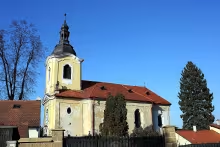
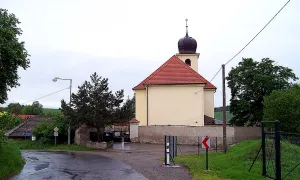
Kostel svatého Mořice in Řevnice is an 18th-century Baroque church with historical significance. It stands on the site of a Romanesque predecessor first mentioned in 1253. Located in the village of Řevnice within Středočeský kraj, this church is surrounded by a small cemetery and is protected as a national monument of the Czech Republic.
Construction began in 1749, with consecration following in 1752 by Julius František Waha, grand master of the Knights Hospitaller. The interior features original frescoes from the 18th century and other Baroque elements that highlight its historical and artistic value.
The church's origins trace back to a Romanesque predecessor mentioned in 1253 when King Václav I donated it to the Knights Hospitaller, known for their red cross emblem. By the mid-18th century, both the original Romanesque church and an adjacent chapel dedicated to the Assumption of the Virgin Mary were demolished due to poor condition.
Architecturally, Kostel svatého Mořice is a single-nave Baroque structure with a tower. Its interior decoration includes frescoes depicting the Holy Trinity and allegories of virtues, reflecting 18th-century artistic trends. The main altar features sculptures of Saint Florian and Saint Sebastian alongside an image of the Virgin Mary on a throne. A notable feature is a stone embedded in the tower wall bearing the emblem of the Knights Hospitaller, symbolizing continuity with its historical roots.
Throughout its history, Kostel svatého Mořice has experienced several significant events. After its consecration in 1752 by Julius František Waha, it served as a parish church until becoming a filial church of Dobřichovice in the late 17th century. In 1842, structural issues necessitated repairs due to cracks appearing in the walls. A major renovation occurred between 1904 and 1905 under architect Eduard Sochor, restoring its status as a parish church after about 250 years.
The church's bell tower holds two surviving bells from the 18th century, with one having survived both World Wars. In recent history, community efforts in 2023 led to fundraising for the repair of these bells and the commissioning of new ones by zvonář Manoušek, named Marie and Anne.
Today, Kostel svatého Mořice stands as a testament to its rich historical legacy and architectural beauty. It is located at the center of an unused cemetery, near a Baroque gate adorned with the Knights' emblem, and adjacent to a protected rural house featuring decorative elements. The church remains accessible for visitors who wish to explore its artistic treasures and delve into its storied past.
Visiting Kostel svatého Mořice offers a unique opportunity to connect with Czech history through its architectural splendor and cultural heritage. Its preservation as a national monument underscores its importance, inviting those interested in Baroque artistry and medieval history to experience this remarkable site firsthand.
Historical milestones
- 1253
- King Václav I donated the predecessor of the current church to the Knights Hospitaller.
- 1749
- Construction of the new baroque church began.
- 1752
- The church was consecrated by Julius František Waha, the grand master of the Knights Hospitaller.
Architectural development
The current baroque structure replaced two earlier churches that were demolished in the mid-18th century due to poor condition. The church underwent significant renovations between 1904 and 1905 under architect Eduard Sochor, restoring its status as a parish church after about 250 years.
Historical events
- 1253
- King Václav I donated the predecessor of the current church to the Knights Hospitaller.
- 1749
- Construction of the new baroque church began.
- 1752
- The church was consecrated by Julius František Waha, the grand master of the Knights Hospitaller.
Points of interest
– The church's predecessor was mentioned as early as 1253 when King Václav I donated it to the Knights Hospitaller, highlighting its deep medieval roots and connection with this influential order. – Despite its Baroque reconstruction, a stone in the tower wall bears the emblem of the Knights Hospitaller, symbolizing continuity with the church's historical origins and the legacy of the order that once owned it.
Guide
Show guide text
Welcome to the historic site of Kostel svatého Mořice in Řevnice, a remarkable testament to both architectural beauty and centuries-old history. As you stand before this baroque church from the 18th century, notice how it gracefully dominates the surrounding landscape, its presence accentuated by the small cemetery that encircles it. This serene setting invites contemplation of the stories embedded within its walls.
The origins of this sacred site trace back to a time long past when, in 1253, King Václav I generously donated the predecessor of today's church to the Knights Hospitaller. This early mention underscores the location’s deep medieval roots and its longstanding connection with this influential order. Fast forward to 1749, when construction began on the current baroque structure, marking a new chapter in its storied existence. By 1752, the church was consecrated by Julius František Waha, the grand master of the Knights Hospitaller, solidifying its role as a focal point for religious activities.
As you explore, take a moment to appreciate the architectural details that define this baroque masterpiece. While specific architects remain unknown, their vision is evident in the church’s elegant design and harmonious proportions. Inside, your eyes will be drawn to the original 18th-century frescoes adorning the interior—a vibrant testament to the artistic craftsmanship of the era.
The history of Kostel svatého Mořice is rich with narratives and notable figures. Julius František Waha, who played a pivotal role in its consecration, is but one of the historical personalities intertwined with this sacred site. His involvement highlights the church’s significance not only as a place of worship but also as a symbol of continuity for the Knights Hospitaller.
A fascinating detail that captures the imagination lies within the tower wall—a stone bearing the emblem of the Knights Hospitaller. This emblem serves as a tangible link to the church's medieval origins and its enduring legacy, bridging centuries of history in a single glance.
As you conclude your visit here at Kostel svatého Mořice, let the tranquility of this historic site linger with you. We invite you to continue exploring Řevnice and discover more about its rich cultural tapestry. Thank you for joining us on this journey through time, and may your explorations be filled with wonder and discovery.
---
This audio guide is designed to enrich your visit by immersing you in the history and beauty of Kostel svatého Mořice. We hope it enhances your appreciation of this remarkable site. Safe travels as you continue your journey through Řevnice's enchanting landscapes and historical treasures.
Businesses nearby
Nearby
The church stands in the center of an unused cemetery, near a baroque gate adorned with the Knights' emblem. Nearby is a protected rural house (čp. 7) featuring decorative elements.
Accommodation nearby
Trips and activities nearby
Guided tours, tickets and activities nearby from GetYourGuide
Search tours and activities →Themed route
Thematic Walking Tour: Řevnice
1. Kostel svatého Mořice (Řevnice) - Church Begin your journey at the heart of Řevnice with the charming Kostel svatého Mořice. This church is a testament to historical architecture and spiritual heritage. Its serene atmosphere invites visitors to explore its unique features, including intricate interior designs that reflect centuries-old traditions.
2. Unused Cemetery - Historical Site Adjacent to the church lies an unused cemetery, offering a quiet space for reflection amidst nature. This site provides insight into local customs and history, with its tranquil setting allowing visitors to appreciate the peaceful coexistence of past and present.
3. Baroque Gate - Architectural Landmark A short walk from the church will lead you to an ornate baroque gate adorned with the Knights' emblem. This architectural marvel serves as a gateway to understanding the region's historical influences, showcasing exquisite craftsmanship that has stood the test of time.
4. Protected Rural House (čp. 7) - Cultural Heritage Site Nearby, you'll find a protected rural house at čp. 7. This building is notable for its decorative elements and serves as a cultural touchstone, offering insights into traditional architectural styles and the lifestyle of past inhabitants in this region.
5. Kostel svatého Mořice (Řevnice) - Church Exterior Conclude your tour by revisiting the church's exterior to appreciate its architectural details from a different perspective. The surrounding area provides an ideal spot for capturing photographs and reflecting on the rich history you've explored throughout this thematic journey in Řevnice.
This walking tour offers a comprehensive exploration of Řevnice, focusing on key historical and cultural sites that highlight the region's unique heritage.
Seasonal recommendations
Spring: The spring season at Church of Saint Maurice (Řevnice) offers a vibrant and refreshing atmosphere as nature awakens around the historic site. The surrounding landscape is adorned with blooming flowers, creating picturesque views that enhance the charm of this medieval church. Natural light filters through stained glass windows, casting colorful patterns inside the church, which adds to its serene ambiance. Visitors should be prepared for occasional rain showers, so carrying a light waterproof jacket or an umbrella is advisable. The weather can be unpredictable during this time, so comfortable walking shoes are recommended. As the days begin to warm up slightly, it's a good idea to visit in the late morning when temperatures are more pleasant and before larger crowds gather.
Summer: Summer at Church of Saint Maurice (Řevnice) is characterized by long daylight hours that illuminate both the exterior and interior of the church beautifully. The lush greenery surrounding the site provides a tranquil setting, perfect for leisurely exploration. This season often sees an increase in visitors due to its appeal as a popular tourist destination during peak travel times. To avoid crowds, consider visiting early in the morning or later in the afternoon. Light, breathable clothing is recommended to stay comfortable under the sun, and don't forget sunscreen and sunglasses. With extended opening hours typical of this season, there's ample time to enjoy both the church and its natural surroundings.
Autumn: Autumn brings a stunning transformation to the area around Church of Saint Maurice (Řevnice), with vibrant foliage creating a warm, golden landscape that enhances the historic beauty of the site. The cooler temperatures make for comfortable walking conditions as visitors explore the church and its grounds. This season is ideal for photography enthusiasts who wish to capture the picturesque scenery in its full glory. As daylight hours shorten, it's advisable to plan your visit earlier in the day to take advantage of natural lighting. Layered clothing is recommended to adapt to the changing temperatures throughout the day.
Winter: Winter at Church of Saint Maurice (Řevnice) offers a serene and almost mystical experience as snow blankets the surrounding landscape, transforming the area into a picturesque winter wonderland. The church's architecture stands out against the white backdrop, creating stunning visual contrasts. During this season, opening hours may be shorter due to weather conditions, so it’s wise to check in advance before your visit. Warm clothing is essential to stay comfortable while exploring the site during colder months. Since fewer visitors tend to come during winter, it's a quieter time to appreciate the church's tranquility and historical significance without large crowds.
Visualizations and artistic views

Vizualizace jsou generovány umělou inteligencí a slouží jako inspirace.


Tips from visitors
No tips yet. Be the first!
Log in and add your tip.



Reviews and comments