





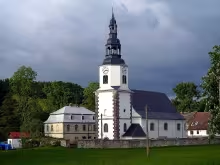
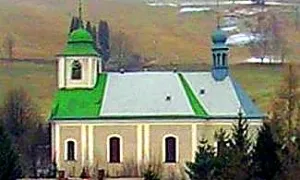
The Church of Saint Nicholas in Bílý Kostel nad Nisou is a prominent early Baroque sacred building centrally located between the river Nisa and a road leading to Chotyně. Constructed from 1679 to 1691 on an elevated ancient cemetery, it stands as the largest landmark visible from afar in Bílý Kostel nad Nisou. This church replaced an earlier structure mentioned since 1352, which likely gave the town its name.
The origins of this church date back to the late 17th century when Bohemia was part of the Habsburg Monarchy. Following the Thirty Years' War, religious tensions influenced the construction of new sacred buildings. The Church of Saint Nicholas replaced an earlier structure on the same site, contributing to the town's name and reflecting both continuity in spiritual significance and architectural evolution towards early Baroque.
Architecturally, the church is oriented, oblong, and single-nave with significant modifications over time. Its west tower, built in 1783, features an octagonal upper section topped by a copper onion dome and lantern. Originally, it had a Baroque interior from the 18th century, but much of this was removed after 1977. Notable elements include segmentally arched windows set within profiled sandstone frames with keystones, smooth lintel frames in light-colored stone contrasting with rough plaster facades, and a square presbytery semi-circularly closed with an attached sacristy on the northern facade. A series of tombstones and memorial plaques from the 18th and 19th centuries encircle the building.
Ownership and administration have changed over time. By the early 21st century, it was owned by the local community. Historically, it served as a storage facility for books from the Liberec library before being restored for cultural events, highlighting its ongoing relevance to the community.
Key historical events include architectural modifications between 1749-1754 and in 1785 when a new presbytery was added. The original Baroque interior, featuring elements like a three-part wooden pulpit adorned with Rococo paintings from the late 18th century, was largely removed after 1977. A notable curiosity is the baptismal font incorporating an early Gothic pillar from the mid-13th century.
Today, the Church of Saint Nicholas is accessible to visitors and serves as a venue for cultural events organized by the local community. Its historical significance, architectural features, and role in the town's cultural life make it a worthwhile destination. The surrounding cemetery wall, featuring 19th-century terracotta reliefs of the Stations of the Cross, adds to its historical ambiance. Nearby, a Baroque parsonage adapted for residential use and an oratory used for Catholic services further enrich the site's heritage.
The Church of Saint Nicholas in Bílý Kostel nad Nisou offers a unique glimpse into the architectural and cultural history of the region. Its blend of early Baroque design and historical significance provides a compelling reason to visit, making it a valuable landmark for both locals and tourists alike.
Historical milestones
- 1352
- První zmínka o starším kostele.
- 1679
- Začátek výstavby nového kostela.
- 1691
- Dokončení výstavby kostela svatého Mikuláše.
- 1749
- Začátek architektonických úprav.
- 1754
- Dokončení architektonických úprav.
- 1783
- Postavení západní věže s kopulem a lanterny.
Architectural development
The church underwent major architectural changes in the mid to late 18th century, including an expansion with a new presbytery. It features a west tower built in 1783, topped with a copper onion dome and lantern. The interior was originally Baroque from the 18th century but was largely removed after 1977.
Historical events
Construction completed in 1691, marking the establishment of the current structure.
Significant architectural modifications occurred between 1749-1754 and in 1785.
Owners
The church was owned by the local community at the beginning of the 21st century. It served as a storage for books from the Liberec library before being restored and repurposed for cultural events.
Points of interest
- The Church of Saint Nicholas replaced an earlier structure that likely contributed to the town's name, Bílý Kostel nad Nisou, reflecting a continuity in both spiritual and historical significance.
- An intriguing architectural feature is the baptismal font, which incorporates an early Gothic pillar dating back to the mid-13th century, blending different historical periods within the church’s design.
Guide
Show guide text
Welcome to the Church of Saint Nicholas in Bílý Kostel nad Nisou. As you stand here on this elevated ancient cemetery, take a moment to absorb the serene beauty surrounding you. The early Baroque facade rises majestically before your eyes, its presence commanding yet inviting—a beacon visible from afar.
This church has stood as the largest landmark in Bílý Kostel nad Nisou since its completion between 1679 and 1691. Its origins trace back to a much older structure, first mentioned in historical records as early as 1352. This earlier edifice likely lent the town its name—Bílý Kostel—a testament to both spiritual significance and continuity through time.
As you look around, notice how the church's architecture harmoniously blends with the landscape. The grandeur of its design is evident even from this distance. Take a moment to appreciate the craftsmanship that went into creating such an enduring symbol for the community.
Now, let’s delve deeper into the architectural marvels before us. While specific architects remain unknown, their vision has left an indelible mark on history. One intriguing feature you might notice upon closer inspection is the baptismal font. It incorporates elements of early Gothic style—a detail that adds a layer of historical intrigue to this Baroque masterpiece.
The church's story is further enriched by its architectural evolution. Between 1749 and 1754, significant modifications were made, enhancing its stature and elegance. In 1783, a western tower with a cupola and lantern was added, completing the silhouette that graces our skyline today.
While specific historical figures tied to this church remain unnamed, their influence is felt in every stone and archway. This place has been a silent witness to countless stories of faith, community, and resilience over centuries.
As you explore further, let your curiosity guide you. Imagine the lives that have intersected with this sacred space—from its earliest days as a modest chapel to its current grandeur. Each element speaks volumes about the people who built it, worshipped here, and left their mark on history.
Before we part ways, I invite you to continue exploring Bílý Kostel nad Nisou. Let your senses guide you through its streets and let the stories of this remarkable church inspire a deeper connection with its past. Thank you for joining me today, and may your journey here be both enlightening and memorable.
Tips for visitors
The best time to visit the Church of Saint Nicholas in Bílý Kostel nad Nisou is during late spring or early autumn when the weather is pleasant, allowing for comfortable exploration both inside and outside the church. During these months, the surrounding cemetery wall with its terracotta reliefs of the Stations of the Cross can be appreciated without the discomfort of extreme temperatures. Additionally, visiting on a weekday may offer a more tranquil experience compared to weekends.
Businesses nearby
Do you run a restaurant, accommodation, shop, museum, rental, wellness or other visitor service near this monument? Show yourself directly to the people heading to it — this is how they will see you in the app and on the web:
Nearby
Surrounding the church is a cemetery wall featuring niches with terracotta reliefs of the Stations of the Cross from the early 19th century. Nearby, there is a Baroque parsonage adapted for residential use and an oratory used for Catholic services.
Accommodation nearby
Trips and activities nearby
Guided tours, tickets and activities nearby from GetYourGuide
Search tours and activities →Themed route
Tematická výletní trasa: Bílý Kostel nad Nisou
1. Kostel svatého Mikuláše - Typ: Historická památka - Proč stojí za návštěvu: Tento barokní kostel je nejen duchovním centrem, ale také architektonickou perli s bohatými historickými prvky. Jeho vnitřek nabízí pohled na krásné umělecká díla a stavební detaily z doby baroka.
2. Hřbitovní zeď - Typ: Historická památka - Proč stojí za návštěvu: Hřbitovní zeď je ozdobena terakotovými reliéfy s Scénami z Křížové cesty, které pocházejí z první poloviny 19. století. Tyto umělecké prvky poskytují pohled na historickou keramiku a náboženské tradice oblasti.
3. Barokní fara - Typ: Architektonický památník - Proč stojí za návštěvu: Tato barokní fara byla přizpůsobena pro rezidenční použití, ale zachovává své historické prvky. Je to skvělý příklad architektury z doby baroka a nabízí pohled na životní styl tehdejších duchovních.
4. Oratorium - Typ: Náboženské místo - Proč stojí za návštěvu: Oratorium slouží jako místo pro katolické služby a je známé svým klidným prostředím. Je to ideální místo k odpočinku a reflexi, které dodatečně obohacuje duchovní atmosféru okolí.
Tato trasa nabízí pohled na bohatou historii a architekturu Bílého Kostela nad Nisou, s důrazem na jeho náboženské a kulturní dědictví.
Seasonal recommendations
Spring: Visiting the Church of Saint Nicholas in Bílý Kostel nad Nisou during spring offers a unique experience as nature begins to awaken around this historic site. The church is bathed in soft, natural light that filters through budding trees and blooming flowers, creating an ethereal atmosphere. As temperatures gradually rise, visitors can enjoy the gentle warmth of early spring days while exploring the church's intricate architecture. It's advisable to wear layers as weather can be unpredictable; a light jacket or sweater might be needed for cooler mornings or evenings. This season sees moderate visitor numbers, making it ideal for those seeking a quieter experience.
Summer: Summer is the peak tourist season at the Church of Saint Nicholas, with the long daylight hours enhancing its architectural beauty and allowing visitors to appreciate every detail. The surrounding greenery is lush and vibrant, providing a picturesque backdrop that enhances the church's charm. Due to increased visitor numbers, especially in the afternoon, it's recommended to arrive early in the morning to avoid crowds. Comfortable walking shoes and light clothing are advisable for exploring both the church and the nearby natural landscapes comfortably.
Autumn: The autumn months transform the Church of Saint Nicholas into a stunning spectacle with its warm hues reflecting off the historic stones, complemented by the vibrant colors of falling leaves. This season offers a serene atmosphere as visitor numbers dwindle, allowing for a more intimate experience. The cooler temperatures are perfect for leisurely exploration without the summer heat, but it's wise to bring a jacket or sweater as evenings can get chilly. The natural beauty of autumn makes this an ideal time for photography enthusiasts.
Winter: Winter cloaks the Church of Saint Nicholas in a serene blanket of snow and ice, creating a magical atmosphere that enhances its historic charm. The church is often illuminated by soft lights, casting a warm glow against the crisp winter landscape. Visitors should be prepared for shorter opening hours due to the season and ensure they dress warmly with layers, including hats and gloves, as temperatures can drop significantly. While fewer people visit during this time, it offers a peaceful opportunity to appreciate the church's beauty in a unique setting.
Visualizations and artistic views

Vizualizace jsou generovány umělou inteligencí a slouží jako inspirace.


Tips from visitors
No tips yet. Be the first!
Log in and add your tip.
Location on the map


Příběhy a pověsti
Legendy, pověsti a příběhy spjaté s touto památkou
Reviews and comments