





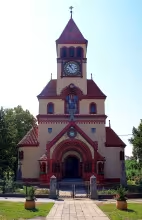
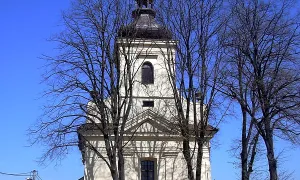
The Church of Saint Michael the Archangel in Ladná is a prominent Roman Catholic church at the village center. Constructed between 1911 and 1912, it was designed by architect Karl Weinbrenner in the Neo-Romanesque style. The church holds cultural heritage status due to its architectural significance and historical context. As a filial church under the parish of Podivín, it serves as both a spiritual center and a dominant feature in Ladná.
The origins of this church trace back to earlier religious structures in the area. By 1663, there was mention of a filiální kostel (filial church) in Lanštorf, now known as Ladná, though its subsequent history remains unknown. A bell cast by Václav Klein in 1678 from this earlier church found its way into the new structure's belfry after initially being part of a smaller chapel built in 1849. The need for a larger place of worship became apparent over time as the small chapel could no longer accommodate the community.
In December 1909, a pivotal moment occurred when a delegation from Ladná, led by Mayor Ondřej Michlovský, negotiated with Prince Jan II. of Liechtenstein. They agreed that in exchange for extending the lease on local hunting grounds for twelve more years at an annual rent of 2000 korun, the prince would finance the construction of a larger chapel in Ladná. This agreement set the stage for the church's development.
The architectural design by Karl Weinbrenner was executed in the Neo-Romanesque style, reflecting early 20th-century trends and the influence of local nobility on community projects. Construction began on April 15, 1912, with materials primarily sourced from a Liechtenstein brickworks, utilizing around 250 types of bricks to achieve detailed architectural features. The church's exterior is adorned with glazed ceramic elements, adding decorative flair to its brickwork.
Throughout the construction process, several key figures played crucial roles. On September 24, 1911, the cornerstone was laid in a ceremonial event where JUDr. Jan Musil received honorary citizenship from Ladná for his advocacy with Prince Lichtenštejn regarding the church's construction. The building work progressed swiftly and was completed by August 9, 1912. By December 8, 1912, Podivín parish priest František Špička consecrated the church.
The Church of Saint Michael the Archangel features a single-nave structure with an apsidal chancel covered by a conch vault and a sacristy attached to its northern side. A circular tower adjoins the southern chapel, while the nave is topped with three fields of cross-ribbed vaulting. The church's façade includes a niche with a Madonna relief above which are glazed clock faces, adding to its distinctive appearance.
During World War I in 1917, the church bells were requisitioned, reflecting the broader historical context of the era. A relic bell from the earlier chapel was later installed in the sanctuary, preserving a connection to Ladná's religious heritage.
Today, the Church of Saint Michael the Archangel remains an active place of worship and a testament to early 20th-century architectural innovation. Its cultural significance is underscored by its status as a protected monument. Visitors are drawn not only to its historical importance but also to its unique blend of glazed ceramic decorations and brickwork. The church stands as a symbol of community resilience and the enduring influence of local nobility in shaping Ladná's spiritual landscape, inviting all who visit to appreciate its architectural beauty and historical depth.
Historical milestones
- 1678
- A bell cast in 1678 by Václav Klein was initially part of the previous chapel and later hung in the new church's belfry.
- 1911
- The cornerstone for the church was laid on September 24, 1911.
- 1912
- Construction of the church was completed by August 9, 1912.
- 1917
- During World War I, in 1917, the church bells were requisitioned.
Architectural development
The Church of Saint Michael the Archangel was designed in the Neo-Romanesque style by Karl Weinbrenner. Construction began on April 15, 1912, and was completed by August 9, 1912. The building materials were primarily bricks supplied by a Liechtenstein brickworks, with various types used to achieve architectural detail. The church features glazed ceramic elements for decorative purposes.
Historical events
In December 1909, a delegation from Ladná led by Mayor Ondřej Michlovský negotiated with Prince Jan II. of Liechtenstein for the construction of a larger chapel in exchange for extending the lease on local hunting grounds.
The cornerstone of the church was laid on September 24, 1911, marking the beginning of its construction.
On December 8, 1912, the church was consecrated by Podivín parish priest František Špička.
Points of interest
- The Church of Saint Michael the Archangel originally had a bell cast by Václav Klein in 1678, which was later relocated to its belfry from an earlier chapel built in 1849.
- A significant negotiation for the church's construction took place in December 1909 when Ladná's delegation secured funding from Prince Jan II. of Liechtenstein in exchange for extending a lease on hunting grounds.
- During World War I, the church bells were requisitioned in 1917, reflecting the impact of global events on local religious sites during that period.
Guide
Show guide text
Welcome to the Church of Saint Michael the Archangel in Ladná, a remarkable testament to architectural beauty and historical depth nestled at the heart of this charming village. As you stand here, take a moment to absorb the serene presence of this Roman Catholic church. Its Neo-Romanesque style is immediately striking, with its robust structure and harmonious proportions commanding your attention.
The story of this church begins in 1911 when the cornerstone was laid on September 24th. Designed by architect Karl Weinbrenner, it rose from the ground over a year later, completed by August 9th, 1912. The construction came at a time when Ladná sought to enhance its spiritual and communal life, marking an era of growth for this village.
As you look around, notice how the church's architecture speaks volumes about its historical context. Its Neo-Romanesque style is evident in the strong lines and symmetrical form that dominate the facade. The belfry stands proudly above, a testament to the craftsmanship of Václav Klein who cast a bell in 1678 for an earlier chapel. This historic bell found its new home here after being relocated from Ladná's previous place of worship.
The church has been touched by many notable figures throughout history. Jan II. z Lichtenštejna, Ondřej Michlovský, JUDr. Jan Musil, and František Špička are just a few whose lives intertwined with this sacred site. Their stories contribute to the rich tapestry of Ladná's cultural heritage.
An intriguing aspect of its history is the significant negotiation that took place in December 1909. The village delegation worked diligently to secure funding for the church, ensuring that it would become a cornerstone of community life—a story of determination and faith.
As you continue your exploration, take a moment to appreciate the atmosphere surrounding this cultural monument. It stands not just as a building but as a living piece of Ladná's history, inviting reflection on its past and present.
Thank you for joining us in this journey through time at the Church of Saint Michael the Archangel. We hope it inspires you to delve deeper into the stories that make Ladná unique. Enjoy your visit, and may your exploration be as enriching as the history itself.
Businesses nearby
Do you run a restaurant, accommodation, shop, museum, rental, wellness or other visitor service near this monument? Show yourself directly to the people heading to it — this is how they will see you in the app and on the web:
Accommodation nearby
Themed route
Tematická výletní trasa: Kostel svatého Michaela archanděla, Ladná
1. Kostel svatého Michaela archanděla (Ladná) *Typ:* Historická památka *Proč stojí za návštěvu:* Tento barokní kostel je centrem kulturní a duchovní historie Ladny. Jeho významná architektura, bohaté interiéry a historická hodnota činí z něj nezbytnou přednost pro každého cestujícího do oblasti.
2. Obecní úřad Ladny *Typ:* Místní instituce *Proč stojí za návštěvu:* Obecní úřad nabízí vhled do administrativních a historických aspektů obce. Je to místo, kde můžete zjistit více o dějinách Ladny a aktuálních událostech v regionu.
3. Lokální tradiční restaurace *Typ:* Kulturní gastronomie *Proč stojí za návštěvu:* Navštívte místní restauraci, abyste prozkoumali autentické jihomoravské pokrmy. Tento zastávkový bod vám umožní ocenit kulturní dědictví oblasti prostřednictvím jejího jedinečného gastronomického přínosu.
4. Místní trh nebo procházka po centru Ladny *Typ:* Kulturní a komunitní místo *Proč stojí za návštěvu:* Procházka po centru Ladny nabídne pohled na místní architekturu a atmosféru. Můžete se zastavit u trhu, kde najdete tradiční produkty a umělecké díla od místních tvůrců.
5. Náves Ladny *Typ:* Kulturní prostranství *Proč stojí za návštěvu:* Náves je srdcem obce, kde se konají různé kulturní akce a setkání. Je to ideální místo pro odpočinek a prohlídku po celodenním výletu.
Tato trasa nabízí komplexní pohled na Ladnu, kombinující historickou památku s místními kulturními a komunitními aspekty.
Seasonal recommendations
Spring: Visiting St. Michael's Church in Ladná during spring offers a unique experience as the surrounding landscape bursts into life with vibrant colors. The blooming flowers and fresh greenery create an enchanting atmosphere, making it a perfect time to appreciate nature alongside historical architecture. As daylight hours lengthen, the church is bathed in soft, natural light that enhances its intricate details. Visitors should dress in layers, as temperatures can vary, and consider arriving early to enjoy the tranquility before larger crowds gather.
Summer: Summer at St. Michael's Church provides an ideal backdrop for exploring both cultural heritage and outdoor beauty. The lush greenery of the surrounding countryside is at its peak, offering picturesque views that complement the church’s historical significance. During this season, visitor numbers can increase, especially in the afternoons, so it's advisable to visit early in the morning or later in the evening to avoid crowds. Light, breathable clothing and sun protection are recommended due to the warmer weather.
Autumn: Autumn at St. Michael's Church is marked by a stunning display of fall foliage, with vibrant reds, oranges, and yellows creating a breathtaking setting that enhances the church’s historical charm. The cooler temperatures make for comfortable exploration, though visitors should be prepared for sudden changes in weather, such as rain or wind. This season is quieter than summer, offering a more serene experience. Layered clothing is recommended to adapt to fluctuating temperatures throughout the day.
Winter: Winter transforms St. Michael's Church into a magical destination with its snow-covered surroundings and festive atmosphere. The church can be particularly enchanting during this time, as the crisp air and shorter days create a cozy ambiance that complements its historical architecture. However, visitors should note that opening hours may be reduced due to inclement weather conditions. Dress warmly in layers, including waterproof outerwear if necessary, and consider bringing gloves and hats for added comfort while exploring this winter wonderland.
Visualizations and artistic views

Vizualizace jsou generovány umělou inteligencí a slouží jako inspirace.
Atmosphere of the place
Atmospheric visualization of the setting and era
Tips from visitors
No tips yet. Be the first!
Log in and add your tip.

Reviews and comments