





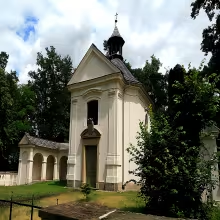
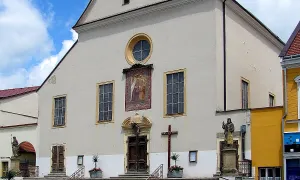
The Chapel of the Holy Family in Černá Hora is an impressive Baroque monument, reflecting both religious devotion and familial legacy. Situated within a forest park near Černá Hora Castle, it holds historical significance due to its architectural style and storied past. Constructed in 1726 by Augustin Kavánka for the Brotherhood of St. Joseph, it initially served religious purposes before becoming a mausoleum for the Fries family, who owned the estate from 1859.
The chapel's origins are rooted in early 18th-century Moravia, part of the Habsburg Monarchy, during a time when Baroque style was prevalent across Europe. Known for its dramatic expressions and grandeur, Augustin Kavánka built it as a worship place for the Brotherhood of St. Joseph. However, in 1782, during the Josephine reforms, it closed and fell into disuse.
Despite neglect, the chapel underwent several restoration phases. In 1837, it was restored as a castle chapel, reviving its religious function. The early 20th century saw architectural enhancements with ambulatory wings added by architect de Witt in 1925, reflecting evolving aesthetic preferences.
Ownership and administration have changed dramatically over time. Initially for a religious brotherhood, it later became integral to the Fries family's legacy as their mausoleum. This transition underscores its adaptability and enduring significance within the local community. Since 1964, the chapel has been part of a protected cultural heritage site, highlighting its importance in preserving regional history.
Key events include an extensive restoration funded by the European Union in 2012, supported by the European Agricultural Fund for Rural Development under the Leader Program. This project emphasized the chapel's value as a cultural asset, focusing on structural integrity and aesthetics, including replacing stonework, repairing roofs, facades, interiors, windows, doors, flooring, and the entrance portal.
Today, the Chapel of the Holy Family stands well-preserved within the Černá Hora estate. Its historical significance and architectural beauty make it an attractive destination for visitors exploring Moravian heritage. Located amidst natural surroundings, it offers a serene environment that complements its rich history.
Visiting the chapel provides insight into the cultural and architectural evolution of the region. Its journey from a religious site to a family mausoleum reflects broader historical narratives while showcasing the enduring legacy of Baroque architecture in Moravia. This monument is not only historically interesting but also a serene retreat inviting reflection on its storied past.
Historical milestones
- 1726
- The chapel was built by Augustin Kavánka for the Brotherhood of St. Joseph.
- 1782
- The chapel was closed during the Josephine reforms and fell into disuse.
- 1837
- The chapel was restored as a castle chapel.
- 1925
- Ambulatory wings were added to the chapel based on de Witt's design.
- 2012
- Extensive restoration of the chapel funded by the EU.
Architectural development
The Chapel of the Holy Family was originally constructed in the baroque style. It underwent significant changes over time, including additions like ambulatory wings designed by architect de Witt in 1925 and various restorations focusing on structural integrity and aesthetics.
Historical events
Built in 1726 by Augustin Kavánka for the Brotherhood of St. Joseph.
Closed and fell into disuse during the Josephine reforms in 1782.
Restored as a castle chapel in 1837.
Extensive restoration funded by the EU in 2012.
Owners
Originally built by Augustin Kavánka for the Brotherhood of St. Joseph; later became a family mausoleum for the Fries family from 1859 onwards.
Points of interest
- The Chapel of the Holy Family was initially constructed as a place of worship for the Brotherhood of St. Joseph, reflecting its deep religious roots and connection to local monastic traditions.
- During the Josephine reforms in 1782, which sought to modernize and secularize many aspects of society, the chapel was closed and fell into disuse, highlighting the impact of these reforms on religious sites across Europe.
Guide
Show guide text
Welcome to the Chapel of the Holy Family in Černá Hora, a remarkable testament to baroque architecture nestled within this picturesque locale. As you stand here, take a moment to absorb the serene ambiance and the gentle play of light on its rotunda structure. This chapel is more than just a building; it's a portal into history, inviting us to explore its storied past.
The Chapel was constructed in 1726 by Augustin Kavánka for the Brotherhood of St. Joseph. Its inception during this period reflects not only architectural ambition but also deep-rooted religious fervor that permeated the area. Originally serving as a place of worship, it beautifully encapsulates the spiritual aspirations of its era.
As you gaze upon the chapel's structure, notice how time has left its mark yet preserved its essence. The rotunda design is emblematic of baroque architecture's grandeur and elegance, though specific stylistic details remain unrecorded in our sources. This lack of detail only adds to the mystery and allure of the site.
Throughout its history, this chapel has been intertwined with significant events and figures. Augustin Kavánka, its architect, left an indelible mark on Černá Hora through his work. The chapel's journey from a religious sanctuary to a mausoleum for the Fries family in 1859 illustrates its adaptability and enduring significance.
Intriguingly, during the Josephine reforms of 1782, the chapel was closed and fell into disuse—a reflection of broader societal shifts towards secularization. Yet, it rose again as a castle chapel in 1837, signifying resilience and continuity. The addition of ambulatory wings in 1925 further transformed its function and appearance, showcasing an evolution that mirrors changing times.
A point of fascination is the chapel's extensive restoration in 2012, funded by the EU—a testament to its cultural value and the commitment to preserving heritage for future generations. This restoration not only revitalized the structure but also reconnected it with the community and history it has long been a part of.
As we conclude our journey through time at this sacred site, I invite you to linger a while longer, to explore further and perhaps uncover more layers of its rich narrative. The Chapel of the Holy Family stands not just as a monument of architectural beauty but as a living chronicle of faith, change, and resilience. Thank you for joining me on this exploration, and may your visit inspire reflection and appreciation for the stories etched in stone around us.
Tips for visitors
The best time to visit the Chapel of the Holy Family is during late spring or early autumn when the weather is mild, making it ideal for walking through the surrounding forest park. These seasons offer pleasant temperatures and vibrant natural scenery, enhancing your experience as you explore both the chapel and nearby Černá Hora Castle.
Parking and transportation options are convenient at this location. There is parking available near Černá Hora Castle, which is a short walk from the chapel. Public transport can also be used to reach the area; however, it's advisable to check current routes and schedules in advance using an online travel planner for the most accurate information.
When visiting, consider bringing comfortable walking shoes as you'll likely explore the forest park and castle grounds. A camera is recommended to capture the chapel’s baroque architecture and the natural beauty of the area. Don’t forget a hat or sunscreen if you’re visiting during sunny days, and perhaps a light jacket in case it gets cooler.
For photography enthusiasts, early morning or late afternoon are ideal times for capturing the best light at the Chapel of the Holy Family. The soft lighting during these times can beautifully highlight the chapel’s intricate details. Additionally, exploring from different angles within the forest park can provide unique perspectives and backdrops for your photos.
Nearby attractions include Černá Hora Castle, which is a short 30-minute walk or drive away. This historic castle offers insights into the region's past and provides stunning views of the surrounding landscape. It’s an excellent spot to visit after exploring the chapel, especially if you’re interested in history and architecture.
Businesses nearby
Do you run a restaurant, accommodation, shop, museum, rental, wellness or other visitor service near this monument? Show yourself directly to the people heading to it — this is how they will see you in the app and on the web:
Nearby
Located in a forest park near Černá Hora Castle, the chapel is surrounded by natural beauty and historical structures within a few kilometers.
Accommodation nearby
Trips and activities nearby
Guided tours, tickets and activities nearby from GetYourGuide
Search tours and activities →Themed route
Thematic Walking Tour: The Chapel of the Holy Family and Surrounding Historical Structures
1. Chapel of the Holy Family (Historical Landmark) Begin your journey at this serene chapel nestled within a forest park near Černá Hora Castle. This architectural gem is surrounded by lush greenery, offering visitors a tranquil setting to appreciate its historical and spiritual significance. The Chapel of the Holy Family stands as a testament to the region's rich cultural heritage.
2. Černá Hora Castle (Historical Landmark) Located just a short walk from the chapel, Černá Hora Castle is an essential stop for history enthusiasts. Explore its ancient walls and learn about its storied past, which has seen it transition through various historical periods. The castle's proximity to the chapel allows visitors to seamlessly connect with the area’s medieval roots.
3. Forest Park (Natural Setting) After exploring the historical sites, immerse yourself in the natural beauty of the surrounding forest park. This verdant landscape offers a peaceful retreat and an opportunity for leisurely strolls among towering trees and picturesque pathways. The park's proximity to both the chapel and castle enhances its appeal as a serene backdrop to your exploration.
This thematic walking tour provides a harmonious blend of history, spirituality, and nature, offering visitors a comprehensive experience of Černá Hora’s cultural landscape.
Seasonal recommendations
Spring: Visiting the Kaple svaté Rodiny during spring offers a serene experience as nature begins to awaken around Černá Hora. The surrounding landscape is adorned with blooming wildflowers and fresh greenery, creating a picturesque setting for photography enthusiasts. The gentle warmth of the season makes it an ideal time for leisurely walks through the area's natural beauty. Visitors should dress in layers to accommodate fluctuating temperatures throughout the day. While spring generally sees fewer tourists than summer, arriving early can provide a more tranquil visit before any midday increase in visitors.
Summer: Summer is the peak tourist season at Kaple svaté Rodiny, with long daylight hours enhancing the experience of exploring this historic site. The lush greenery and vibrant colors of Černá Hora's landscape are at their most stunning during these months, offering a perfect backdrop for outdoor activities such as hiking nearby trails. However, summer also brings larger crowds, so it is advisable to arrive early in the morning to avoid the busiest times. Comfortable walking shoes and light clothing are recommended due to the warm weather, ensuring an enjoyable visit.
Autumn: Autumn transforms Černá Hora into a tapestry of rich colors as leaves change from green to vibrant hues of red, orange, and yellow. The Kaple svaté Rodiny is enveloped in this natural beauty, making it an enchanting destination for those who appreciate the season's atmospheric charm. Cooler temperatures during autumn make it a comfortable time to explore without the summer crowds or winter chill. Visitors should consider bringing a light jacket or sweater as evenings can be brisk. This season offers a quieter yet equally captivating experience compared to the bustling summer months.
Winter: Winter at Kaple svaté Rodiny presents a unique and magical atmosphere, with snow often blanketing the landscape of Černá Hora. The chapel itself takes on an ethereal quality under winter light, providing a serene setting for reflection or photography against the snowy backdrop. However, winter conditions can affect accessibility, so it's important to check opening hours in advance as they may be reduced due to weather. Dressing warmly is essential, with layers and waterproof clothing recommended to stay comfortable during your visit. Despite potentially fewer visitors, the tranquil beauty of the site in winter offers a special experience for those who venture out.
Visualizations and artistic views


Vizualizace jsou generovány umělou inteligencí a slouží jako inspirace.


Tips from visitors
No tips yet. Be the first!
Log in and add your tip.



Reviews and comments