





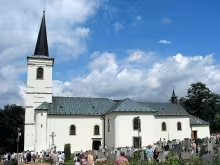
The Church of Saint Martin in Pozlovice is a notable Baroque-style Roman Catholic church located on a southern slope above the village. Built in 1642 by Count Pavel Serényi, it serves as the center of the Roman Catholic parish of Pozlovice and shares spiritual administration with the neighboring parish of Luhačovice. The church holds cultural significance as it is protected as a cultural monument of the Czech Republic.
The origins of this church date back to 1642 when Count Pavel Serényi, who owned the local estate, commissioned its construction. This period was marked by significant political and religious changes in Bohemia, including the Thirty Years' War (1618-1648). The Baroque style emerged during this time as a response to the Counter-Reformation, emphasizing grandeur and intricate detail, which is reflected in the church's architecture.
Architecturally, the Church of Saint Martin underwent significant renovations between 1790 and 1792. These enhancements included the addition of a side chapel, sacristy, and music loft, further enriching its Baroque style. A commemorative plaque above the entrance to the church's bell tower honors Count Pavel Serényi and his wife Klára Trsťanská, marking their contribution to the church's history.
The Serényi family played a pivotal role in the church's history, with several members buried beneath it. The crypt located under the right chapel serves as a burial site for this noble family. Notably, Count Vincenc Serényi, who founded Luhačovice’s spa town, and Moravian regional deputy Count Gabriel Serényi are among those interred there.
Throughout its history, the church has witnessed key events that have shaped its legacy. In 1671, it received a new pulpit, marking an important addition to its interior. The renovations in the late 18th century further contributed to its historical and architectural significance.
Today, the Church of Saint Martin remains a central part of the Roman Catholic parish, which includes nearby villages such as Ludkovice and Podhradí. Its status as a cultural monument ensures its preservation for future generations. Visitors are drawn not only by its historical importance but also by its serene location offering scenic views of the surrounding landscape.
The Church of Saint Martin in Pozlovice stands as a testament to the rich history and architectural beauty of the Baroque period. It invites visitors to explore its storied past, appreciate its artistic elements, and reflect on the legacy of those who have shaped its journey through time.
Historical milestones
- 1671
- The church received a new pulpit.
- 1790
- Renovations included adding a side chapel, sacristy, and music loft.
Architectural development
Originally built in 1642 by Count Pavel Serényi, the church underwent significant renovations between 1790 and 1792. These renovations added architectural features such as a side chapel, sacristy, and music loft, enhancing its baroque style.
Historical events
- 1671
- The church received a new pulpit.
- 1790
- Renovations included adding a side chapel, sacristy, and music loft.
Owners
The church was commissioned by Count Pavel Serényi, who owned the local estate. The Serényi family played a significant role in its history, with several members buried beneath the church.
Points of interest
- The Church of Saint Martin was built during the tumultuous period of the Thirty Years' War, a time when Bohemia experienced significant political and religious upheaval. This context influenced its Baroque architecture, characterized by grandeur as part of the Counter-Reformation movement.
Guide
Show guide text
Welcome to the Church of Saint Martin in Pozlovice, a magnificent testament to Baroque architecture nestled on the southern slope above this charming village. As you stand here, take a moment to absorb the serene atmosphere and grandeur that envelops you. This church is not only a spiritual center for the Roman Catholic parish of Pozlovice but also shares its sacred duties with the neighboring parish of Luhačovice. Recognized as a cultural monument of the Czech Republic, this site invites you on a journey through time.
The Church of Saint Martin emerged during the tumultuous Thirty Years' War, a period marked by significant political and religious upheaval in Bohemia. It was a time when Baroque architecture flourished as part of the Counter-Reformation movement, characterized by its grandeur and dramatic intensity—a response to the era's challenges. The church stands as a symbol of resilience and faith during these trying times.
As you explore further, notice the intricate details that define its Baroque style. Imagine the skilled artisans who crafted each element with precision. In 1671, this church received a new pulpit, enhancing its spiritual ambiance. By 1790, it underwent significant renovations: a side chapel, sacristy, and music loft were added, enriching both its function and aesthetic appeal.
The history of this place is interwoven with the lives of notable figures such as Pavel Serényi and Klára Trsťanská, whose contributions have left an indelible mark on Pozlovice. Their stories are embedded in the very walls you now admire, inviting you to ponder their impact on this sacred site.
One intriguing aspect of the Church of Saint Martin is its enduring legacy amidst historical upheavals. As you stand here, consider how it has remained a beacon of faith and community through centuries of change. This resilience adds an extra layer of intrigue as you explore its nooks and crannies, each whispering tales from the past.
I invite you to continue your exploration, perhaps wandering around the church grounds or delving deeper into its history. There's much more to discover in Pozlovice, a village rich with stories waiting to be uncovered. Thank you for joining me on this journey through time and faith at the Church of Saint Martin. Safe travels as you continue to explore the wonders that await!
Businesses nearby
Do you run a restaurant, accommodation, shop, museum, rental, wellness or other visitor service near this monument? Show yourself directly to the people heading to it — this is how they will see you in the app and on the web:
Nearby
The Church of Saint Martin is situated on a southern slope above Pozlovice, offering scenic views of the surrounding landscape. Nearby villages such as Ludkovice and Podhradí are part of its parish.
Accommodation nearby
Themed route
Thematic Vlog Tour: The Church of Saint Martin and Surroundings
1. The Church of Saint Martin (Pozlovice) - *Type:* Historical Landmark - *Why Visit:* Perched on a southern slope, this church offers breathtaking views of the surrounding landscape. Its architectural beauty and serene atmosphere make it an ideal starting point for exploring the area's rich history and culture.
2. Ludkovice Village - *Type:* Nearby Community - *Why Visit:* A short walk from Pozlovice, Ludkovice is part of the parish that includes The Church of Saint Martin. Explore this quaint village to experience local life and enjoy its peaceful ambiance, which complements the historical charm of the church.
3. Podhradí Village - *Type:* Nearby Community - *Why Visit:* Located a bit further from Pozlovice, Podhradí offers another glimpse into rural life in the Zlínský kraj region. Its proximity to The Church of Saint Martin makes it an excellent spot for those interested in exploring the broader community and cultural ties within the parish.
This tour provides a comprehensive look at the historical and cultural significance of The Church of Saint Martin, enriched by visits to nearby villages that share its heritage.
Seasonal recommendations
Jaro: In the spring season, St. Martin's Church in Pozlovice is enlivened by the natural color spectrums of blooming fields and trees, providing a radiant atmosphere. Sunlight elegantly weaves through branches that are beginning to shed their winter coats, creating beautiful lighting around the church. This is an ideal time for a visit as crowds typically avoid it, allowing you to enjoy a peaceful moment. We recommend wearing comfortable clothing with the option of removing a warm cardigan, as temperatures can change quickly. The best time to visit is usually in the afternoon when the sun fills the space with its warmest rays.
Léto: In summer, St. Martin's Church becomes an attractive destination for visitors seeking refuge from the heat. The green areas around the church provide comfortable shade, making it an ideal place to relax. The atmosphere is full of life and light, with long days offering more time to explore the surrounding area. However, be aware that summer can be the busiest time of year, so it's advisable to arrive early in the morning to avoid crowds and enjoy a peaceful moment. Wear lightweight clothing and consider protective sunglasses or a hat.
Podzim: In autumn, St. Martin's Church offers a unique atmosphere as tree leaves transform into golds and reds. This colorful spectacle provides a beautiful backdrop for the church, creating an idyllic environment full of peace and tranquility. Sunlight becomes warm and inviting, making the visit a comfortable experience. Despite falling temperatures, autumn is generally a less visited time, so you'll encounter fewer crowds. We recommend wearing layered clothing to adapt to rapidly changing temperatures and take advantage of mild autumn days to explore nearby green areas.
Zima: A winter visit to St. Martin's Church offers an entirely different adventure as the environment is covered in snow and trees have a bare appearance. The atmosphere is quiet and calm, bringing a sense of comfort and relaxation. Sunlight pauses over the snow-covered terrain, creating a magical ambiance. Since it's outside peak tourist seasons, you can expect few visitors and thus a more peaceful experience. It's important to dress warmly with coats or down jackets, as temperatures are cold and the church's opening hours may be shorter. The best time to visit is usually in the afternoon when the sun provides its warmest rays.
Visualizations and artistic views

Vizualizace jsou generovány umělou inteligencí a slouží jako inspirace.


Tips from visitors
No tips yet. Be the first!
Log in and add your tip.
Location on the map

Příběhy a pověsti
Legendy, pověsti a příběhy spjaté s touto památkou
Reviews and comments