






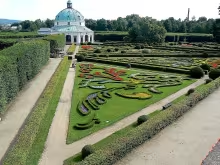
Květná zahrada, originally known as Libosad, is an early Baroque garden in Kroměříž, Zlínský kraj. Established between 1665 and 1675 by Bishop Karl II. von Liechtenstein-Kastelkorn, it exemplifies the geometric style typical of French gardens. Its significance is highlighted by its inclusion as part of a UNESCO World Heritage Site in 1998, alongside the Archbishop's Garden and Castle.
Bishop Karl II.'s vision transformed infertile marshland outside Kroměříž into an ornate garden. During this period, Baroque art and architecture flourished across Europe, characterized by grandeur and symmetry. In Bohemia, under Habsburg rule, there was a cultural emphasis on artistic expressions that highlighted order and harmony. The park's design reflects these influences through its meticulous layout and elaborate features.
Architects Filiberto Lucchese and Giovanni Pietro Tencalla designed the garden, incorporating Italian and Dutch elements. Květná zahrada is renowned for its precise symmetry, with geometrically trimmed greenery and flower beds creating a harmonious visual effect. The park includes ornamental features such as sculptures, fountains with water jets, labyrinths, and a central rotunda. Notably, the rotunda houses Foucault's pendulum, installed in the late 19th century by Dr. František Nábělek, which traces its path in fine sand.
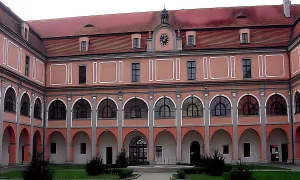
Throughout its history, Květná zahrada has undergone several reconstructions while maintaining its original design and layout. The entrance building, created between 1840 and 1845 by architect Antonín Archem, features a tympanum with the initials M and J flanking an embossed coat of arms. This structure connects to large greenhouses that form part of the park's architectural ensemble.
The garden was meticulously documented in 1691 by artists Justus van den Nypoort and Georg Matthäus Vischer through numerous surviving drawings, capturing its ornamental elements in detail. Additionally, a colonnade running along one side of the park originally served as the main entrance. This structure is adorned with sculptures of ancient gods, historical figures, and mythological characters.
Today, Květná zahrada stands as a testament to Baroque garden design, offering visitors a glimpse into 17th-century horticultural artistry. Its well-preserved state allows for an immersive experience of its geometric precision and artistic embellishments. The park remains accessible to the public, inviting exploration of its historical significance and aesthetic beauty.
Květná zahrada is not only a cultural treasure but also a serene retreat that continues to captivate visitors with its timeless elegance. Its inclusion in UNESCO's World Heritage list highlights its global importance, making it an essential destination for those interested in history, architecture, and garden design. Visitors are encouraged to explore this remarkable site and appreciate the legacy of Bishop Karl II.'s vision brought to life through meticulous craftsmanship and enduring beauty.
Historical milestones
- 1665
- Založení Květné zahrady (Libosad) biskupem Karlem II.
- 1675
- Dokončení výstavby Květné zahrady
- 1691
- Detailní dokumentace zahrady Justusem van den Nypoortem a Georgem Matthäusem Vischerem
- 1840
- Výstavba vchodní budovy architektem Antonínem Archem
- 1890
- Instalace Foucaultova pendula Dr. Františkem Nábělkem
- 1998
- Přidání Květné zahrady do seznamu UNESCO Světového dědictví
Architectural development
Květná zahrada was designed by Italian architects Filiberto Lucchese and Giovanni Pietro Tencalla, combining Italian and Dutch influences. The garden's layout is meticulously symmetrical with geometrically trimmed greenery and flower beds. Over the years, it has undergone various reconstructions while maintaining its original design. Notable additions include a rotunda with Foucault's pendulum installed in the late 19th century by Dr. František Nábělek.
Historical events
Established between 1665-1675 by Bishop Karl II. von Liechtenstein-Kastelkornu
Inscribed as a UNESCO World Heritage Site in 1998
Points of interest
- Despite its Baroque origins, Květná zahrada is home to Foucault's pendulum, a scientific instrument installed in the late 19th century by Dr. František Nábělek, which was not typical for gardens of this style and period.
- The meticulous documentation of Květná zahrada in 1691 by Justus van den Nypoort and Georg Matthäus Vischer provides one of the earliest comprehensive visual records of a Baroque garden's design elements, offering invaluable insights into its original layout and features.
Guide
Show guide text
Welcome to the enchanting Květná zahrada in Kroměříž, a remarkable testament to early Baroque garden design. As you stand here, take a moment to absorb the serene beauty of this meticulously crafted landscape. The park's precise symmetry and elegant geometric patterns are immediately apparent, inviting you into a world where nature meets artistry.
The creation of Květná zahrada dates back to between 1665 and 1675 when Bishop Karl II. von Liechtenstein-Kastelkorn transformed this once infertile marshland outside the city walls into an exquisite garden. His vision was realized through the collaborative genius of architects Filiberto Lucchese and Giovanni Pietro Tencalla, who together crafted a space that embodies the French Baroque style.
As you stroll along the well-defined pathways, notice the harmonious blend of hedges and flowerbeds that guide your steps with effortless grace. The park is adorned with elaborate sculptures and fountains, each carefully positioned to enhance the overall symmetry and balance. These elements not only serve as visual delights but also reflect the meticulous planning that went into every detail.
Květná zahrada has been home to many notable figures throughout its history. Justus van den Nypoort and Georg Matthäus Vischer meticulously documented the garden in 1691, preserving its design for future generations. In 1840, architect Antonín Archem added a touch of elegance with the construction of the entrance building. Perhaps one of the most intriguing additions is Foucault's pendulum, installed by Dr. František Nábělek in 1890—a scientific marvel that stands out amidst the garden’s Baroque splendor.
This fusion of art and science is a testament to the garden's enduring appeal and its ability to inspire curiosity across centuries. As you continue your exploration, let yourself be captivated by the interplay of light and shadow on the manicured lawns and the gentle sound of water flowing from the fountains.
Before you leave, take one last look at this UNESCO World Heritage Site, a place where history, beauty, and innovation converge. We invite you to linger a little longer, perhaps discovering new details with each visit, as Květná zahrada continues to enchant all who wander its paths. Thank you for joining us on this journey through time and nature.
Tips for visitors
The best time to visit Květná zahrada, or the Flower Garden, is during late spring through early autumn when the garden's floral displays are at their peak. This period offers a vibrant display of colors and fragrances that highlight the geometric design typical of French Baroque gardens. Additionally, visiting in these months allows for pleasant weather conditions ideal for exploring both the garden and its surroundings.
Parking is available near Květná zahrada, though spaces can be limited during peak tourist seasons. Public transportation options are accessible, with several bus routes serving Kroměříž. Visitors should verify current schedules and connections using a travel planner or local transport website to ensure smooth access to the garden.
When visiting Květná zahrada, it's advisable to bring comfortable walking shoes as there is much ground to cover while appreciating the garden’s layout. Sunscreen and hats are recommended for protection during sunny days, and an umbrella or raincoat may be necessary if visiting in late spring or early autumn when weather can be unpredictable.
For photography enthusiasts, the best spots within Květná zahrada include areas where the geometric patterns of hedges and flower beds create striking compositions. Early morning light provides soft shadows that enhance these designs, while late afternoon light offers warm tones ideal for capturing the garden’s beauty. Be mindful of other visitors to avoid obstructing views.
Nearby attractions within a 30-minute drive include the Archbishop's Palace in Kroměříž, which houses an impressive art gallery and historical exhibits. For families with children, the nearby Kroměříž Zoo offers a fun day out with various animal exhibits and interactive experiences.
Businesses nearby
Do you run a restaurant, accommodation, shop, museum, rental, wellness or other visitor service near this monument? Show yourself directly to the people heading to it — this is how they will see you in the app and on the web:
Accommodation nearby
Trips and activities nearby
Guided tours, tickets and activities nearby from GetYourGuide
Search tours and activities →Themed route
Tematická výletní trasa: Květná zahrada, Kroměříž
1. Květná zahrada (park) *Typ:* Historický park *Proč stojí za návštěvu:* Tento krásně udržovaný barokní park je známý svou bohatou botanickou rozmanitostí a impozantními zahradními prvky. Je to ideální místo pro relaxaci na přírodním pozadí, kde se můžete uvolnit mezi květinami a stromy.
2. Katedrála svatého Petra a Pavla *Typ:* Náboženský památník *Proč stojí za návštěvu:* Nachází se v blízkosti Květné zahrady a je nejznámějším architektonickým dílem regionu. Její barokní interiér, včetně freskových malbách od Františka Šíchy, přitahuje návštěvníky z celého světa.
3. Kroměřížský zámek *Typ:* Historický zámek *Proč stojí za návštěvu:* Tento barokní zámek je domovem pro slavnou Kroměřížskou sbírku, která obsahuje jedinečné umělecké díla. Jeho krásný park a architektonické prvky poskytují pohled na historii a kulturu oblasti.
4. Náměstí Svobody *Typ:* Historické náměstí *Proč stojí za návštěvu:* Centrální veřejný prostor v Kroměříži, kde se nachází mnoho historických budov a památek. Je to ideální místo pro procházku a prohlédnutí si architektonické krásy města.
5. Kostel svatého Mikuláše *Typ:* Historický kostel *Proč stojí za návštěvu:* Tento gotický kostel je jedním z nejstarších a nejznámějších sakrálních památek v Kroměříži. Jeho historie a architektura přitahují návštěvníky, kteří mají rádi historické stavby.
Tato trasa nabízí kombinaci přírody, historie a umění v Kroměříži.
Seasonal recommendations
Spring: The Květná zahrada (Garden of the Roses) in Kroměříž bursts into life during spring, offering a spectacular display of blooming roses and lush greenery that create a vibrant tapestry of colors. This season is particularly enchanting as morning dew glistens on petals, enhancing the garden's natural beauty. The mild weather makes it an ideal time for leisurely strolls; however, visitors may encounter larger crowds drawn by the floral displays. It’s advisable to wear comfortable walking shoes and perhaps bring a light jacket in case of unexpected cooler temperatures. Arriving early can help avoid the midday rush.
Summer: In summer, Květná zahrada is at its peak with long daylight hours allowing visitors to fully immerse themselves in its beauty. The warm weather invites picnics under the shade of sprawling trees and provides a perfect backdrop for photography enthusiasts capturing the garden's vibrant hues. While the extended opening hours are welcoming, it’s important to be prepared for larger crowds during this popular season. Wearing breathable clothing, sunscreen, and comfortable footwear is recommended. Arriving early in the morning or later in the afternoon can help avoid peak visitor times.
Autumn: Autumn transforms Květná zahrada into a serene landscape of warm tones as leaves change color, creating an atmospheric setting that’s both calming and picturesque. The cooler temperatures make for pleasant walking conditions, ideal for enjoying the garden's tranquility without the summer crowds. As daylight hours shorten, it’s wise to plan your visit during midday when visibility is best. Layered clothing can accommodate fluctuating temperatures throughout the day, ensuring a comfortable experience.
Winter: During winter, Květná zahrada offers a unique charm with its snow-covered paths and bare trees that create an ethereal atmosphere. The garden’s quietness provides a peaceful retreat from the hustle of holiday season activities elsewhere. Limited opening hours mean visitors should plan their visit carefully to make the most of the time available. Wearing warm, insulated clothing is essential for comfort in the cold weather, and bringing gloves or a hat can enhance your experience as you explore this winter wonderland.
Visualizations and artistic views

Vizualizace jsou generovány umělou inteligencí a slouží jako inspirace.


Tips from visitors
No tips yet. Be the first!
Log in and add your tip.

Reviews and comments