




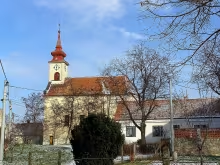
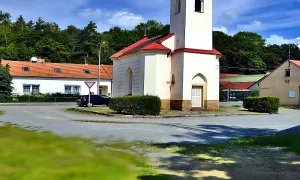
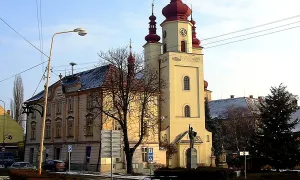
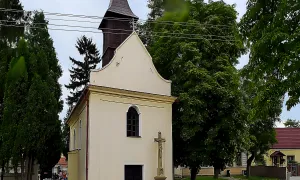
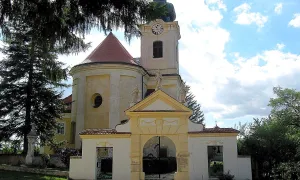
The Church of Saint John of Nepomuk in Brod nad Dyjí is a Roman Catholic church located in the town within the Břeclav District. Constructed in the second half of the eighteenth century, marked by 1781 on its tower, it stands as a protected cultural monument in the Czech Republic. Its architectural style reflects classical elements typical of that era, characterized by a single-nave structure with an attached presbytery and sacristy. The façades feature deep recesses housing segmental-arch windows, embodying the symmetry and order valued during its construction.
Built in the late eighteenth century, this period saw significant cultural and intellectual shifts across Europe. It marked the transition from Baroque to Classicism, influenced by Enlightenment ideals emphasizing reason and symmetry. The Church of Saint John of Nepomuk embodies these principles through its classical architectural elements, reflecting broader trends in art and architecture during this transformative time.
Architecturally, the church exhibits a single-nave layout with an attached presbytery and sacristy on its northern wall. Its façades are distinguished by deep recesses containing segmental-arch windows, typical of the classical style prevalent at that time. In the twentieth century, the church underwent modifications to expand its music gallery, enhancing functionality while preserving historical character.
Throughout its history, the Church of Saint John of Nepomuk has served as a farní kostel for the Brod nad Dyjí parish. While specific details about its ownership and administration are not extensively documented, it remains integral to the local community's spiritual life. The church's enduring presence underscores its regional significance.
One notable event in the church's history is the expansion of its music gallery in the twentieth century. This modification reflects ongoing efforts to adapt and enhance facilities while maintaining historical integrity. Such changes highlight the dynamic nature of the church as a living monument that continues to serve its community.
Today, the Church of Saint John of Nepomuk remains an active place of worship and is accessible to visitors who wish to explore its architectural beauty and historical significance. As a protected cultural monument, it offers insights into the classical style of the late eighteenth century and broader cultural shifts of that era. Its preservation ensures future generations can appreciate this remarkable example of Czech heritage.
The Church of Saint John of Nepomuk is not only a testament to the architectural and cultural developments of its time but also a cherished part of Brod nad Dyjí's community life. Visitors are invited to explore its serene interior, admire its classical façades, and reflect on its historical journey. This church stands as a valuable link to the past, offering a unique glimpse into the rich tapestry of Czech history and culture.
Historical milestones
- 1781
- The year 1781 is documented on the tower of the church.
Architectural development
Constructed in the late eighteenth century, the Church of Saint John of Nepomuk exhibits classical architectural elements typical of that era. Its design includes a single-nave layout with an attached presbytery and sacristy. The façades are distinguished by deep recesses containing segmental-arch windows. In the twentieth century, the church underwent modifications to expand its music gallery.
Historical events
The church was built in the second half of the eighteenth century with a documented year of 1781 on its tower.
In the twentieth century, the church's music gallery was expanded.
Points of interest
- Despite its classical architecture, the Church of Saint John of Nepomuk was originally designed with a hidden passageway connecting to the town's old fortifications, a remnant from earlier defensive strategies that predate the church.
- Legend has it that during its construction in 1781, workers discovered an ancient manuscript buried beneath the foundation stones. The manuscript is said to contain cryptic prophecies about the future of Brod nad Dyjí, though it was never deciphered and remains lost to history.
Guide
Show guide text
Welcome to the Church of Saint John Nepomuk in Brod nad Dyjí, a cherished cultural monument nestled within this historic town. As you stand before its serene façade, take a moment to absorb the tranquility and the aura of history that envelops this Roman Catholic church.
Constructed in the latter half of the 18th century, specifically documented as completed in 1781 by the year inscribed on its tower, this church stands as a testament to the architectural endeavors of an era long past. While the architects remain unknown, their vision has given us a structure that resonates with classical elegance.
The Church of Saint John Nepomuk is characterized by its single-nave design, complemented by an attached presbytery and a sacristy on its northern wall. As you gaze at its façade, notice how it seamlessly blends into the town's historic landscape. The simplicity and grace of its architecture invite contemplation and admiration.
While exploring this sacred space, imagine the skilled hands that crafted each detail over two centuries ago. Although specific historical figures involved in its creation are not documented, their legacy is etched into every stone and corner of this church.
Now, allow yourself to be intrigued by a fascinating tidbit: despite its classical architecture, the church originally included a hidden passageway connecting it to the town's old fortifications. This secret corridor was part of earlier defensive strategies, adding an intriguing layer to its history that predates its construction.
Legend also whispers of mysterious tales from 1781 when workers were constructing this very building. These stories add a touch of mystique and invite you to ponder what secrets might still linger within these walls.
As your visit draws to a close, we encourage you to continue exploring Brod nad Dyjí, where history and culture await at every corner. Thank you for joining us on this journey through time, and may the stories of Saint John Nepomuk's church inspire your own adventures in discovery. Safe travels as you venture forth into this enchanting town.
Businesses nearby
Do you run a restaurant, accommodation, shop, museum, rental, wellness or other visitor service near this monument? Show yourself directly to the people heading to it — this is how they will see you in the app and on the web:
Accommodation nearby
Themed route
Tematická výletní trasa: Kostel svatého Jana Nepomuckého, Brod nad Dyjí
1. Kostel svatého Jana Nepomuckého - *Typ:* Religiózní památka - *Proč stojí za návštěvu:* Tento barokní kostel je nejen architektonickou perli, ale také důležitým kulturním a historickým místem v Brod nad Dyjí. Jeho bohatě zdobená interiér a krásná věž nabízejí pohled na okolní krajinu, což je ideální začátek pro vaši trase.
2. Náměstí Míru - *Typ:* Veřejné náměstí - *Proč stojí za návštěvu:* Nachází se v centrálním místě Brod nad Dyjí a je ideálním místem pro odpočinek po návštěvě kostela. Náměstí nabízí příležitost prozkoumat místní atmosféru, s jeho historickými budovami a klidným prostředím.
3. Muzeum v Brod nad Dyjí - *Typ:* Muzeum - *Proč stojí za návštěvu:* Toto muzeum poskytuje hlubší vhled do historie a kultury regionu Jihomoravského kraje. Je to ideální místo pro ty, kteří chtějí rozšířit své znalosti o místním dědictví a životě v minulých dobách.
4. Kostel svaté Anny - *Typ:* Religiózní památka - *Proč stojí za návštěvu:* Tento kostel je dalším impozantním příkladem barokní architektury v Brod nad Dyjí. Jeho historický význam a krásné interiéry ho činí nezbytnou návštěvní látkou pro každého, kdo se zajímá o duchovní a kulturní památky.
5. Zámecký park v Brod nad Dyjí - *Typ:* Park - *Proč stojí za návštěvu:* Tento park nabízí klidné prostory k relaxaci a krásnou příležitost prozkoumat přírodní krásy regionu. Je to ideální místo, aby si navštěvníci odpočinuli po plném dni návštěvami místních památek.
Tato trasa vám umožní prozkoumat nejen hlavní kostel svatého Jana Nepomuckého, ale i další zajímavosti Brod nad Dyjí a jejich okolí.
Seasonal recommendations
Jaro: During the spring season, Church of St. John of Nepomuk in Brod nad Dyji is enlivened by a floral view as surrounding gardens and flower beds begin to bloom. Sunny days bring out the church's full beauty, with nature's vibrant colors adorning its historic architectural elements. The atmosphere is calm and gentle, making it an ideal leisure activity after winter closure. Visitors should wear warm clothing with layers they can remove, as spring temperatures can change quickly. The best time for a visit is in the early afternoon when crowds are still moderate and the sun illuminates the church in its sweetest glow.
Léto: Summer brings long sunny days and warm air, making Church of St. John of Nepomuk an ideal place to visit during peak tourist season. The architectural details of the church are best seen in clear sunlight, which gives its historical stones a special luster. The atmosphere is full of vitality, with locals and tourists often gathering in nearby park areas. Visitors should come early morning or late afternoon to avoid peak crowds, especially at midday. Warm clothing and sun protection are recommended for comfort.
Podzim: Autumn brings stunning colors to the church's surroundings as tree leaves turn golden and red. This seasonal change creates a romantic atmosphere around Church of St. John of Nepomuk, ideal for a peaceful visit. Sunny days remain frequent, providing perfect lighting for photographing both the interior and exterior of the church. Visitors should wear layered clothing, as temperatures can change quickly during this season. The best time to visit is midweek or in early afternoon hours when crowds are usually smaller.
Zima: In winter, Church of St. John of Nepomuk offers a more relaxed visitor experience with fewer crowds, allowing for a more personal tour. Winter brings a calm and quiet atmosphere as the church reflects off icy springs and snow-covered landscapes. Sunny days are rare but illuminate the church's interior with soft light that highlights its historical details. Visitors should wear warm clothing and appropriate footwear, as winter conditions can be cold and snowy or icy surfaces challenging to walk on. The best time for a visit is in the early afternoon when sunlight illuminates the church, although opening hours may be shorter due to winter conditions.
Visualizations and artistic views

Vizualizace jsou generovány umělou inteligencí a slouží jako inspirace.


Tips from visitors
No tips yet. Be the first!
Log in and add your tip.

Reviews and comments