





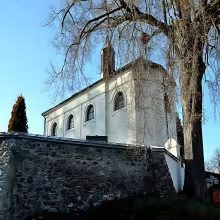
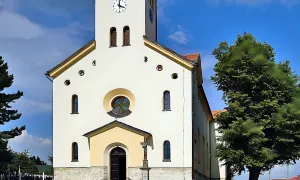
The Church of Saint Nicholas and the Holy Trinity in Olešnice is a Roman Catholic church dedicated to Saint Nicholas and the Holy Trinity. Situated at the edge of a cemetery surrounded by mature trees, this cultural monument serves as a branch church for the parish in Olešnice na Moravě. Originally built on the site of an older church, it was constructed in Baroque style and consecrated on November 25, 1725. The church underwent significant renovations to adopt a neoclassical architectural style in 1852. Its historical significance is enhanced by local legends and its connection to regional history.
Constructed during a period when Bohemia was part of the Habsburg Monarchy, an era marked by Baroque art and architecture, the Church of Saint Nicholas and the Holy Trinity replaced an older structure on the same site. This reflects the cultural and artistic trends of early 18th-century Europe. The period also saw significant political developments, such as the War of Spanish Succession, influencing the broader European context in which this monument was constructed.
Architecturally, the church initially showcased Baroque elements when built in 1725. Characterized by dramatic use of space and intricate details, this style emphasized grandeur and movement typical of the period. In 1852, renovations introduced Neoclassical features, reflecting a shift towards simplicity and symmetry influenced by classical antiquity. This transformation highlights evolving architectural tastes over the centuries.
The church has remained under the administration of the Roman Catholic parish in Olešnice na Moravě since its construction. While there are no dramatic changes in ownership or administration documented, its historical journey is marked by adaptation to changing artistic and cultural influences. The 1852 renovations signify a notable period of transformation aligning with broader architectural trends.
Key events associated with the church include its original consecration in 1725 and the Neoclassical renovation in 1852. Local legend adds intrigue, suggesting a secret underground passage connecting it with nearby Lamberk Castle. Additionally, the church's tower originally housed two bells from the previous structure: one dating back to 1593 and another to 1650. The older bell was recast in 1847 but later confiscated during World War I for military purposes.
Today, the Church of Saint Nicholas and the Holy Trinity stands as a testament to its rich history and architectural evolution. Protected as a cultural monument, it ensures preservation for future generations. Visitors can explore the church's interior, featuring a main altar with an image of Saint Nicholas, side altars, historical tombstones, and wooden pews. The surrounding cemetery adds to the site's serene atmosphere, featuring a central stone cross and a brick ossuary. A Stations of the Cross path begins outside the cemetery, commemorating regional suffering from 2016.
The Church of Saint Nicholas and the Holy Trinity is not only a place of worship but also a historical landmark offering insights into architectural and cultural shifts over centuries. Its connection to local legends and its role in the community make it a fascinating destination for those interested in history and architecture. Visitors are invited to explore this remarkable site, where the past meets the present in a harmonious blend of tradition and heritage.
Historical milestones
- 1725
- The Church of Saint Nicholas and the Most Holy Trinity was consecrated.
- 1852
- The church underwent extensive reconstruction with a transition to neoclassical style.
- 1593
- The older bell of the church dates from 1593.
- 1650
- The second oldest bell of the church was made in 1650.
- 1847
- The older bell was recast in 1847.
Architectural development
The Church of Saint Nicholas and the Holy Trinity was initially constructed in a Baroque style in 1725. It replaced an older church on the same site. In 1852, it underwent significant renovations to adopt a neoclassical architectural style.
Historical events
The current church was built and consecrated in Baroque style on November 25, 1725.
In 1852, the church was renovated in the Neoclassical style.
Points of interest
- Local legend suggests the existence of a secret underground passage linking the Church of Saint Nicholas and the Holy Trinity to nearby Lamberk Castle, adding an element of mystery to its history.
- The church's tower originally contained two bells from the previous structure: one dating back to 1593 and another to 1650. The older bell was recast in 1847 but was later confiscated during World War I for military purposes.
Guide
Show guide text
Welcome to the Church of Saint Nicholas and the Holy Trinity in Olešnice, a gem nestled within the picturesque setting of Jihomoravský kraj. As you stand here, imagine the serene atmosphere enveloping this Roman Catholic sanctuary dedicated to Saint Nicholas and the Holy Trinity. This church, now protected as a cultural monument, stands as a testament to history and spirituality.
The origin of this beautiful structure dates back to 1725 when it was consecrated on November 25th. Originally built upon the site of an older church, its construction in Baroque style reflects the architectural tastes and religious fervor of that era. Over time, the church underwent significant changes; notably in 1852, it embraced a neoclassical transformation during extensive renovations.
As you look around, take a moment to appreciate the architectural details that speak volumes about its storied past. The structure's design, though built by unknown architects, exudes an aura of timeless elegance and grace. While specific stylistic elements are not detailed here, the overall presence of this church invites contemplation and admiration.
The church's history is further enriched by its bells. Two older bells hold stories from centuries past: one dating back to 1593 and another crafted in 1650. These bells have witnessed countless events and continue to resonate with historical significance.
A local legend adds an intriguing layer to the church’s narrative—a rumored secret underground passage linking it to Lamberk Castle nearby, weaving a tapestry of mystery into its history.
As you explore further, let your imagination wander through these halls that have stood for centuries. The Church of Saint Nicholas and the Holy Trinity invites you to delve deeper into its mysteries and marvel at its enduring presence in Olešnice.
Thank you for joining us on this journey through time and faith. We hope this experience has enriched your understanding and appreciation of this cultural treasure. As you continue your exploration, may each step reveal new wonders and insights about the history that surrounds you. Farewell, until we meet again at another historical site!
Tips for visitors
The best time to visit the Church of Saint Nicholas and the Holy Trinity is during late spring or early autumn when the weather is pleasant, allowing you to enjoy a leisurely walk through the cemetery surrounded by mature trees. These seasons offer mild temperatures and vibrant foliage, enhancing the serene atmosphere around the church. Additionally, visiting outside peak tourist seasons ensures a more tranquil experience, ideal for reflection and appreciation of the historical site.
Parking and transportation options are convenient for visitors to Olešnice. The church is accessible both by car and public transport. There should be parking available near the cemetery area, though it's advisable to check for any restrictions or specific parking guidelines upon arrival. For those preferring public transport, local bus services can take you close to the location, but it's recommended to verify current routes and schedules through a transportation search tool.
When planning your visit, consider bringing comfortable walking shoes as there may be uneven paths around the cemetery and church grounds. A camera is also advisable for capturing the picturesque setting of mature trees and the central stone cross nearby. Additionally, carrying a light jacket or sweater can be helpful due to variable weather conditions, especially if you plan to explore the Stations of the Cross path outside the cemetery.
Photography enthusiasts will find several spots around the church ideal for capturing its beauty. The best lighting is generally during the early morning or late afternoon when the sun casts a soft glow over the historic architecture and surrounding trees. Try photographing from different angles, including shots that include the central stone cross and the brick ossuary to add context to your images.
For families with children visiting the Church of Saint Nicholas and the Holy Trinity, consider exploring the Stations of the Cross path outside the cemetery. This path offers a unique opportunity to engage with regional history through its commemorative plaques marking events from 2016. The walk is educational and can be an enriching experience for older children interested in local heritage.
In terms of nearby attractions within a 30-minute drive, visitors might explore other historical sites or natural landscapes around Olešnice na Moravě. While specific details are limited to the immediate vicinity mentioned earlier, such as the cemetery's features and paths, these elements provide a meaningful cultural experience close to home.
Businesses nearby
Do you run a restaurant, accommodation, shop, museum, rental, wellness or other visitor service near this monument? Show yourself directly to the people heading to it — this is how they will see you in the app and on the web:
Nearby
The church is located at the edge of a cemetery, surrounded by mature trees. Nearby features include a central stone cross and a brick ossuary on the cemetery grounds. A Stations of the Cross path begins outside the cemetery, commemorating regional suffering from 2016.
Accommodation nearby
Themed route
Tematická výletní trasa kolem kostela svatého Mikuláše a Nejsvětější Trojice
1. Kostel svatého Mikuláše a Nejsvětější Trojice (Kostel) - Typ: Náboženský památník - Proč stojí za návštěvu: Tento historický kostel je centrem duchovního života v obci Olešnice a nabízí poutavé architektonické prvky, které odrážejí bohatou historii regionu. Je umístěn na okraji hřbitova, což dodává jeho prostorám klidný a reflektivní nádech.
2. Hřbitov (Okolí) - Typ: Hřbitov - Proč stojí za návštěvu: Okolo kostela se rozkládá hladké nádvoří hřbitova, obklopené zralými stromy, které vytvářejí klidnou atmosféru. Hřbitov je ideálním místem pro odpočinek a reflexi, nabízející příležitosti k pochopení dějin a památných osobností z oblasti.
3. Kamenný kríž (Okolí) - Typ: Historický prvek - Proč stojí za návštěvu: Centrální kamenný kríž na hřbitovním pozemku je významnou památkou, která připomíná místní historii a kulturu. Jeho umístění v centru hřbitova zdůrazňuje jeho symbolické významy a poskytuje poutavý vizuální bod pro návštěvníky.
4. Drevenec (Okolí) - Typ: Ossuarium - Proč stojí za návštěvu: Brněný drevenec na hřbitovním pozemku je důležitou součástí místních tradic a poskytuje vhled do historických praktik pohřbívání. Jeho přítomnost dodává hřbitovu hlubší význam, reflektující respekt k minulosti.
5. Cesta křížů (Okolí) - Typ: Trasa paměti - Proč stojí za návštěvu: Cesta křížů začínající mimo hřbitovní pozemek je významnou trvalou památkou, která oslavuje odolnost a vytrvalost regionu po tragédii z roku 2016. Tato cesta nabízí poutavé procházky s možností reflektovat nad historickými událostmi, které formovaly místní komunitu.
Tato trasa vás provede hlubokým a zamyšleným prozkoumáním kostela svatého Mikuláše a jeho bezprostředního okolí, nabízející pohled na historii, kulturu a duchovní význam regionu.
```Seasonal recommendations
Spring: Visiting the Church of St. Nicholas and the Holy Trinity during spring offers a refreshing experience as nature awakens around Olešnice. The surrounding landscape is adorned with vibrant wildflowers, creating a picturesque setting that enhances the church's historical charm. The soft sunlight filters through budding trees, casting gentle shadows on the stone façade. As this season marks the beginning of tourist activity, it’s wise to arrive early in the day to enjoy the tranquility before larger crowds gather. Light layers are recommended due to fluctuating temperatures, and comfortable walking shoes will be useful for exploring nearby trails.
Summer: Summer is an ideal time to explore the Church of St. Nicholas and the Holy Trinity, with long daylight hours offering extended visiting opportunities. The lush greenery and blooming gardens around Olešnice create a vibrant atmosphere that complements the church's serene beauty. This season often sees increased visitor numbers, so planning your visit early in the morning can help avoid crowds. Light, breathable clothing is advisable to stay comfortable during warmer days, and carrying water is essential for hydration as you explore.
Autumn: Autumn brings a stunning display of colors to Olešnice, with the changing leaves providing a warm backdrop to the Church of St. Nicholas and the Holy Trinity. The crisp air and gentle sunlight create an inviting atmosphere that enhances the historical ambiance of the site. This season typically sees fewer tourists compared to summer, allowing for a more relaxed visit. Layered clothing is recommended to accommodate cooler temperatures, and a light jacket can be useful as evenings tend to get chilly.
Winter: Winter transforms Olešnice into a serene wonderland, with snow often blanketing the landscape around the Church of St. Nicholas and the Holy Trinity. The church's architecture takes on a mystical quality under the soft glow of winter sunlight or during evening hours when it is illuminated against the snowy backdrop. This season usually sees lower visitor numbers, offering a peaceful experience. It’s important to dress warmly in layers, wear waterproof boots, and check opening times as they may be shorter due to weather conditions.
Visualizations and artistic views

Vizualizace jsou generovány umělou inteligencí a slouží jako inspirace.

Tips from visitors
No tips yet. Be the first!
Log in and add your tip.



Reviews and comments